22 Jump Street

22-jump-street-poster1-405x600

Genre: Action, Comedy

Directors: Phil Lord, Christopher Miller

Writers: Michael Bacall, Oren Uziel, Rodney Rothman, based on the television series “21 Jump Street” created by Patrick Hasburgh and Stephen J. Cannell.

Cast: Channing Tatum, Jonah Hill, Peter Stormare, Wyatt Russell, Amber Stevens, Jillian Bell, Ice Cube, Keith Lucas, Kenny Lucas

Running Length: 111 minutes

Synopsis: After making their way through high school (twice), big changes are in store for officers Schmidt (Jonah Hill) and Jenko (Channing Tatum) when they go deep undercover at a local college. But when Jenko meets a kindred spirit on the football team, and Schmidt infiltrates the bohemian art major scene, they begin to question their partnership. Now they don’t have to just crack the case – they have to figure out if they can have a mature relationship. If these two overgrown adolescents can grow from freshmen into real men, college might be the best thing that ever happened to them.

Review: The box office success of 21 Jump Street all but ensured a sequel would happen, and just two years down the road Phil Lord and Christopher Miller (who seem to be able to do no wrong in their directing career thus far) are back with 22 Jump Street. This is a sequel that nudges and winks constantly at all the stale conventions of sequels, and it relentless lampoons all these conventions, making it one of the most self-aware sequels I have ever seen.

Nothing is spared – it understands that almost all sequels are inferior retreads to the originals, turns the “meet cute” scenario on its head, pokes fun at the increasingly ridiculous action setpieces in movies these days, and brings bromance to its most extreme, Brokeback Mountain-esque incarnation. Not everything works, but there definitely are enough moments in 22 Jump Street to justify its existence.

Nothing has changed from 21 Jump Street in this sequel, and the premise is identical – the two cops have to infiltrate a learning institution to find the source of a new designer drug. It’s moved from high school to college, and there’s a tacked on spring break segment (easily the weakest link in the movie), but despite the change in address the same positives and negatives that the first movie had is also intact here. The movie is still hit-and-miss when it comes to the comedy (but when it’s funny it’s laugh-out-loud hilarious), the running time is still a bit too long, and the central story really isn’t all that interesting.

Yet somehow the movie works, sometimes even better than the first. The chemistry between Channing Tatum and Jonah Hill has become more assured, which is even more important this time round because of the focus on their bromance. Ice Cube continues playing the best “angry black Captain” in recent memory, and manages to steal the limelight every time he appears on screen. It’s probably a good thing that he has limited screentime, or he would have probably stolen the entire show from the main leads. Ice Cube is also key to what’s probably the best scene in the movie – his reaction to a revelation – and it is an absolutely priceless sequence, almost worth the price of entry on its own. While 22 Jump Street is unlikely to forge new fans of the franchise, moviegoers who appreciated the first movie would definitely find things to like about this sequel, uneven as it may be.

P.S. The distributor has requested not to discuss an element of the movie, so I can only cryptically mention that there is a rather well executed sequence, but one must be patient in order to see it in its entirety.

Rating: * * * (out of four stars)

Standard

Maleficent

Image

Genre: Action, Adventure

Director: Robert Stromberg

Writer: Linda Woolverton, based on Disney’s “Sleeping Beauty” and Charles Perrault’s “La Belle au bois dormant”

Cast: Angelina Jolie, Elle Fanning, Sharlto Copley, Lesley Manville, Imelda Staunton, Juno Temple, Sam Riley

Running Length: 97 minutes

Synopsis: Maleficent explores the untold story of Disney’s most iconic villain from the classic “Sleeping Beauty” and the elements of her betrayal that ultimately turn her pure heart to stone. Driven by revenge and a fierce desire to protect the moors over which she presides, Maleficent (Angelina Jolie) cruelly places an irrevocable curse upon the human king’s newborn infant Aurora. As the child grows, Aurora (Elle Fanning) is caught in the middle of the seething conflict between the forest kingdom she has grown to love and the human kingdom that holds her legacy. Maleficent realizes that Aurora may hold the key to peace in the land and is forced to take drastic actions that will change both worlds forever.

Review: You may not know it from the official trailers, but Maleficent is both a kid- and family-friendly film. To say more would be slightly spoilerly, but this mismatch presents the biggest stumbling block for the film – that many viewers are going to watch the movie with the wrong expectations in tow. Given that the film is trying to flesh out the backstory of one of Disney’s most famous villains, and integrating that into one of the most famous “old-school” Disney animations, first-time director Robert Stromberg has a lot to achieve in a very short amount of time. It’s not entirely successful, and in a way it almost feels as though the original Sleeping Beauty had put some shackles around the way the movie unfolds, but almost all is forgiven solely by the extremely astute casting choice of Angelina Jolie as Maleficent.

Producer Joe Roth seems enamoured with films that retell a familiar story, including Alice in Wonderland, Snow White and the Huntsman, and Oz the Great and Powerful, and Maleficent is a film cast in a similar mould. For Maleficent, unfortunately, it really has been done before (and arguably better) in Wicked, which means that there are very few surprises to be had here. In fact, the attempt to run a parallel story to the original Sleeping Beauty doesn’t nearly work as well as it should, because the film is simply too short to allow for more depth in the storytelling. The final third of the movie feels extremely rushed, as though the fact that this is a family movie means the running length can’t exceed 90 or so minutes (two words for Disney to consider: “Harry” and “Potter”). It’s almost hilarious how little time Aurora spends caught in her magical slumber, that it feels more like a quick nap than anything else. It’s things like these that make the links to Sleeping Beauty feels perfunctory, especially because there appeared to be a need to recreate certain key scenes from the alternate perspective.

However, there’s no denying that Richard Stromberg had realized a wonderful world in Maleficent – the art direction and set design (despite there being only two main sets in the film) is flawless, and the visual effects are extremely well done. This isn’t surprising, given Stromberg’s CV before taking the helm, which includes two Oscar wins for Art Direction for Avatar and Alice in Wonderland. However, once again this is a film that doesn’t require viewing in 3D – there were scenes that should have looked better without 3D glasses on, and the already dark scenes look even murkier in the third dimension.

There is no doubt that Angelina Jolie totally owns the Maleficent character. She’s terrific in the role, all regal and menacing, her already distinct features made even more angular by Rick Baker’s incredible makeup. Her screen presence overshadows everyone else in the film, to the point that she is really the only character that matters or has any semblance of depth. This could be a good or bad thing depending on your perspective, but let’s get real – everyone is here for Angelina Jolie/Maleficent, and her performance does not disappoint.

Rating: * * * (out of four stars)
Standard

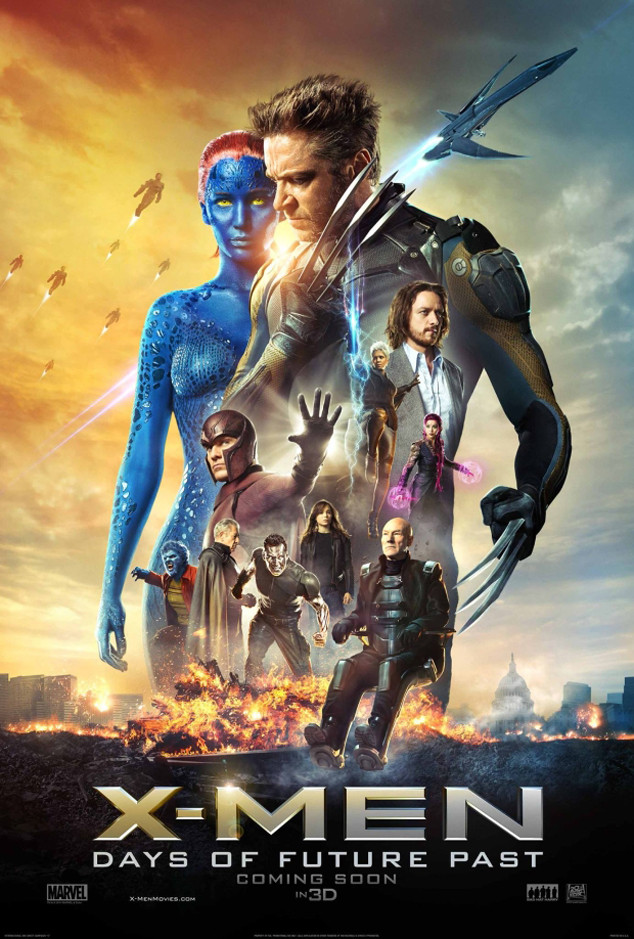
X-Men: Days of Future Past

Image

Genre: Action

Director: Bryan Singer

Writer: Simon Kinberg, story by Jane Goldman, Simon Kinberg and Matthew Vaughn

Cast: Hugh Jackman, James McAvoy, Michael Fassbender, Jennifer Lawrence, Halle Berry, Nicholas Hoult, Ellen Page, Peter Dinklage, Ian McKellen, Patrick Stewart

Running Length: 131 mins

Synopsis: The ultimate X-Men ensemble fights a war for the survival of the species across two time periods in X-Men: Days of Future Past. The beloved characters from the original X-Men film trilogy join forces with their younger selves from the past, X-Men: First Class, in order to change a major historical event and fight in an epic battle that could save our future.

Review: To say that X-Men: Days of Future Past is one of the better installments in the X-Men franchise seems to be faint praise, given that there have been a number of clunkers in the seven films thus far. So let’s rephrase: this is the second best movie in the franchise so far (the first by far still being X-Men: First Class), and since it features actors from the original trilogy, also manages to more or less flush out the bad taste that remained after the rather terrible X-Men: The Last Stand.

Days of Future Past is not a perfect movie – it has way too many characters doing nothing, the dense plot requires a working knowledge of the X-Men universe to make head and tail of. However, it belongs to a rare breed of superhero movies where the action takes a back seat to plot development. While the action is fine in Days of Future Past (the most notable being an imaginative, series-best scene where Quicksilver uses his powers to get the mutants out of a tight bind), it is when some of the key actors get a chance to flesh out their characters where the movie shines.

There’s an impressively long list of mutants featured in Days of Future Past, but almost all of them are nothing more than wallpaper – this sadly even includes seasoned thespians Patrick Stewart and Ian McKellen as the future age Professor X and Magneto. Hugh Jackman is given top billing, but even his Wolverine is reduced to doing nothing much except be the plot device that marries the two timelines in the film. As for the minor mutants, the only ones who are really given any significant screen time are Kitty Pryde (Ellen Page) and Quicksilver, the rest seemingly present just to perform a technical demonstration of their powers – the most egregious example being Fan Bing Bing’s Blink, who didn’t even seem to get a single line of dialogue.

Thankfully, Singer does give the key actors in X-Men: First Class their time in the sun, and the film benefits immeasurably because of this. The trio of James McAvoy, Michael Fassbender and Jennifer Lawrence do most of the heavy lifting in the film, and it is not a stretch to say that the movie is successful largely due to their presence. Michael Fassbender once again reigns supreme, and his portrayal as Erik/Magneto is easily the strongest (and dare I say, most magnetic) amongst the trio. There’s a tragic quality about Erik Lensherr which Fassbender is able to bring out, both within and without his costume – a pretty rare occurrence for superhero movies.

Having watched the film in 2D, it’s hard to say if 3D would add to the viewing experience, but it does not look like to be the case. While the quality of the CG in any action blockbuster worth its salt (or its $200 million production budget in this case) is a given, there are spots in the film where the visual effects do seem a little sloppy, particularly the finale sequence, easily the weakest scene both visually and in the grander scheme of things.

Bryan Singer was the director who truly established the end-credits sequence in superhero movies, and it’s no surprise that there’s one such scene in Days of Future Past, an obvious teaser for the already announced X-Men: Apocalypse. Having reboot the franchise’s beginnings with X-Men: First Class, and now resetting the present X-Men universe with the time travel premise in Days of Future Past, the X-Men franchise is now at its strongest in its entire 14-year cinematic history. Hopefully Apocalypse will be able to continue the streak and not waste the build-up when it arrives in 2016.

Rating: * * * (out of four stars)

Standard

Godzilla

Image

Genre: Sci-Fi, Action

Director: Gareth Edwards

Writer: Max Borenstein, story by David Callaham

Cast: Aaron Taylor-Johnson, CJ Adams, Ken Watanabe, Bryan Cranston, Elizabeth Olsen, Carson Bolde, Sally Hawkins, Juliette Binoche, David Straitham

Running Length: 123 mins

Synopsis: An epic rebirth to Toho’s iconic Godzilla, this spectacular adventure pits the world’s most famous monster against malevolent creatures who, bolstered by humanity’s scientific arrogance, threaten our very existence.

Review: It’s been 16 years since Hollywood has put Godzilla on the big screen, and little wonder since the 1998 version was quite a misstep in terms of establishing the (then-planned) franchise. I’m pleased to say that the 2014 (re)incarnation is a far, far better movie.  Although it hiccups in terms of human drama, Godzilla manages to deliver on most other aspects, especially on Godzilla himself, and is a very satisfying stompy movie indeed.

The film does take its time to get started, with Godzilla not making a formal appearance till about the halfway point. This is largely due to Gareth Edwards attempting to ramp up the human drama in the movie, though it is somewhat unsuccessful. Despite populating the cast with an amazing amount of talent, no one actually gets to do much apart from Bryan Cranston. Ken Watanabe and Sally Hawkins are particularly wasted, reduced to nothing more than reciting expository dialogue. It is a pretty shocking waste of thespian chops, and the film would probably have done better just by focusing more on the monsters from the get-go.

Where the film does succeed, however, is giving the audience the human’s-eye view of the action once it gets going. Gareth Edwards regularly films the proceedings from the perspective of the humans, and this really helps to put the audience smack in the heart of the action. One particularly impressive scene is seen through Ford’s (Aaron Taylor-Johnson) face mask as he skydives past Godzilla – it is an impossibly intimate look at the big monsters and delivers dramatic flair in spades.

Kudos to the effects team as well for crafting Godzilla and monsters that look stunningly realistic (well, as realistic as we think giant monsters would look like anyway), and all the computer-generated mayhem and destruction are presented most convincingly. An excellent score by Alexander Desplat perfect augments the fantastic sound effects and mixing in the movie – it’s highly recommended that you watch Godzilla in a theatre with great acoustics, and rest assured that you can feel Godzilla’s roar in your bones if you do so. What’s not so recommended is the 3D in the movie – once again, the post-production 3D does nothing to enhance the viewing experience, and it would be better to stick to a big screen that’s devoid of the third dimension.

Although this isn’t identical to the Toho Godzilla movies that some of us grew up with, Gareth Edwards has done a very commendable job in maintaining the spirit of the old movies. Sure, the science is a bit junky still, and the central humans just aren’t interesting enough, but Godzilla himself is most impressively brought to life, in a mould that’s similar to the Japanese films that he once starred in. In fact, the movie could have been significantly improved if more focus was brought onto the monsters instead of the humans, but this is so much better than Hollywood’s previous attempt that it would seem nitpicky to ask for more. This may be Edwards’ first big budget directorial effort, but he has lived up to expectations (and more), and this film more than makes up for the 1998 travesty that almost killed Godzilla for good.

Rating: * * * (out of four stars)

Standard

The Amazing Spider-Man 2

Image

Genre: Action

Director: Marc Webb

Writers: Alex Kurtzman, Roberto Orci, Jeff Pinkner, James Vanderbilt, based on the comic book by Stan Lee and Steve Ditko

Cast: Andrew Garfield, Emma Stone, Jamie Foxx, Dane Dehaan, Sally Field, Campbell Scott, Embeth Davidz, Colm Feore, Paul Giamatti

Running Length: 141 mins

Synopsis: For Peter Parker (Andrew Garfield), life is busy between taking out the bad guys as Spider-Man and spending time with the person he loves, Gwen Stacy (Emma Stone), and high school graduation can’t come quickly enough. Peter hasn’t forgotten about the promise he made to Gwen’s father to protect her by staying away – but that’s a promise he just can’t keep. Things will change for Peter when a new villain, Electro (Jamie Foxx), emerges, an old friend, Harry Osborn (Dane DeHaan), returns, and Peter uncovers new clues about his past.

Review: The Amazing Spider-Man 2 may be far from being the perfect superhero movie, but as far as Spider-Man movies go, the film has now taken over the mantle from Sam Raimi’s Spider-Man 2 as the best Spider-Man movie so far. It may not boast the best action sequences, or the tightest of editing (at almost two and a half hours, the film runs way too long), but it is certainly the film that is closest in spirit to the comic book version of Spidey. One of the criticisms of the first installment in the Spider-Man reboot was that it took too long to get the establishing story out of the way, but it does pays off partially in this sequel.

Although it’s clear that The Amazing Spider-Man 2 cost a pretty penny to make – the 3D is surprisingly decent throughout, and the CGI, particularly in the final showdown with Electro, is as good as it gets these days – what really makes the film stand out is in the “smaller” sequences. There’s no doubt that being a real-life couple makes the chemistry between Andrew Garfield and Emma Stone easily the best and most tangible in any superhero movie to date (far better than the Tobey Maguire-Kirsten Dunst pairing in the original Spider-Man trilogy, at the very least), but even other characters also get a chance to shine. Sally Field particularly impresses (again) as Aunt May, and her performance is the strongest one in the film despite a rather limited screen time. Unsurprisingly, the most emotionally engaging scenes in The Amazing Spider-Man 2 are when everyone is out of their costumes. 

For a Summer action blockbuster, The Amazing Spider-Man 2 is surprisingly light on action, and although the limited action sequences are all well choreographed and make good use of technology, I suspect that many moviegoers will still have preferred something that isn’t so skewed in favour of exposition and storyline, especially since the first installment already spent a good amount of time doing the same. There’s no doubt that the film is a little durdly, particularly in the middle, but the eventual payoff does make it somewhat worth the time.

The single largest misstep in The Amazing Spider-Man 2 is its entirely forgettable villains. Electro is the worst offender, and though he is supposed to be the central villain, he is such a broad caricature – bringing to mind Jim Carrey’s Riddler in Batman & Robin – that it’s impossible to take the character seriously. Even an accomplished actor like Jamie Foxx can’t do much to rescue a character that is this poorly written and developed. While Harry Osborn/Green Goblin is significantly better written, with Dan DeHaan doing a capable enough job, his introduction and eventual transformation does seem rather rushed, and it’s surprising to see such a major villain in the comic book series getting such short shrift in the film. And the less that’s said about the Rhino and Norman Osborn the better – suffice to say that it’s a colossal waste of talent for both Paul Giamatti and Chris Cooper.

With The Amazing Spider-Man 2, Marc Webb and his creative team have managed to create a Spider-Man that’s closest to the comic book version, but despite the positives of the film, it very nearly comes apart at the seams due to its flaws. Whether one would enjoy the film depends very much on how much weight is placed on the film having an emotional centre, which in my opinion is one of the things that the film manages to get very right. With The Amazing Spider-Man 3 slated for a 2016 release, hopefully the franchise will finally hit its stride in its third outing, and deliver the best Spider-Man movie yet.  

Rating: * * * (out of four stars)

Standard

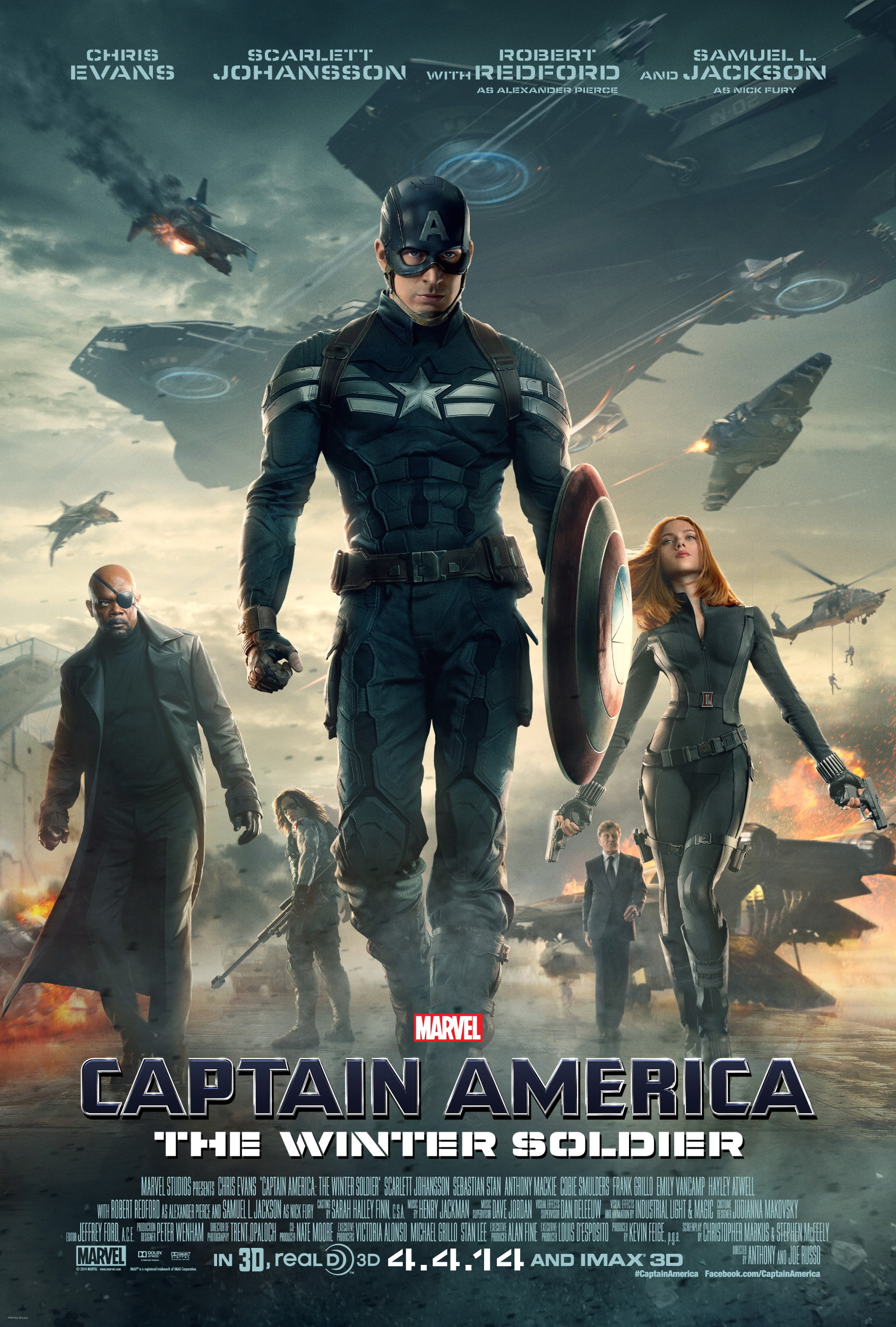
Captain America: The Winter Soldier

Image

Genre: Action

Directors: Anthony & Joe Russo

Writers: Christopher Markus and Stephen McFeely, based on the comic series by Joe Simon and Jack Kirby

Cast: Chris Evans, Scarlett Johansson, Samuel L. Jackson, Robert Redford, Anthony Mackie, Sebastian Stan

Running Length: 135 minutes

Synopsis: After the cataclysmic events in New York with The Avengers, Marvel’s Captain America: The Winter Soldier finds Steve Rogers (Chris Evans), aka Captain America, living quietly in Washington, D.C. and trying to adjust to the modern world. But when a S.H.I.E.L.D. colleague comes under attack, Steve becomes embroiled in a web of intrigue that threatens to put the world at risk. Joining forces with the Black Widow (Scarlett Johansson), Captain America struggles to expose the ever-widening conspiracy while fighting off professional assassins sent to silence him at every turn. When the full scope of the villainous plot is revealed, Captain America and the Black Widow enlist the help of a new ally, the Falcon (Anthony Mackie). However, they soon find themselves up against an unexpected and formidable enemy – the Winter Soldier.

Review: Captain America: The Winter Soldier is a game changer in terms of the Marvel movie universe – the events that unfold in this film has far reaching repercussions, and it is definitely interesting that the studio chose to do it in a single movie. This is particularly so given the track record of dragging out plot developments across multiple films prior to the “proper” Avengers movie in 2012. With this change, Nick Fury (Samuel L. Jackson) is finally given more screen time and actually feels like a character in the movie proper, instead of a plot delivery device, usually showing up in end credit sequences.

Apart from Nick Fury, Scarlett Johansson’s Black Widow is also given a much larger role, and can essentially be considered Captain America’s partner throughout the whole movie. This is an astute choice because Captain America can be considered to be quite a vanilla superhero, and almost everything that he does here is a retread of the first movie. It doesn’t help that despite his physicality, Chris Evans really lacks the charisma and presence of other action superheroes.

With Black Widow in the mix, things get a little more interesting, since she is willing to bend the rules to her favour, and Scarlett Johansson as an actress is many levels more charismatic than Chris Evans is. Suffice to say that she successfully manages to steal the limelight from Evans in the film consistently, which actually winds up being not a bad thing. A small plot thread involves Black Widow thinking of all the women that Captain America can hook up with, and interestingly enough, she herself is never presented as an option despite some hints of a possible romantic dalliance – perhaps this would be further expounded upon in future Marvel movies.

Action setpieces are a must in any self-respecting superhero movie, and these do not disappoint in The Winter Soldier. The directors made an interesting choice to move away from CGI for some of these action sequences, and the audience is treated to a number of “smaller” scenes – a car chase, ground pursuit and close quarters combat, which are really far more entertaining than the CGI-laden finale. One big caveat – directors Anthony and Joe Russo does not seem to be comfortable with helming a big superhero action movie, and chooses to go the route of employing jerky camera movements and frantic quick cuts to suggest visceral action. It does not work well, and is even more pronounced when viewed in 3D, particularly the two sequences that bookend the movie.

The identity of the Winter Soldier will be no mystery to anyone familiar with the Marvel comic universe, but the script does make it a sufficiently interesting reveal for moviegoers who are not that acquainted with the backstory of Captain America. Returning scribes Christopher Markus and Stephen McFeely wisely chooses to devote a good amount of screen time delving into the more emotional aspects of the Captain (the Winter Soldier reveal and a short sequence with Peggy Carter, for example), which gives the character more dimensionality and makes up partially for Evans’ lack of charisma. And to be fair, Evans does a decent job in these scenes, underscoring the fact that Captain America belongs very much to the “more human” category of superheroes.

Captain America, like Iron Man, seems to be planned as a trilogy, though it’s hard to imagine a third movie being in the same mold as the previous two without it feeling like a tired retread. However, Captain America is one of the longest running comic book franchises, so hopefully the final film would find some way to improve further on its predecessors. The Winter Soldier is perfectly fine as the opening salvo in a year chock-full of superhero movies, and it will certainly be interesting to see how the events initiated in this film will cascade out to the next few Marvel films, particularly Avengers: Age of Ultron next year.

P.S. There are two end credit codas, one mid credits which gives a sneak peek into Age of Ultron, and one at the very end which hopefully hints at further developments for the Captain America franchise. 

Rating: * * * (out of four stars)

Standard

Dallas Buyers Club

Image

Genre: Drama

Director: Jean-Marc Vallee

Writers: Craig Borten & Melisa Wallack

Cast: Matthew McConaughey, Jared Leto, Jennifer Garner

Running Length: 118 minutes

Synopsis: Matthew McConaughey stars in Dallas Buyers Club as real-life Texas cowboy Ron Woodroof, whose free-wheeling life was overturned in 1985 when he was diagnosed as HIV-positive and given 30 days to live. These were the early days of the AIDS epidemic, and the U.S. was divided over how to combat the virus. Ron, now shunned and ostracized by many of his old friends, and bereft of government-approved effective medicines, decided to take matters in his own hands, tracking down alternative treatments from all over the world by means both legal and illegal. Bypassing the establishment, the entrepreneurial Woodroof joined forces with an unlikely band of renegades and outcasts – who he once would have shunned – and established a hugely successful “buyers’ club.” Their shared struggle for dignity and acceptance is a uniquely American story of the transformative power of resilience.

Review: There really are only two reasons to watch Dallas Buyers Club – Matthew McConaughey and Jared Leto. Yes, the “based on a true story” account of Ron Woodroof is a somewhat interesting movie, but without the amazing performances from the two leads, the movie would probably have felt much more generic. It’s not a stretch to say that McConaughey in particular carries the movie on his shoulders throughout, and it’s no surprise that he’s the frontrunner for the awards race this year.

McConaughey’s last appearance on the big screen (for most cinemagoers) would have been Magic Mike in 2012, and in Dallas Buyers Club he is a literal shadow of the muscled male stripper portrayed previously. McConaughey lost more than 40 pounds to play Woodroof, but it isn’t simply the weight loss that impresses – this is bar none his best performance in his entire career, a nuanced, ferocious and at times truly moving portrayal of a man stricken with what was then seen as a terminal illness.

Then there’s Jared Leto, who has taken an extended break from the big screen for a number of years to focus on his singing career with 30 Seconds to Mars. Yet he seems to have not lost his previous thespian form, and in his portrayal of the emotionally vulnerable transgender Rayon, we have a wonderful foil to McConaughey’s Woodroof. The movie’s most enjoyable moments are the interactions between the two, and the gradual shift in the dynamics of their relationship convinces because of the excellent chemistry between the two. These are transcendent performances, projecting the film into a whole different league on their own.

Perhaps understanding that this is a performance-driven movie, Jean-Marc Vallee displays very little flair at the helm of the film, and it unfolds pretty much as a straight biopic. There are interesting elements to the plot, especially the protracted “battle” that Woodroof and the FDA engage in, but it does seem to somewhat underplay the paranoia and difficulties that surrounded HIV positive patients in that era. Woodroof’s overcoming immense odds to triumph (somewhat) holds a universal appeal, however, and although the subject matter may not be all that popular with cinemagoers, anyone who’s willing to pay the price of admission will likely find themselves with a rewarding cinematic experience.

Rating: * * * (out of four stars)

Standard

The Hobbit: The Desolation of Smaug

Image

Genre: Fantasy

Director: Peter Jackson

Writers: Fran Walsh, Philippa Boyens, Peter Jackson & Guillermo del Toro, based on the novel “The Hobbit” by J. R. R. Tolkien

Cast: Martin Freeman, Ian McKellan, Richard Armitage, Luke Evans, Orlando Bloom, Evangeline Lilly, Lee Pace, Stephen Fry, Benedict Cumberbatch (voice)

Running Length: 161 minutes

Synopsis: The Hobbit: The Desolation of Smaug continues the adventure of the title character Bilbo Baggins (Martin Freeman) as he journeys with the Wizard Gandalf (Ian McKellen) and thirteen Dwarves, led by Thorin Oakenshield (Richard Armitage), on an epic quest to reclaim the Lonely Mountain and the lost Dwarf Kingdom of Erebor. Having survived the beginning of their unexpected journey, the Company continues East, encountering along the way the skin-changer Beorn and a swarm of giant Spiders in the treacherous forest of Mirkwood. After escaping capture by the dangerous Wood-elves, the Dwarves journey to Lake-town, and finally to the Lonely Mountain itself, where they must face the greatest danger of all—a creature more terrifying than any other; one which will test not only the depth of their courage but the limits of their friendship and the wisdom of the journey itself—the Dragon Smaug (Benedict Cumberbatch).

Review: Peter Jackson is in an enviable position – the first Hobbit movie, An Unexpected Journey, had already clocked more than a billion dollars in revenue, effectively paying for the entire franchise. Any box office takings for Desolation of Smaug and There and Back Again is pure icing on the cake. Perhaps if this was anticipated beforehand, there wouldn’t have been a need to draw out the film adaptation into three installments instead of the originally-planned two, because although The Desolation of Smaug is better than An Unexpected Journey, what cannot be denied is that there is a massive amount of bloat in the franchise, which is even more apparent in this second outing.

Instead of being true to the novel, what Peter Jackson has done is to use the source as an outline for the movie. In fact, half or more of The Desolation of Smaug is not found in the novel, with entire sequences and characters being crafted from the collective imaginations of the writing team and from the notes of Tolkien himself. Splitting such a short book into three three-hour excursions has necessitated this, and plot wise The Desolation of Smaug is about as spare as it can get. It’s a telltale sign when the most interesting and well-developed character is Tauriel (Evangeline Lilly), who is not even part of the novel, and the remainder dwarves are still as featureless and unmemorable as before, excepting Kili (Aidan Turner), who is really only made interesting because of his involvement with Tauriel. The ostensible leads of Gandalf, Bilbo and Thorin are stagnant in terms of character development, and the actual plot development is minimal – in fact, one can simply sit through just the final 30 minutes of The Desolation of Smaug and be completely up to speed with the plot leading into There and Back Again.

That is not to say that The Desolation of Smaug is a bad film by any measure. Peter Jackson showcases his mastery in action sequences, and there are a number of action set pieces that are extremely well done in the film, particularly the water barrel sequence involving Legolas (Orlando Bloom, who unfortunately looks older despite playing a younger version of Legolas) and the showdown with giant spiders. The visuals presented in Jackson’s vision of Middle-Earth is as stunning as ever (I’m still undecided on whether HFR is a good or bad thing, however), and Smaug, finally unveiled in his full glory, is a marvel of CG imagery.

However, there are just as many segments in the film that drag, particularly the hour between the water barrels and Smaug’s appearance, and only the most ardent fans or tolerant moviegoers would not feel some sort of impatience at the plodding pace. And of course, it then ends abruptly, giving no resolution to the storyline till the next installment in December 2014. While most people would have had some inkling of the plot progression and the series’ conclusion, the lack of a conclusion of any sort may still frustrate some audience members.

Perhaps the biggest problem with The Hobbit franchise is the impossibly high standard that Peter Jackson and crew had set with Lord of the Rings. While The Hobbit bears a resemblance to that franchise, it is plagued with problems that the three Lord of the Rings movies did not face, particularly the paucity of the source material and the desperate attempts to pad out the films to justify a trilogy. Somewhere beneath the bloat is an excellent movie (or two, at most), and one hopes that instead of a further extended edition heading to home video, that Jackson and team would be able to produce an abridged version that will distil the films into a more refined whole.

Rating: * * * (out of four stars)

Standard

Zone Pro Site: A Movable Feast

Genre: Comedy

Director: Chen Yu Hsun

Writer: Chen Yu Hsun

Cast: Lin Mei Hsiu, Tony Yang, Kimi Hsia, Wu Nien Chen, Ko Yi Cheng, His Hsiang, To Hsien, Bamboo Chen, Chan Wan Hao

Running Length: 144 minutes

Synopsis: More than twenty years ago, there were three Ban-doh (outdoor banquet) master chefs who dominated the catering business in Taiwan. They were known as Master Silly Mortal, Master Ghost Head and Master Fly Spirit. However, the outdoor banquet business has been in decline since Taiwan’s economic take-off, and even the master chefs feel helpless to turn the tide. Master Fly Spirit wants to pass the family recipes and culinary skills on to his only child, Hsiao Wan, but she desperately wants to run away from the family business and to become a fashion model. Nevertheless, fate proves that Wan is destined to take up the challenge and mission she once shunned…

Review: Curious, meaningless English title aside, Zone Pro Site is an entertaining romp through the world of “ban dou”, the Taiwanese catering business, through the eyes of a younger generation. Continuing a trend of Taiwanese movies seeing success when dealing with specific aspects of Taiwanese culture, Zone Pro Site tells an engaging story that doesn’t bore, despite a running time clocking well over 2 hours.

Although director Chen Yu Hsun has been away from the big screen for sixteen years, he seems to have stayed remarkably up-to-date, amply evidenced by his choice to use an almost manga style to his direction of Zone Pro Site. There are many scenes which invoke the use of magical realism, and the larger-than-life characters also allude to the manga influence, not least of which are a trio of “otakus” who are ready to offer their assistance to the central protagonist Hsiao Wan at all times. The finale cooking competition is also one of the weirdest I have seen for a live-action movie, incorporating effects and sequences that seem to have been plucked directly out of similarly themed Japanese cartoons. This stylistic choice makes for a lively viewing experience, and helps to minimize dead air in the movie (but requires a high tolerance level to whimsy). 

It also helps that most of the main and supporting cast members put in good performances, none more so than Lim Mei Hsiu as the boisterous mother of Hsiao Wan. She displays both a great comic timing and good thespian prowess, easily outshining any other cast member sharing the screen with her. Kimi Hsia does the best she could with what is essentially quite a one-note lead character, but fortunately she is ably bolstered by a good supporting cast. The weakest link is clearly Tony Yang, who seems to function as a pretty face but is undeniably bland in his portrayal of the “gourmet doctor” and requisite love interest.

With a relatively large cast and multiple plot threads, it was perhaps inevitable that certain elements would have fallen by the wayside. One unfortunate and surprising casualty of this is the actual food itself – for a movie that revolves around feasts and chefs, I had expected there to be much greater focus on the dishes being created. However, the director seems to prefer showcasing the journey and not the destination, and although there are more than enough scenes on the preparation of the dishes, the final presentation of the finished products seem more like an afterthought. Still, this isn’t a show to watch on an empty stomach, and is best followed by a big, satisfying meal after exiting the cinema.

Rating: * * * (out of four stars)

Standard

That Girl in Pinafore

Genre: Drama

Director: Chai Yeewei

Writers: Chai Yeewei & Violet Lai

Cast: Daren Tan, Julie Tan, Seah Jiaqing, Kenny Khoo, Jayley Woo, Hayley Woo, Kelvin Mun, Sherly Devonne Ng

Running Length: 116 minutes

Synopsis: Set in Singapore in the early 90s, That Girl in Pinafore recounts the lives and love of a group of friends whose love of xinyao brings them together.

Review: At first glance, That Girl in Pinafore is immediately reminiscent of the 2011 Taiwan box office smash You Are the Apple of My Eye, and there definitely are similarities between the two films. Both tap into the power of nostalgia, and the story structure and character mix is almost identical. That Girl in Pinafore has one very big upside going for it (in Singapore at least), however – it’s a local movie, and it would be remiss to ignore the compounding effect of resonance on top of nostalgia. There would be no doubt that the movie will generate strong word of mouth, and barring the cinema operators’ whims and fancies, should see a relatively good run at the box office.

It’s also interesting to observe the small touches that director Yee Wei had put into the film – to enhance the veracity of the period setting, he managed to obtain relics from the bygone era, including pagers, old-school telephones, cassette tapes, and even a cheesy abdominal exercise machine.

However, strip away the nostalgia factor and the film does lose some of its sheen. The overt melodrama, especially in the final reel, wasn’t entirely necessary, and the young actors weren’t able to portray the weightier moments of the film well. The song performances were akin to Glee – although some of the new arrangements were interesting, the vocal quality (except perhaps Daren Tan, who is after all an ex-Project Superstar winner) of the cast was extremely uneven.

It was great to see part of my growing up days being re-enacted on the big screen, and that alone is worth the price of entry, but for audience members who are not acquainted with the xinyao movement or the early 90s would likely find the experience a more subdued one. There is no denying, however, that this is a heartfelt labour of love, and should receive kudos for bucking the norms of what defines a local movie. It’s also pleasant to note that despite having a slew of sponsors backing the movie, there were no overt product placements or awkward commercial messages.

Rating: * * * (out of four stars)

Standard