Spy

Genre: Action/Comedy

Director: Paul Feig

Screenplay: Paul Feig

Cast: Melissa McCarthy, Jason Statham, Rose Byrne, Miranda Hart, Bobby Cannavale, Allison Janney, Peter Serafinowicz, Morena Baccarin, Jude Law

Running Length: 120 minutes

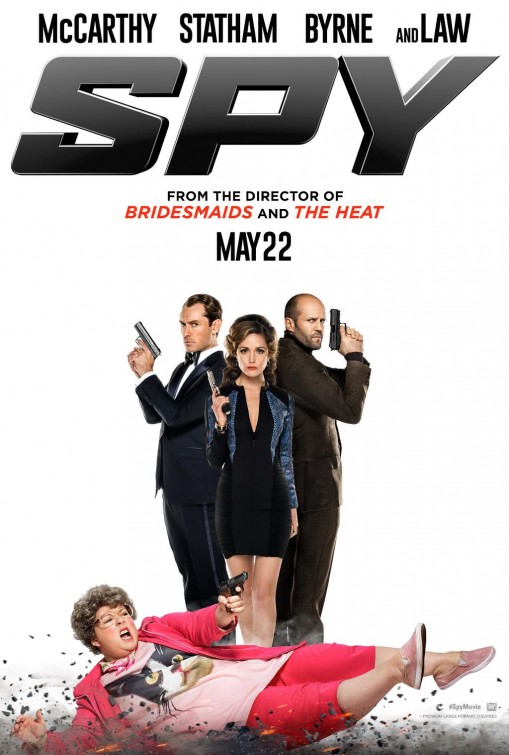
Synopsis: Susan Cooper (Melissa McCarthy), a shy deskbound CIA analyst, goes on a mission to help a field agent in trouble. Employing not-so-outrageous identities and not-so-fancy spy gadgets, she attempts to infiltrate the shadowy world of an alluring but dangerous weapons dealer. She leaves a trail of mayhem crisscrossing Europe, utilizing deception and false bravado to try and outwit her quarry and locate a stolen nuke.

Review: No one has managed to make Melissa McCarthy shine like Paul Feig has (and that includes McCarthy’s husband, who directed her in the mediocre Tammy), and in Spy they have left everything else (so far) in the McCarthy canon in the dust. Spy is undeniably the best Feig-Mccarthy pairing in the three films they have worked together on (the breakout hit Bridesmaids and the equally successful The Heat), and despite it being positioned firstly as a comedy, Spy is also a totally legit espionage action film, and I foresee it scoring great success at the box office despite a pretty packed Summer roster.

The most impressive thing about Spy is how it manages to meld the comedy and action genres together so well, without diminishing either aspect. This is in large part due to the how deftly Melissa McCarthy balances between the two – her comic timing is impeccable here, but she also manages to pull off the action and physical comedy sequences with equal aplomb (though there are some scenes where a body double was quite clearly used). Not many actors can lay claim to such an achievement, and it firmly establishes McCarthy as the reigning queen of comedy with a few tricks up her sleeve.

Paul Feig’s script does the same – it’s filled with excellent zingers and visual gags, so rich in material that one can easily watch the film a second time round and find even more to belly laugh at, and yet the spy story is equally engaging, with twists and turns that would surprise even the most jaded moviegoers. All the things that make a good spy movie are present here: exotic locations, over-the-top action sequences, a doomsday device and yes, even the classic Bond-style opening sequence makes an appearance.

Both McCarthy and the script are also bolstered greatly by a uniformly excellent supporting cast, almost all playing against type (and obviously having a great time doing it). The most notable are Rose Byrne, who is fantastic as the cruel but vapid villainess with a ridiculous accent and even more ridiculous coiffure, and Jason Statham, gleefully sending up his usual tough guy routine as a British spy who is all bark and no bite. Spy is possibly the most fun that will be had this Summer season, and is an easy recommendation to make to virtually any moviegoer.

Rating: * * * ½ (out of four stars)

Standard

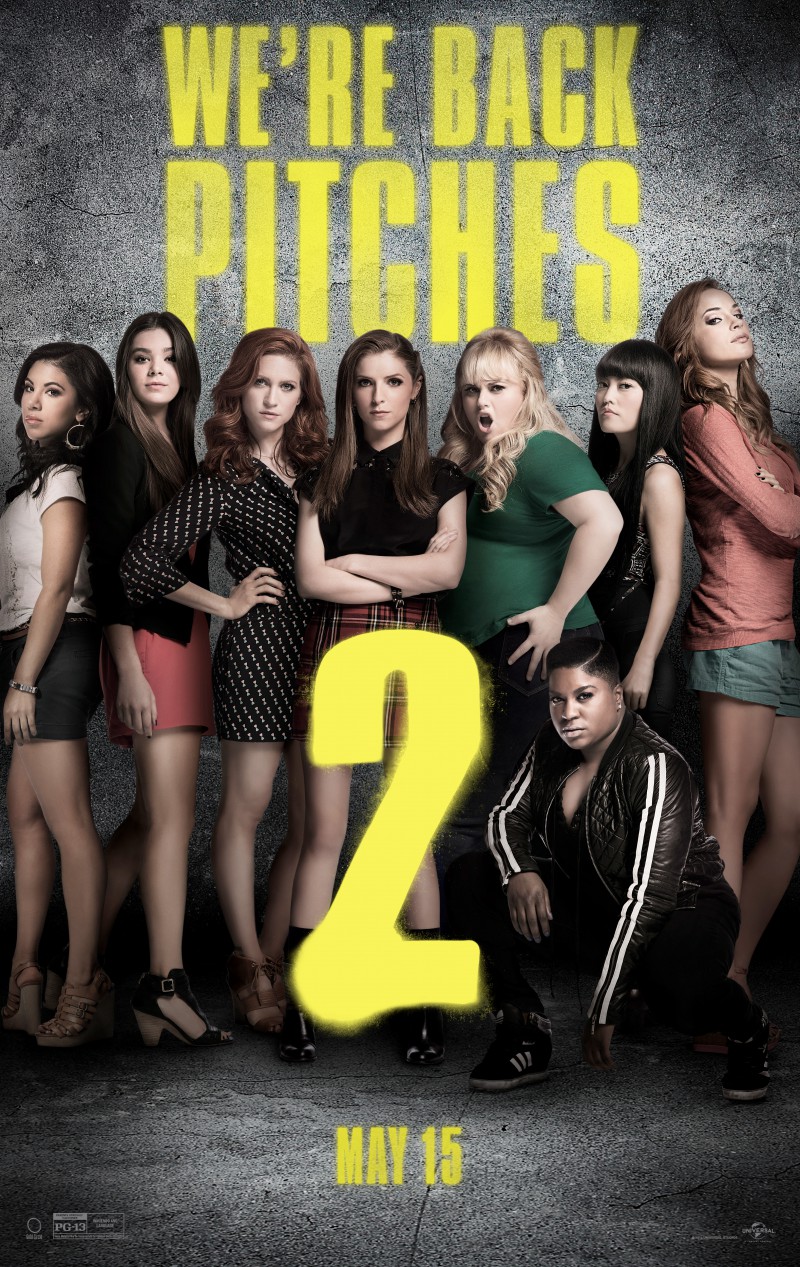
Pitch Perfect 2

Genre: Musical/Comedy

Director: Elizabeth Banks

Screenplay: Kay Cannon

Cast: Anna Kendrick, Skylar Astin, Anna Camp, Brittany Snow, Rebel Wilson, Ester Dean, Alexis Knapp, Hana Mae Lee, Adam DeVine, Kelley Jakle, Chrissie Fit, Hailee Steinfeld, Katey Sagal, Elizabeth Banks

Running Length: 114 minutes

Synopsis: After a disastrous wardrobe malfunction while performing for the President, the Barden Bellas, who are now three-time national champions, have fallen from grace and lost their mojo. Their only hope for redemption is to clinch the top spot at the World A Capella Championships, but they face their toughest battle yet against the formidable German team, Das Sound Machine.

Review: Don’t be fooled by the title – just like the original film, Pitch Perfect is actually a rather pitchy attempt. While Elizabeth Banks’ directorial debut is a perfectly credible one, the seams do show whenever the singing stops. Fortunately, there is a LOT of singing to be found in Pitch Perfect 2, and the astute choice of Banks and screenwriter Cannon to lavish more attention on characters like Rebel Wilson’s Fat Amy makes the proceedings much easier to bear despite the near two-hour running time.

One of the bigger changes from the first Pitch Perfect is that the sequel is much more female-empowered, with virtually every male cast member relegated to the sidelines. There are two romantic subplots (which arguably take up too much screen time despite their affable conclusions) but it’s really all about the girls – this is a movie that passes the Bechdel test with flying colours.

Kay Cannon’s script is filled with great one-liners, mostly given to Rebel Wilson, who is a blast to watch in her expanded role, and also Elizabeth Banks and John Michael Higgins, who return as colour commentators Gail and John, letting rip one sexual innuendo after another. However, Cannon can be accused of trying to include too much in the script – while there are a good number of other plot threads, including Beca’s (Anna Kendrick) internship at a record label, a lot of it feels like filler and doesn’t particularly engage on any level. Bellas newcomer Hailee Steinfeld boasts a lot of charisma, but honestly she isn’t given too much to do, though it can be assured that she will be given a meatier role in the (inevitable) next installment of the franchise.

Much like Glee, the strength of the Pitch Perfect franchise lies not in the drama, but in the musical numbers. In this aspect Banks has managed to do an excellent job. Not only are most of the songs great selections, but whenever she puts together a music set piece it is almost always note perfect. While the performances of Das Sound Machine are all great, nothing beats the finale performance by the Bellas, featuring the song Flashlight (which, among others, includes Sam Smith and Sia as co-writers) and virtually guaranteed to leave one with goosebumps, forgiving almost all the flaws that have come before it.

Rating: * * ½ (out of four stars)

Standard

Hot Pursuit

Genre: Comedy

Director: Anne Fletcher

Screenplay: David Feeney, John Quaintance

Cast: Sofía Vergara, Reese Witherspoon, Jodi Lyn Brockton, Matthew Del Negro, Michael Mosley

Running Length: 87 minutes

Synopsis: An uptight and by-the-book cop (Reese Witherspoon) tries to protect the sexy and outgoing widow of a drug boss (Sofia Vergara) as they race through Texas pursued by crooked cops and murderous gunmen.

Review: I really wanted to like Hot Pursuit. After all, action comedies with female leads are few and far between, and Reese Witherspoon and Sofia Vergara are both likable actors. This also happens to be Vergara’s first proper lead role in a movie, which is kind of surprising given the success she has found off hit TV sitcom Modern Family. Although there are laughs to be had, Hot Pursuit is more lukewarm than hot, the result of minimal chemistry between the leads and a script that simply doesn’t do enough. Hot Pursuit runs a short 87 minutes but still feels laboured before the final reel, and even the gags feel like they have run their course an hour into the film.

It appears from the end-credit outtakes that Witherspoon and Vergara not only had a great time making the film, but that they seem to have developed what seems like a rather healthy camaraderie as well. Unfortunately, I doubt that viewers could tell that from the main feature itself – there are barely any sparks between the two despite sharing significant screen time. It also annoys me that – without going into too much detail for risk of spoilers – the screenplay tries its best to create a will-they-stay-or-will-they-go tension between the odd couple, creating scenarios that then limply resolve themselves in a matter of minutes without making any actual impact to the pairing.

It also seems like half the jokes seem to be about either Witherspoon’s height and boyish (??) looks or Vergara’s age and Latina heritage, and neither actress makes even a concerted effort to rise above the mediocre and rather lazy writing. They are content to play to their characters’ stereotypes, and this is really the essence of why Hot Pursuit doesn’t work that well despite low expectations: nothing comes across as being particularly genuine and as a result it just doesn’t engage enough. When the same joke gets recycled for the fifth time in an hour, even the funniest gag starts to feel like a lame duck.

The audience is never truly vested in what happens to either woman, and since this is a comedy everyone already knows what the eventual outcome would be. The journey is indeed more important than the destination, and in this case the journey just isn’t all that interesting. As a low budget contender for Summer, Hot Pursuit will definitely get its fair share of moviegoers, but given that both Witherspoon and Vergara have producer credits on this film, I really expected it to deliver more than it did.

Rating: * * (out of four stars)

Standard

Rubbers

Genre: Comedy

Director: Han Yew Kwang

Screenplay: Han Yew Kwang

Cast: Yeo Yann Yann, Julian Hee, Lee Chau Min, Marcus Chin, Catherine Sng, Alaric Tay, Oon Shu Ann

Running Length: 85 minutes

Synopsis: Three different stories revolving around condoms unfold on Valentine’s Day: in Balloons, the elderly Hua (Catherine Sng) considers divorcing her husband Niu (Marcus Chin) for his acts of infidelity with a prostitute; in Plumber, journalist Bao Ling (Yeo Yann Yann) hallucinates about a durian-flavoured condom coming to life (Lee Chau Min) and encouraging her to hook up with any man, including a plumber (Julian Hee) whom Bao Ling contacts out of desperation; and finally in Nightmare, condom-hating womanizer Adam Kok’s (Alaric Tay) fantasy with a Japanese AV actress Kawaii Momoko (Ong Shu Ann) comes to life, but at the same time he finds a condom attached to his genitals that he simply can’t remove.

Review: In a society as straight-laced as Singapore, a homegrown sex comedy is almost unheard of, so kudos to Han Yew Kwang for successfully bringing Rubbers to fruition. Boasting three non-intersecting storylines, the film is perhaps a little too ambitious in scope, and really may have fared better if Yew Kwang did not attempt to inject the film with so many disparate tonal styles and plotlines. Simply put, the contrasting styles of the three segments – realism (Balloons), magical realism (Plumber) and absurdist (Nightmare) – do not mesh that well together, especially when intercut with each other.

The good thing about Rubbers is that it does deliver the goods as a sex comedy. There are a handful of laugh-out-loud moments, although some of it does feel a little juvenile (most of which coming from Nightmare). What’s more impressive is that there are actually some tender scenes in the film that manage to elevate it to more than just a crass sex comedy, particularly in Balloons and in the denouement of Plumber. Yew Kwang has also successfully replicated the look and feel of a number of different genres of film in Rubbers, and the one I was most impressed with was a note-perfect “Asian horror” sequence that stars the director himself.

While Yann Yann is definitely the most high-profile actor in the cast, her performance is somewhat of a mixed bag, as her portrayal of Bao Ling ends up feeling a bit too caricaturish and scenery-chewing at times, which is somewhat exacerbated by the virtual non-acting of Julian Hee and the extremely out-of-place performance of Chau Min as the durian condom (to be fair, anyone would have been out of place in that rather thankless role). The other two pairings fare much better – Shu Ann steals the limelight in almost every scene she is in, and shares a great chemistry with Alaric, while Catherine and Marcus both hold their own, especially in a pivotal scene near the end of their tale.

Despite the R21 rating that Rubbers has received, apart from a few suggestive sequences and a number of cuss words, the film is actually visually rather PG, with nary any nudity or even implied sexual activity. It’s also an extremely localized film, with a lot of colloquialisms and Singapore-specific humour that will likely limit the film’s accessibility outside of its home nation. Though Rubbers is a somewhat uneven attempt, it works well as a palate cleanser amidst the heavier-hitting action blockbusters that are currently populating the cinemas, especially for audiences who are looking for a more light-hearted cinematic experience.

Rating: * * ½ (out of four stars)

Standard

Marvel’s The Avengers: Age of Ultron

Genre: Action

Director: Joss Whedon

Screenplay: Joss Whedon

Cast: Robert Downey Jr., Chris Hemsworth, Mark Ruffalo, Chris Evans, Scarlett Johansson, Jeremy Renner, Don Cheadle, Aaron Taylor-Johnson, Elizabeth Olsen, Paul Bettany, James Spader

Running Length: 141 minutes

Synopsis: When Tony Stark tries to jumpstart a dormant peacekeeping program, things go awry and Earth’s Mightiest Heroes, including Iron Man, Captain America, Thor, The Incredible Hulk, Black Widow and Hawkeye, are put to the ultimate test as the fate of the planet hangs in the balance. As the villainous Ultron emerges, it is up to The Avengers to stop him from enacting his terrible plans, and soon uneasy alliances and unexpected action pave the way for an epic and unique global adventure.

Review: It cannot be denied that despite being an utterly successful commercial venture (and having other film studios scrambling to create similar franchises), the Marvel Cinematic Universe is starting to feel a little tired. Although this is “just” the second proper Avengers movie, it is also the 11th film in the Cinematic Universe, with just one more film to go (Ant-Man, coming in July) before Phase 2 ends and Phase 3 begins with TEN more movies on the slate, stretching all the way to 2019. To say that there’s a surfeit of superhero movies is an understatement, and one does wonder how long the gravy train can keep on chugging. 

Thankfully, there’s a dichotomy in Avengers: Age of Ultron that is rarely seen in the Cinematic Universe – the film delivers on the big action sequences that people have come to expect from these movies, and yet focuses the plot largely on the smaller characters that don’t have a dedicated movie (or movies) to their name. This approach adopted by Joss Whedon is really only possible in a franchise as developed as the Marvel one, since there is the luxury of time to tell the tale over multiple movies, and Age of Ultron is better for it.

Ultron, the titular mega-villain, stands head and shoulders above many of the other bland villains that have populated much of the MCU movies. He poses a credible threat and is a worthy opponent to the Avengers, and because he is literally heartless, there is actually a sense of peril pervading parts of the movie. Joss Whedon also tries to humanize a number of the Avengers, most notably Bruce Banner, Black Widow and Haweye, as well as newcomers Quicksilver and Scarlet Witch, giving them romantic subplots and human backstories that fill in the gaps between the action set-pieces.

Although this may sound like nit-picking, it’s actually the action set-pieces that bring Age of Ultron down a notch. Like the first Avengers movie, action sequences come across as being slightly over-edited, with so many cuts that the action actually becomes a little muddled. This is most apparent in the showdown between the Hulk and Iron Man (in a pretty cool Hulkbuster suit), which is edited with such a quickfire pace that it almost feels like a scene out of the Transformers franchise – which is not a good thing. Watching the film in 3D also exacerbates the issue while adding virtually nothing in the third dimension, and an IMAX non-3D screening would probably be the most optimal viewing experience.

It’s become apparent, especially in Phase 2 of the MCU, that the movies can no longer be entirely judged on their individual merit. As a standalone film, Age of Ultron has its flaws in terms of pacing and editing, but when viewed as a key film in Phase 2 of the MCU, it fares better – not only does it wrap up some loose ends from the preceding movies, it also begins the narrative arc of Phase 3, introducing a number of new superheroes that should come into their own when the next Phase begins.  There is a compelling story to be found in Age of Ultron, and despite it being what is essentially the middle film in the Avengers trilogy (now a quadrilogy, to be exact), doesn’t suffer too much from the middle-child syndrome.

Rating: * * * (out of four stars)

Standard

Cinderella

Genre: Fantasy

Director: Kenneth Branagh

Screenplay: Chris Weitz

Cast: Lily James, Cate Blanchett, Richard Madden, Helena Bonham Carter, Holliday Grainger, Sophie McShera

Running Length: 113 minutes

Synopsis: Kenneth Branagh directs Disney’s 2015, live-action take on the classic fairy tale Cinderella, which stars Lily James as Ella, forced to endure a life of labor at the hands of her stepmother (Cate Blanchett) after her father dies unexpectedly. Although forced into a life of a servant and cruelly nicknamed “Cinder-ella”, Ella maintains her good spirits and serendipitously makes the acquaintance of a stranger in the woods, who turns out to be the prince (Richard Madden). When the royal court holds a gala ball, Cinderella wants nothing more to attend, and although her stepmother won’t allow it, she gets help from a surprising source.

Review: It’s not easy to turn a well-loved, enduring Disney animation into a live-action movie, but Kenneth Branagh manages to get everything right – this 2015 version of Cinderella not only manages to retain the spirit of the original cartoon, but also adds a little of “something there that wasn’t there before”, quite possibly making it the definitive Cinderella moving forward.

Unlike Maleficent, this is a mostly straight-up adaptation of the 1950 animation, and almost everything that you remember from the animated film is present, but with the new adaptation comes deeper characterization, particularly for the two leads. Ella’s backstory is deepened and she is fleshed out a bit more, and Prince Charming (well, Prince Kit in this version) is not just a pretty face. In fact, a tender deathbed scene with Kit and his father (played by Branagh stalwart Derek Jacobi) is one of the most heartfelt and affecting in the film. Even the evil stepmother (flawlessly portrayed by Cate Blanchett) is made a little more human with a peek into what made her so.

On top of that, Cinderella is an absolutely gorgeous movie to look at from start to finish. Every scene is lush, colourful and packed to the gills with details – this is a movie that really needs to be experienced on the biggest screen possible.  Dante Ferreti’s production design is amazing, and the attention to detail can be seen in nearly every frame of the movie (the gilded carriage is literally a work of art when observed up close). Also, I’ll be extremely surprised if the costumes and jewellery by Sandy Powell do not earn multiple nominations in next year’s awards race, because simply put, they are stunning pieces of work.

Because of these additions, the live-action Cinderella will not only appeal to the children (yes, this is a totally family friendly film, and would be my top pick for the school holidays next week), but also to older viewers. Perhaps the social message of the movie is repeated a little too many times – I’m sure everyone would remember to “have courage and be kind” after the tenth time it’s mentioned – but it’s hard to begrudge a movie that is so well-made and yet remains so accessible to audiences of every age group.  I have to admit that I was initially quite skeptical of the film despite the talent attached to it, but I am now quite the convert.

P.S. The film is preceded by an animated short film, Frozen Fever (yes, THAT Frozen), but unfortunately aside from the fact that the new characters (the Snowgies) are pretty cute, it’s a rather uninspired short film, with a rather bland musical number. I was not impressed but for the children still caught up in Frozen-mania, I’m sure there would be no complaints.

Rating: * * * ½ (out of four stars)

Standard

Oscar Predictions: 2015

Truth be told, the Oscar nominations this year have been rather unexciting, with few surprises and a number of movies and performances that I liked getting the snub. Fortunately, it’s not all clear-cut and there are a small number of categories in which there are no front runners. Given that I am not involved in any Oscar pool this year, I have reverted back to the practice of abstaining from the documentary and short film categories. Now, on to the predictions:

Best Motion Picture of the Year

Should win: Birdman

Prediction: Birdman

Although Boyhood has a good chance here, it’s not as flashy and exciting as Birdman, and feels a bit more like improv. Birdman is one of the most original films I have seen in years and wins my vote here.

Best Performance by an Actor in a Leading Role

Should win: Michael Keaton (Birdman)

Prediction: Eddie Redmayne (The Theory of Everything)

The Academy loves performances like Eddie Redmayne’s, plus he even got an endorsement from Stephen Hawking himself. It’s an astonishing physical transformation for sure, but in terms of actual acting, I feel Michael Keaton did a better job. If Jake Gyllenhaal had been nominated for Nightcrawler, it would have been a closer race, but alas that was not to be.

Best Performance by an Actress in a Leading Role

Should win: Julianne Moore (Still Alice)

Prediction: Julianne Moore (Still Alice)

This is not a particularly strong category – most of the performances here are good but not great, which means Julianne Moore’s outstanding performance in Still Alice will likely give her a win. Rosamund Pike’s performance in Gone Girl was certainly a career-best one, but it’s still not good enough to beat Moore.

Best Performance by an Actor in a Supporting Role

Should win: J.K. Simmons (Whiplash)

Prediction: J.K. Simmons (Whiplash)

Honestly, this category is J.K. Simmons to lose. Not only is he a veteran in the industry, the performance he gave in Whiplash is unforgettable and well worth a win.  I loved Edward Norton’s performance in Birdman as well, but I don’t think he has a chance to win when pitted against J.K. Simmons.

Best Performance by an Actress in a Supporting Role

Should win: Patricia Arquette (Boyhood)

Prediction: Patricia Arquette (Boyhood)

The amount of time invested in Boyhood is tremendous, and I think the fact alone that Arquette has more or less devoted 12 years to the movie will make her the front runner in this category. I really liked Emma Stone’s performance as well, but don’t think she has a chance to win here.

Best Achievement in Directing

Should win: Alejandro Gonzalez Innaritu (Birdman)

Prediction: Richard Linklater (Boyhood)

Birdman is such an amazingly conceived and technically capable film that I feel Innaritu should get the nod here. However, Linklater has also crafted one of the best films of the year, and the fact that the labour of love took a dozen years means he stands a better chance here.

Best Writing, Screenplay Written Directly for the Screen

Should win: Birdman

Prediction: The Grand Budapest Hotel

This is a strong category and my personal preference is for Birdman. However I believe the quirky screenplay for The Grand Budapest Hotel is likely to win out.

Best Writing, Screenplay Based on Material Previously Produced or Published

Should win: Whiplash

Prediction: Whiplash

This has been one of the most divisive categories in the awards race this year – I am giving it to Whiplash because Damian Chazelle both wrote and directed the film, but really it can feasibly go to any nominee here and wouldn’t be too surprising.

Best Achievement in Cinematography

Should Win: Birdman

Prediction: Birdman

Emmanuel Lubezki’s work in Birdman is stunning to stay the least, and the oft-nominated Roger Deakins will likely have to sit this one out again.

Best Achievement in Editing

Prediction: Boyhood

Editing 12 years of footage down to a coherent film is an immense, daunting task, and Sandra Adair totally deserves a win here.

Best Achievement in Production Design

Prediction: The Grand Budapest Hotel

The quirky and standout production design in The Grand Budapest Hotel stands out from the rest.

Best Achievement in Costume Design

Prediction: The Grand Budapest Hotel

This category sees a number of deserving nominations but I believe The Grand Budapest Hotel will beat out Maleficent and Into the Woods to clinch the statuette.

Best Achievement in Makeup and Hairstyling

Prediction: The Grand Budapest Hotel

Based on the wins so far this awards season, it seems likely that The Grand Budapest Hotel will win here as well.

Best Achievement in Music Written for Motion Pictures, Original Score

Prediction: The Theory of Everything

I felt Hans Zimmer overdid it a little for Interstellar, and virtually no one saw Mr Turner. There could be a chance it would be either of Desplat’s nominations, but the possibility of split votes makes Johann Johannson the likelier winner here.

Best Achievement in Music Written for Motion Pictures, Original Song

Prediction: I’m Not Gonna Miss You (Glen Campbell… I’ll Be Me)

This is a particularly flat category for me this year, without a favourite to root for.

Best Achievement in Sound Mixing

Prediction: American Sniper

Best Achievement in Sound Editing

Prediction: American Sniper

I have a feeling Interstellar would not be taking any awards home despite being the more deserving winner for both sound categories, so I’m predicting American Sniper for both.

Best Achievement in Visual Effects

Prediction: Guardians of the Galaxy

This category is wide open since none of the Best Picture nominees ended up here, so for me it’s going to be either Interstellar or Guardians of the Galaxy. I think Guardians is likely to be the more popular vote here.

Best Animated Feature Film of the Year

Prediction: Big Hero 6

The Lego Movie is a truly shocking omission here – I may not have loved the movie as much as many critics and moviegoers, but I would have expected it to be a shoo-in for the nomination at the very least. In the absence of The Lego Movie, it’s likely the “bigger” commercially-released animations will win out here, and my vote goes to Big Hero 6.

Best Foreign Language Film of the Year

Prediction: Leviathan

Full disclosure – I have not seen any of the five nominated films here, unfortunately. Leviathan has been the critics’ darling so I will go with that here.
Standard

Kingsman: The Secret Service

Genre: Action

Director: Matthew Vaughn

Screenplay: Jane Goldman, Matthew Vaughn, based on the comic book “The Secret Service” by Mark Milar, Dave Gibbons

Cast: Colin Firth, Samuel L. Jackson, Mark Strong, Taron Egerton, Sophie Cookson, Jack Davenport, Mark Hamill, Sofia Boutella, Edward Holcroft, Jack Cutmore-Scott, Geoff Bell, Samantha Womack, Michael Caine

Running Length: 129 minutes

Synopsis: Based upon the acclaimed comic book and directed by Matthew Vaughn (Kick-Ass, X-Men: First Class), the film tells the story of a suave, old-school British superspy who recruits an unrefined but promising street kid into his agency’s ultra-competitive training program just as a global threat emerges from a twisted American entrepreneur.

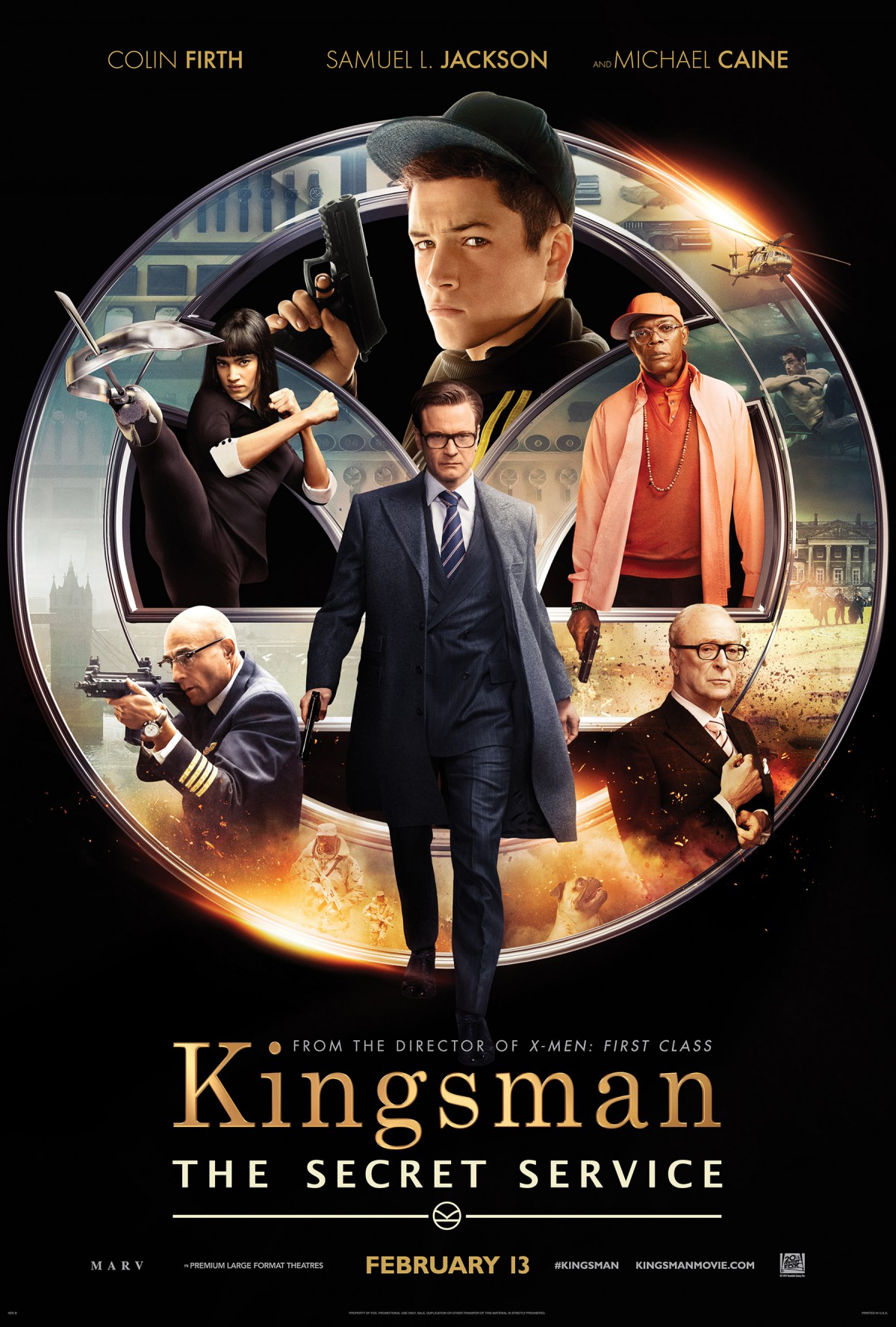
Review: For those who think that James Bond is too stuffy for them, Kingsman is here to the rescue. Taking the British spy thriller genre and spinning it on its head, Vaughn has managed to create one of the most entertaining comic book adaptations and spy movies I have seen in a while. Yes, the plot is absurd and stretches plausibility to breaking point, but it’s a very enjoyable movie to sit through (with a caveat – more on that later), with slick, polished visuals and a great sense of style and humour. It also establishes Colin Firth – surprise, surprise – as a bona fide action movie star, reminiscent of what Taken managed to do for Liam Neeson’s career.

Kingsman does not pretend to be anything else than a glossily packaged spy movie parody, but unlike many parodies, it is a top notch production while wearing its intentions proudly on its immaculately tailored sleeve. Newcomer Taron Egerton is highly charismatic and likably cocky, a perfect fit as the fledging spy-in-training under Colin Firth’s wing. Firth manages to show off a hitherto unseen action hero skill set while remaining impeccably coiffed in his suit. They are ably complemented by a strong ensemble cast, with Samuel L. Jackson stealing the limelight (as he’s prone to do) as a lisping megalomaniac with a strange aversion to blood, and special mention going to Algerian dancer Sophie Boutella as an updated Oddjob (known aptly as Gazelle here), brandishing the coolest killer prosthetic legs I’ve ever seen.

Audiences who have seen Vaughn’s Kick-Ass would be aware that he is not one to shy away from violence, and there is certainly a lot of near-gratuitous violence to be found in Kingsman. The hyperviolence is not for all audiences, and there will be some viewers who may feel it’s a bit too much (the church sequence – no spoilers – can particularly be rather disturbing, even if one takes it purely at face value). The plot makes no sense whatsoever, more at home in the Austin Powers franchise than the Bond franchise, but if one is willing to go along for the ride and not take things too seriously, it is a thrilling, highly entertaining movie well worth its price of admission.

Rating: * * * (out of four stars)

Standard

Unbroken

Genre: Drama

Director: Angelina Jolie

Screenplay: Joel Coen & Ethan Coen, Richard LaGravenese and William Nicholson, based on the book by Laura Hillenbrand

Cast: Jack O’Connell, Domhnall Gleeson, Miyavi, Garrett Hedlund, Finn Wittrock, Jai Courtney, John Magaro, Luke Treadaway, Alex Russell, John D’Leo, Vincenzo Amato, Ross Anderson, C.J. Valleroy, Maddalena Ischiale

Running Length: 137 minutes

Synopsis: Unbroken is an epic drama that follows the incredible life of Olympian and war hero Louis “Louie” Zamperini (Jack O’Connell) who, along with two other crewmen, survived in a raft for 47 days after a near-fatal plane crash in WWII – only to be caught by the Japanese Navy and sent to a prisoner-of-war camp.

Adapted from Laura Hillenbrand’s popular book, Unbroken brings to the big screen Zamperini’s unbelievable and inspiring true story about the resilient power of the human spirit.

Review: Unbroken is a very, very well-made film, excelling in its technical aspects and honestly quite an achievement for second-time director Jolie, who had embarked on making a second war-related movie after her little-seen directorial debut (2011’s In the Land of Blood and Honey). However, the film also feels sterile and perfunctory, lacking heart and a deeper emotionality, despite an excellent performance by newcomer Jack O’Connell. And even though it already runs over two hours, there’s this sense of incompleteness, that there’s a bigger story to be told of what happened to Zamperini after his traumatic ordeal, which deserves more than a few seconds worth of title cards before the end credit crawl.

Louie Zamperini’s life story is an incredible one – in a short span of years, he goes from Olympic athlete to an army officer surviving a plane crash, being stranded almost fifty days at sea on a life raft, followed by more than two years of torture and suffering in various POW camps. Based on Laura Hillenbrand’s biography of Zamperini, Unbroken tells a mostly straight tale, but Jolie chooses not to touch on the lighter aspects of his life. Zamperini was a born leader and apparently devised ways to make life more bearable for himself and his fellow inmates, but this is not covered in the film at all. Jolie instead focuses almost entire on the brutality that Zamperini endured, which makes the narrative more one-sided than it should be. There’s also no redemptive arc in the film, even though it is a significant portion of the biography, which mutes the impact of Unbroken further.

Performances of the ensemble cast are almost uniformly good, with the exception being Miyavi, who plays Zamperini’s sadistic tormentor Mutsushiro “The Bird” Watanabe, who hams it up a little too much and becomes more caricaturish than truly evil. Jack O’Campbell is a relatively fresh face, but manages to take on both the physical and emotional aspects of the role well. It is a difficult role to undertake, but he manages to give an excellent performance, not just in the big moments, but even in the small nuances of action and movement in the quiet scenes.

Jolie had assembled a highly proficient team of technicians for Unbroken, from the Coen Brothers being involved in the script, to Alexandre Desplat for the scoring and Roger Deakins in cinematography. It all works admirably well, especially so for the stunning cinematography by Deakins (which has been aptly rewarded with a nomination in the upcoming Academy Awards), accompanied by excellent production design by Jon Hutman. However, she may still have bitten off a bit more than she could chew with Unbroken as a sophomore effort, resulting in a somewhat lopsided movie that does not sufficiently engage.

Rating: * * ½ (out of four stars)

Standard

Jupiter Ascending

Genre: Sci-Fi

Directors: The Wachowskis

Screenplay: The Wachowskis

Cast: Mila Kunis, Channing Tatum, Eddie Redmayne, Sean Bean, Douglas Booth, Tuppence Middleton

Running Length: 125 minutes

Synopsis: Jupiter Jones (Mila Kunis) was born under a night sky, with signs predicting that she was destined for great things. Now grown, Jupiter dreams of the stars but wakes up to the cold reality of a job cleaning other people’s houses and an endless run of bad breaks. Only when Caine (Channing Tatum), a genetically engineered ex-military hunter, arrives on Earth to track her down does Jupiter begin to glimpse the fate that has been waiting for her all along – her genetic signature marks her as next in line for an extraordinary inheritance that could alter the balance of the cosmos.

Review: Originally slated to open in July 2014, Jupiter Ascending was delayed for a full six months, and is now opening in a non-typical February window (particularly considering it cost US$175 million to make). That in itself is quite an ominous sign, that perhaps The Wachowskis are following the career trajectory of M. Night Shyamalan, and that Jupiter Ascending is not the film that will return them to greatness. Unfortunately, that is exactly the case here – Jupiter Ascending is overproduced, overwrought, and overdone, with a half-baked story and underdeveloped characters in a movie that truly ends in a whimper. While it may have aspirations to be the next big space opera, all it manages to achieve is to be vapid, thoroughly forgettable eye candy. It’s not even in the “so bad, it’s good” category of films, so all it manages is to be a bad sci-fi movie.

While the plot may aspire to be a cautionary fable for modern capitalism, Jupiter Ascending really feels more like a Disney princess fairy tale more than anything else – it has the rags to riches transformation of Jupiter and a tame, PG-13 romantic subplot with an unconventional Prince Charming . Unfortunately, because the Wachowskis obviously weren’t satisfied with something that “prosaic”, they chose to bury the simple plot with layers upon layers of pointless exposition and a frustrating lack of resolution, with multiple characters appearing to do their bit then disappearing for the rest of the film, and an inconsequential conclusion that just does not do the grandiose setting any justice. And despite the baseline simplicity and the endless exposition, the plot still doesn’t make sense, with so many logical gaps that one truly needs to check their brain at the door to wring more enjoyment out of the movie.

There’s no middle ground to the performances in Jupiter Ascending – they are either bland and uninteresting or extremely overwrought. Both Mila Kunis and Channing Tatum (and almost everyone else, honestly) fall into the first category, plus a total lack of chemistry between the two means it’s nearly impossible to feel vested in Jupiter’s plight or their romance. This may be a fault of the script more than the actors, since the whole movie positions Jupiter as a near-hapless damsel in distress, and Caine repeatedly swooping in on his jet boots to rescue her as a literal deus ex machina. This kind of setup does not lend much need to emoting on any level. And then there’s Eddie Redmayne, who is so exceedingly campy in his performance that he seems to be channeling a parody of Meryl Streep – delivering a good portion of his dialogue in a breathy whisper, then suddenly switching to shrieking, nostril-flaring, scenery-chewing mode as an indicator of his rage. Honestly, it’s lazy acting and a far cry from his outstanding performance in The Theory of Everything.

That’s not to say that there isn’t any brilliance in Jupiter Ascending, and that’s exactly why The Wachowskis’ output has been so frustrating to watch. Amidst all the chaff there are actually some good things about the movie. The CGI-laden visuals are impressive and near faultless (though pointless to watch in 3D), and it is clear that much though and effort have been put into bringing the Jupiter Ascending world to life. There are so many interesting spacecraft, technological gadgets, alien species, costumes, landscapes and more, that there seems to be enough to populate a whole TV series, not just a two-hour movie. Alas, it all shuffles by so quickly that one wonders why so much effort was put into realizing the universe and its accoutrements.

One of the most interesting scenes in Jupiter Ascending was a bureaucratic shuffle when Jupiter is first trying to claim her royal title, which sees her being pushed from one bureaucrat to another in a seemingly endless cycle, culminating in an unexpected, but very pleasantly surprising cameo. It’s a telltale sign that the best scene is one entirely devoid of action and flashy CGI (and without Michael Giacchino’s bombastic, overbearing score – a misstep for him), and one wonders that perhaps it is now time for the Wachowskis to go back to their roots and make movies on a limited budget, because it seems the more money they get, the worse their output gets.

Rating: * ½ (out of four stars)

Standard