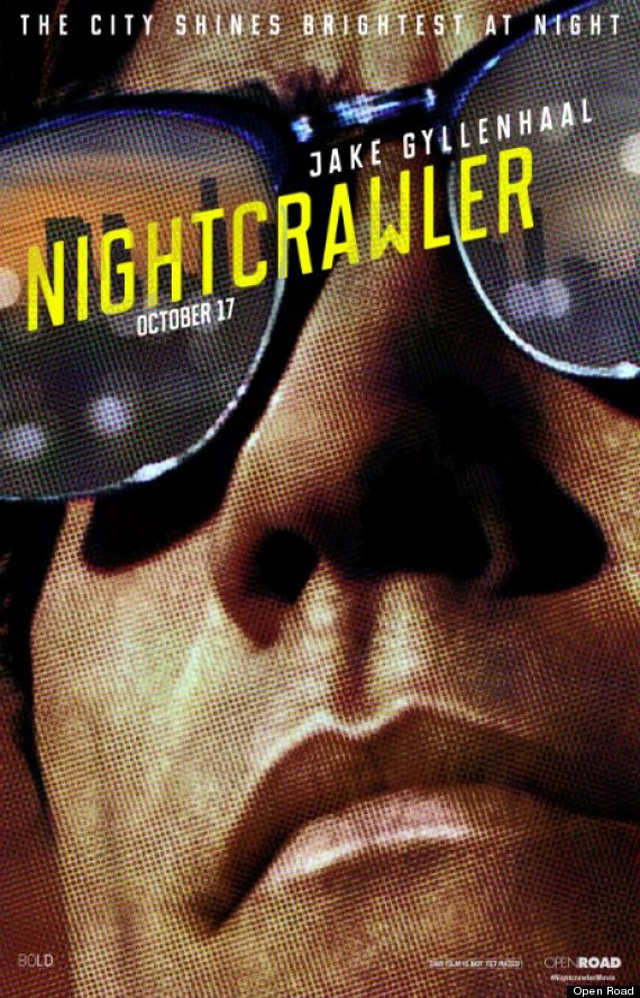
Nightcrawler

Genre: Drama

Director: Dan Gilroy

Writer: Dan Gilroy

Cast: Jake Gyllenhaal, Rene Russo, Riz Ahmed, Bill Paxton

Running Length: 117 minutes

Synopsis: Nightcrawler is a thriller set in the nocturnal underbelly of contemporary Los Angeles. Jake Gyllenhaal stars as Lou Bloom, a driven young man desperate for work who discovers the high-speed world of L.A. crime journalism. Finding a group of freelance camera crews who film crashes, fires, murder and other mayhem, Lou muscles into the cut-throat, dangerous realm of nightcrawling – where each police siren wail equals a possible windfall and victims are converted into dollars and cents. Aided by Rene Russo as Nina, a veteran of the blood-sport that is local TV news, Lou blurs the line between observer and participant to become the star of his own story.

Review: Jake Gyllenhaal has had an excellent body of work so far, with wide-ranging roles that manage to impress time and again (Enemy, Brokeback Mountain, Jarhead, Prisoners, and many more). However, his performance in Nightcrawler is undoubtedly his best yet, and that says a lot about how good it is – highly deserving of a great run at the awards season next year, and on its own is reason enough to give Nightcrawler a go. While Nightcrawler is not without some flaws, it has a mesmerising central performance around a smart, always engaging film, making it impossible to look away for the entire 2-hour running time. This is the poster child for movies that don’t accord audiences any good moments for a pee break.

The most immediate comparison that one can make to Gyllenhaal’s performance is that of Robert De Niro’s in Taxi Driver – Lou Bloom is as much of an anti-hero as Travis Bickle was, although Bloom definitely has less of a moral compass than Bickle. And it’s an equally transformative, unforgettable performance – Gyllenhaal totally disappears into the role, fully embodifying Bloom not just in his physicality (he lost over 20 pounds of weight for the role) but in every aspect. It’s clear that in Nightcrawler, Bloom is the antagonist, and his soulless eyes, forced smile and ruthless, sociopathic focus on the end game is unyieldingly creepy yet fascinating to observe. This is easily one of the best performances of the year, on par with the mind searing turn by Rosamund Pike in Gone Girl.

While Gyllenhaal carries the film on his performance alone, the supporting cast is also quite capable – Rene Russo (Dan Gilroy’s wife, by the way) is the only female presence in the film and leaves a strong impression as the network executive that’s almost willing to do anything for ratings. Bill Paxton plays a small but important role in the film, and despite limited screen time gives a memorable performance as well. Riz Ahmed’s Rick acts as the human foil for Lou, but at times does feel more like a convenient plot device rather than a convincingly written character.

Dan Gilroy pulls double duty as director (his debut) and screenwriter, and manages to excel at both. With such solid performers on board, he wisely chooses a straightforward, unflashy directorial style, but is aided by Robert Elswit hitting it out of the park with excellent cinematography – nighttime Los Angeles has not looked so spectacular since the equally lush take in 2011’s Drive. The scripting is impeccable, and although I question the veracity of how network news footage is acquired (and the sensationalism of news is a very tired, old trope), Gilroy is masterful in ramping up the suspense all the way to the explosive, macabre, yet strangely satisfying denouement.

Rating: * * * ½ (out of four stars)

Standard

The Hunger Games: Mockingjay – Part 1

Genre: Sci-Fi, Action

Director: Francis Lawrence

Writers: Peter Craig and Danny Strong, based on the novel by Suzanne Collins

Cast: Jennifer Lawrence, Josh Hutcherson, Sam Claflin, Woody Harrelson, Donald Sutherland, Liam Hemsworth, Julianne Moore, Philip Seymour Hoffman, Jeffrey Wright, Elizabeth Banks, Natalie Dormer

Running Length: 123 minutes

Synopsis: The Hunger Games: Mockingjay – Part 1 opens with Katniss Everdeen (Jennifer Lawrence) in District 13 after she literally shatters the Hunger Games forever. Under the leadership of President Coin (Julianne Moore) and the advice of her trusted friends, Katniss spreads her wings as she fights to save Peeta (Josh Hutcherson) and a nation moved by her courage.

Review: Despite its best intentions, Mockingjay Part 1 is easily the weakest installment in the Hunger Games franchise thus far. Lionsgate had made the financially-lucrative (but creatively bankrupt) decision to cleave the final installment in two, but unfortunately Mockingjay Part 1 does not work well as a standalone movie, and ends in such an abrupt manner that it can potentially turn casual audiences off from making a return visit for Mockingjay Part 2. The final novel in the Hunger Games trilogy was the grandest in scale, but does not lend itself well to a (probable) 4-plus hour transition to the big screen. Mockingjay Part 1 is ponderously paced, meanders and feels drawn out, and is only sporadically interesting in its two hour plus running time. While the elements that made the first two movies good are still present, they are weighed down by too much unnecessary baggage.

Although “The Hunger Games” is still part of the title of Mockingjay, it is important to note that while there’s war and strife, there’s no Hunger Games being conducted in the movie. While this is not surprising for anyone who has read the novels (like myself), expectations of some audience members will surely be confounded. Mockingjay is a far more static movie, with a very minimal number of action setpieces. Much of it is set underground, in District 13, and with Katniss essentially neutered from most of the action (of any kind), it’s almost like the franchise is banking on the halo effect of her past two cinematic outings to coast by. Even though Jennifer Lawrence is a great actress, she’s really only effective in a handful of scenes in Mockingjay Part 1, a stark difference from the previous two films where she held the audience’s attention from beginning to end. The film does boast a very strong supporting cast of veteran actors, especially the late Philip Seymour Hoffman, but none of them are really given enough time to shine, despite the film’s length.

It doesn’t help that Peeta is separated from Katniss for essentially the whole movie – while Liam Hemsworth’s Gale is around Katniss, the love triangle is essentially DOA since there’s no chemistry whatsoever between Hemsworth and Lawrence, which has already been confirmed in the last two movies, but brought into starker contrast this time round. Fortunately, the romance is a smaller and less consequential component of the film compared to other YA offerings, so it doesn’t completely undermine the movie despite the clunkiness.

Since it’s essentially half a movie, it is difficult to judge if Mockingjay is a befitting swansong for the franchise until Part 2 is released (a full year later, in November 2015). It cannot be denied, however, that nothing much really happens in Mockingjay Part 1, since it’s merely a placeholder for the true conclusion of the film in Part 2, where surely there’s less inaction and an actual denouement. This is the film’s most glaring fault and drowns out almost every positive aspect. While it’s still a perfectly serviceable YA film (albeit a fair bit darker and brooding than most films in the same genre), Catching Fire had set up higher expectations which unfortunately are not met with this half of the finale.

Rating: * * ½ (out of four stars)

Standard

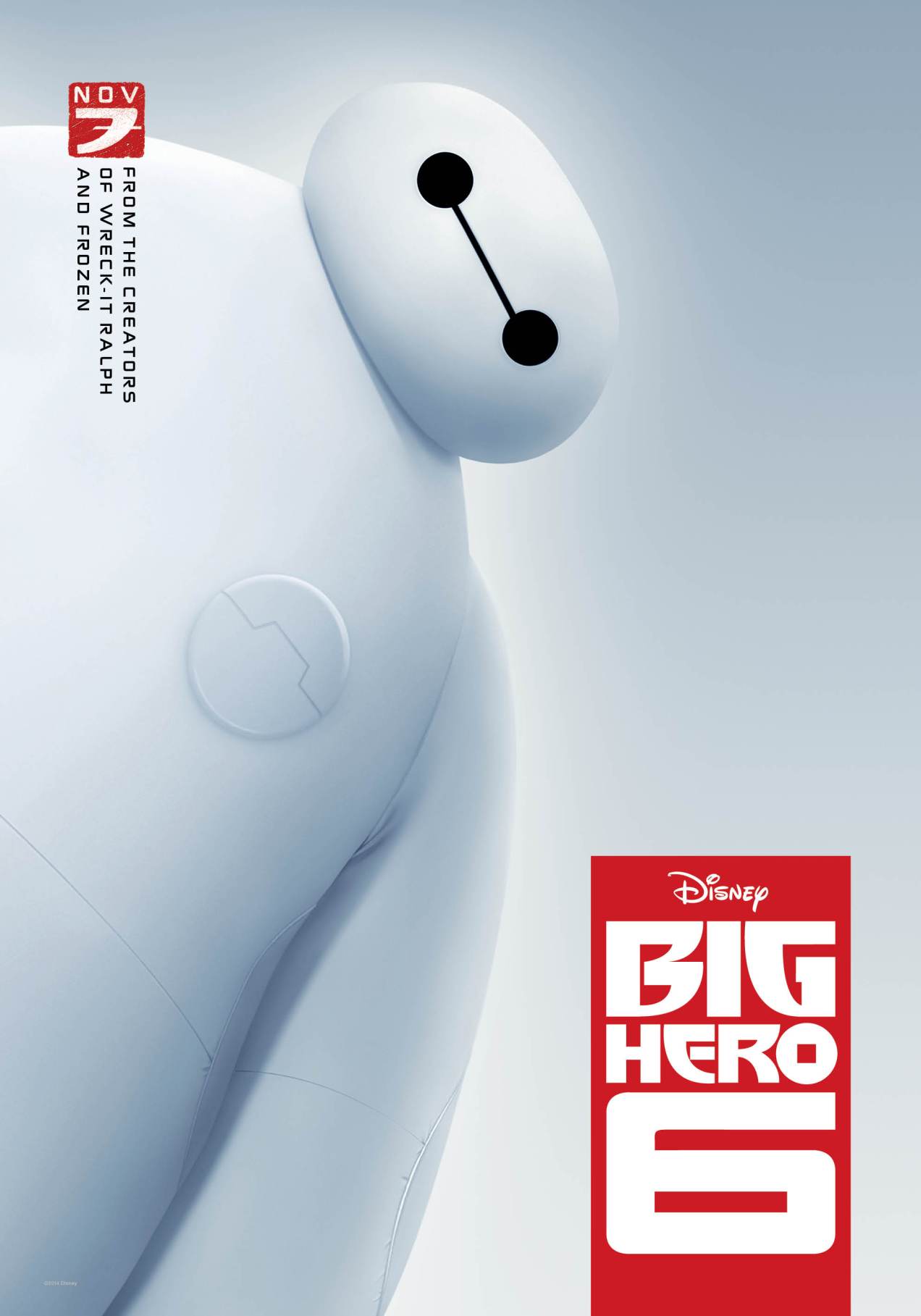
Big Hero 6

Genre: Animation

Directors: Don Hall, Chris Williams

Writers: Robert L. Baird, Daniel Gerson, Jordan Roberts, based on the comic by Duncan Rouleau, Steven T. Seagle

Voice Cast: Scott Adsit, Ryan Potter, Daniel Henney, T.J. Miller, Jamie Chung, Damon Wayans Jr., Genesis Rodriguez, James Cromwell, Alan Tudyk, Maya Rudolph

Running Length: 108 minutes

Synopsis: An action comedy adventure about brilliant robotics prodigy Hiro Hamada (Ryan Potter), who finds himself in the grips of a criminal plot that threatens to destroy the fast-paced, high-tech city of San Fransokyo. With the help of his closest companion—a robot named Baymax (Scott Adsit) – Hiro joins forces with a reluctant team of first-time crime fighters on a mission to save their city.

Review: We have all gotten used to the short film that precedes most animated films these days, but this could possibly be the first time that I feel a feature presentation has been somewhat hurt by the short film before it. While Big Hero 6 is a fun romp for both young and old, the emotional depth (nowadays more commonly referred to as “the feels”) actually pales in comparison to its companion six-minute short Feast, which is an excellent short film. And while this is a good, if somewhat unexpected, addition to the Marvel Comic Universe movies, the fact remains that there is a better superhero animation in the Disney/Pixar stable (no prizes for guessing which).

As always, I will touch on the short film first. Feast is a recounting of the relationship a Boston terrier has with his master over 12 years, except via the unusual angle of his food. It seems like such a simple conceit, but like the best of animation, it is evocative and manages to tell a very engaging story. There is a good chance that many animal lovers or pet owners will choke up (like I did) over Feast, which is high praise given that it unfolds in such a short span of screen time. If this is what writer-director Patrick Osborne can achieve in under ten minutes, I am definitely looking forward to his first feature film (surely not too far away).

Perhaps it’s a direct result of Pixar’s stellar output over the years (and to be fair, a smattering of animated films from rival studios) that expectations for animated films have risen dramatically. It doesn’t help that technology has advanced to a point that spectacular visuals are almost a given in any computer animated film these days, and often the differentiating factors come down to the storyline, the number of A-list actors in the voice cast, and the production design. The need to sell animated films with Hollywood actors has become almost a liability however, because not all name actors are necessarily good in voice roles. Thankfully, Big Hero 6 eschews this, going instead with a bunch of relatively lesser-known actors that do pretty well in their roles.

As for the visuals, there’s really nothing to complain about, except once again this is not a film that needs to be seen in 3D. The character designs are uniformly excellent, with some truly colourful and creative flourishes, and the setting of San Fransokyo is wonderfully imagined, creating an inventive mashup between San Francisco and Tokyo. Then, there’s Baymax – Disney has created a surefire marketing phenomenon with the most cuddly robot design I’ve ever seen, and despite straying far, FAR away from the source graphic novels, will capture the hearts and minds of audiences of all age groups.

This is not the first movie in the Marvel Comic Universe to work with a relatively obscure Marvel property, as Guardians of the Galaxy lays claim to being the first. There’s also an interesting parallel between the two movies, since both are about a motley crew of unlikely heroes, and also touches on grief and loss. I would say that the themes are better handled in Guardians of the Galaxy versus Big Hero 6, but this is a somewhat unfair comparison given that Big Hero 6 is aimed at a much younger audience. Given that there will be a lot of young ones watching the movie, the concept of death is actually quite elegantly handled, even more so than How to Train Your Dragon 2 (I’ll keep things vague although the full trailer does give part of this storyline away).

Most of the film stays pretty light-hearted with a number of fun action set pieces, and it would take a heart of stone not to be somewhat taken by Baymax and his lovable antics, so it is not difficult to recommend the film, especially for younger audiences. There are a number of more affecting moments, to be sure, but Feast manages to do better in this aspect than the whole of Big Hero 6 (hence the earlier comment about the short film hurting the feature film, something that I have not experienced prior). Although the superhero origin story is done to death at this point, Big Hero 6 offers a somewhat fresh perspective, even if it doesn’t match the narrative strength of The Incredibles, still the gold standard for animated superhero films a decade after its release.

P.S. The end credit sequence is a blast, and features one of the best cameos I have seen to date, particularly so for fans of the Marvel universe. Definitely worth staying through the credits for.

Rating: * * * (out of four stars)

Standard

Interstellar

Genre: Sci-Fi, Drama

Director: Christopher Nolan

Writers: Jonathan Nolan, Chris Nolan

Cast: Matthew McConnaughey, Anne Hathaway, Jessica Chastain, Ellen Burstyn, John Lithgow, Michael Caine, Casey Affleck, Wes Bentley, Bill Irwin, Mackenzie Foy, Topher Grace, David Gyasi, Timothee Chalamet, David Oyelowo, Will Devane, Matt Damon

Running Length: 169 minutes

Synopsis: A group of explorers make use of a newly discovered wormhole to surpass the limitations on human space travel and conquer the vast distances involved in an interstellar voyage.

Review: If I were to pick just one word to describe Christopher Nolan’s latest film, it would have to be “ambitious” – Interstellar is an epic undertaking that doesn’t always succeed, but you have to give Nolan brownie points just for trying. Although this sounds like faint praise, Interstellar is actually an excellent cinematic experience – the sheer scope and spectacle of the film is more than enough reason to give this movie a once-over on the big screen (and I am serious about “big screen” – this movie deserves to be seen on IMAX – more on this later), and even if the final reels come a little unhinged, it does not undo what happens in the two hours prior.

Although the film runs almost three hours long, it never feels belaboured, and plotlines are so engaging and well developed that the 169 minute running time passes by very quickly. Nolan smartly intertwines plot heavy scenes with action setpieces which are nothing short of stunning, taking place on a variety of very different landscapes. If you thought the action setpieces in Nolan’s Inception and Batman trilogy were impressive, you ain’t seen nothing yet.

While Interstellar is essentially a sci-fi film, Nolan manages to inject a lot of emotionality into the proceedings. It treads the fine line between emotional resonance and cheesiness, but most of the time the drama does hit the right notes, none more so than a mid-movie segment in which the time warping capabilities of a black hole is brought into stark relief. Matthew McConnaughey is extremely impressive in this sequence, and without spoiling the proceedings, the range and depth of emotions that he displays in those five minutes could rival the entire cast of some other sci-fi films, and brings to mind Sandra Bullock’s similarly excellent turn in Gravity. The supporting cast is strong, but undeniably McConnaughey is the one that holds the entire film together. It would not be a surprise to see him nominated second year running for Best Actor.

That the film throws so many scientific principles and terms at the audience, and yet still remains rather accessible, is a feat in itself. Most of it seems legit too, especially since famed CalTech astrophysicist Kip Thorne consults on the film and is credited as an Executive Producer. It does get a bit too farfetched and clunky near the end, and the denouement feels a little rushed, as though Nolan is aware that dwelling too long on the postscript would bring the plot holes into focus. Interstellar is not as mind-bending as some of Nolan’s other work (it was pretty clear to me how the plot would pan out eventually, midway through), but audience members will nevertheless need to prepare for a mental workout when watching the film – this is not your usual Hollywood sci-fi action blockbuster.

In terms of technical accomplishment, Interstellar is about as flawless as it gets. Every technical aspect is remarkably executed – art direction, production design, sound, visual effects, CG work, cinematography, editing, musical score and more – one simply cannot ask for more in a movie. This is a big budget Hollywood movie done right, and I will be surprised if there would not be a flurry of nominations and awards in technical categories come awards season next year. Having been shot entirely on celluloid, bucking the digital trend, the film’s scale and beauty is best appreciated in IMAX, and is a necessity in my opinion.

Interstellar is such a massive undertaking that the fact that Nolan manages to pull it off is impressive enough, and for the film to actually be this accomplished means it automatically takes a spot in my best-of list for 2014. Despite some blemishes, it is the cinematic experience to beat in 2014, and much as it sounds like a cliché: if you watch one movie this year, make it Interstellar.

Rating: * * * ½ (out of four stars)

Standard

Horns

Genre: Horror, Romance, Comedy

Director: Alexander Aja

Writer: Keith Bunin, based on the novel of the same name by Joe Hill

Cast: Daniel Radcliffe, Juno Temple, Max Minghella, Joe Anderson, Kelli Garner, Heather Graham, David Morse, Kathleen Quinlan, James Remar

Running Length: 120 minutes

Synopsis: Horns is a supernatural thriller driven by fantasy, mystery and romance. The film follows Ig Perrish (Daniel Radcliffe), the number one suspect for the violent rape and murder of his girlfriend, Merrin (Juno Temple). Hungover from a night of hard drinking, Ig awakens one morning to find horns starting to grow from his own head and soon realizes their power drives people to confess their sins and give in to their most selfish and unspeakable impulses – an effective tool in his quest to discover the true circumstances of his late girlfriend’s tragedy and for exacting revenge on her killer.

Review: It was probably a mistake from the get-go to adapt Horns into a film – I have not had the opportunity to read the novel by Joe Hill (son of Stephen King), but if all the elements in the movie were found in the source novel, it should definitely be classified under the “unfilmable” category. Horns simply fails to work as a movie – it is overstuffed with clashing elements and can’t decide whether it wants to be a dark comedy, a horror, a whodunit or a romance, and tries to be everything all at once. The end result is unsurprisingly a muddled mess that even Harry Potter can’t save, and a film that swings so wildly in tone and pace that it feels like it was helmed by an amateur.

And to be honest, Daniel Radcliffe is actually part of the problem. One can definitely understand the need to divorce himself from an iconic role like Harry Potter, but whilst Radcliffe has appeared in a good number of indie films in the process, his performance in Horns is too much. Radcliffe has to realize that his dial need not be set at 11 the entire film, and just because it’s a forceful performance doesn’t mean it’s a good one. Radcliffe’s portrayal of Ig is so forced that all subtlety is lost, and although he does prove that he can work with a broad range of emotions, and there are moments of brilliance amidst all the overacting.

Although it seems that Horns has aspirations to be a genre bender, it does not do so very successfully. The coming of age flashbacks are pretty decent, but the romance, the mystery and the horror are all subpar. We’re never fully convinced of the supposedly deep love between Ig and Merrin, and the mystery has a laughably obvious reveal, done in by screenwriter Keith Bunin’s script which telegraphs every twist way in advance. The horror just comes across at best as being darkly comic (not exactly a bad thing, but the film doesn’t go far enough with this aspect either), and at worst it’s farcical and underscored by awful CG effects (some of the worst I’ve seen in a long while).

The final reel of Horns is really what takes the cake – it feels as though the writers were making up the ending as they went along, and the result is a lazy, inexplicable, genuinely ridiculous denouement that threatens to unravel the entire movie. The film ends with a whimper instead of a bang, and that it took a good two hours to get to the unsatisfying finale is just rubbing salt in the wound. Although there were a number of enjoyable moments in the film, Horns is simply too inconsistent to earn  a solid recommendation.

Rating: * ½ (out of four stars)

Standard

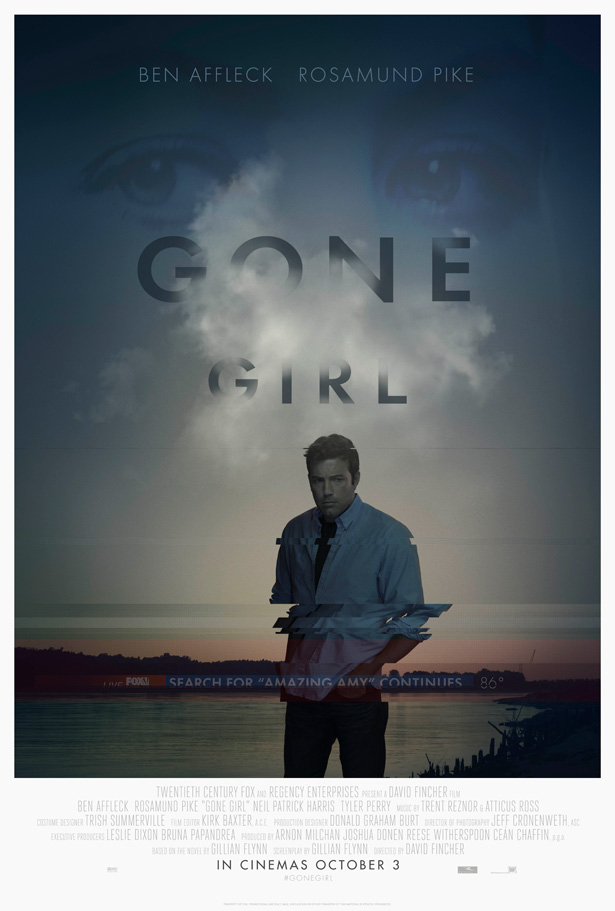
Gone Girl

Genre: Drama

Director: David Fincher

Writer: Gillian Flynn, based on her novel of the same name

Cast: Ben Affleck, Rosamund Pike, Neil Patrick Harris, Tyler Perry, Carrie Coon, Kim Dickens, Patrick Fugit, David Clennon, Lisa Banes, Missi Pyle, Emily Ratajkowski, Casey Wilson, Lola Kirke, Boyd Holbrook, Sela A. Ward

Running Length: 149 minutes

Synopsis: On the occasion of his fifth wedding anniversary, Nick Dunne (Ben Affleck) reports that his beautiful wife, Amy (Rosamund Pike), has gone missing. Under pressure from the police and a growing media frenzy, Nicks portrait of a blissful union begins to crumble. Soon his lies, deceits and strange behavior have everyone asking the same dark question: Did Nick Dunne kill his wife?

Review: I have long been an ardent fan of David Fincher’s work, and it comes as no surprise (to me at least) that his latest, Gone Girl, is yet another excellent cinematic achievement. Adapted from Gillian Flynn’s bestselling 2012 novel of the same name, Gone Girl is flawlessly directed, capably supported by Fincher’s regular crew, and features a number of brilliant performances, none more so than Rosamund Pike’s career-defining turn as Amy Dunne. Gone Girl is an impossibly deft mix of a police procedural, a whodunit, a domestic drama, and a darkly comic exploration of the state of media culture in present times. It runs a long 149 minutes, but is deeply absorbing from the get-go, and qualifies easily as one of the must-watch films this year.

It is best to enter a viewing of Gone Girl with little to no foreknowledge of the plot, and thankfully the trailers released for the film has not managed to give anything away (kudos to 20th Century Fox for showing enough restraint and respect for the film). As is my practice, this review will not contain any obvious spoilers, but readers who are averse to spoilers of any magnitude may want to avoid proceeding any further till after watching the movie.

It’s really quite impossible to take the story of Gone Girl seriously, and it goes far, far down the rabbit hole in terms of implausibility. But therein lies the beauty of pairing the source material with Fincher – even though I knew it made no sense whatsoever, it did not detract from the viewing experience at all because the film was so well made. All the Fincher regulars are involved – the film is shot beautifully by cinematographer Jeff Cronenweth, edited flawlessly by Kirk Baxter (the dual timeline narrative structure could not have been easy to edit coherently), and the pulsing, electronica-infused classical score is perfectly suited to the film’s unsettling nature.

What truly makes the movie stand out, however, is the quality of performances from all the actors involved. Every speaking role leaves a strong impression, particularly Kim Dickens whose hard-as-nails police investigator effortlessly steals the limelight every time she makes an appearance. Then there are the twin performances from Ben Affleck and Rosamund Pike – Affleck has proven his solid acting skills in previous outings, but here he is an inspired choice as the cocky writer who gradually loses his dignity and pride. The constantly shifting perspective means you can never be too sure of Nick’s intents and motives, and Affleck manages to convince in an understated, restrained yet nuanced performance.

And then there’s Rosamund Pike. Pike has done solid work in supporting roles over the years, but here she is a revelation as Amy. The role requires a truly broad emotional scope, and she manages to nail all of them, from wide-eyed ingénue to demure enchantress to being cold and calculative. Charismatic yet chilling, her performance consistently demands the attention of the audience, and feels like it’s multiple roles compressed into one.  That she manages to fully embody this complex character is a triumph – this is a star-making role for Pike and one I feel that’s deserving of an Oscar nomination, if not a win. (A side anecdote – her performance in a scene was so impressive that some audience members in the normal screening I attended began to applaud spontaneously.)

That the story and its internal logic starts to unravel in Gone Girl’s final reels isn’t all too material to the enjoyment of the film – by then, Fincher and team have managed to weave such an engrossing, deliciously macabre tale that the old adage that it’s the journey, not the destination rings true. Anyone with a penchant for the twisted will definitely relish this dark, stylish and sexy movie.

Rating: * * * * (out of four stars)

Standard

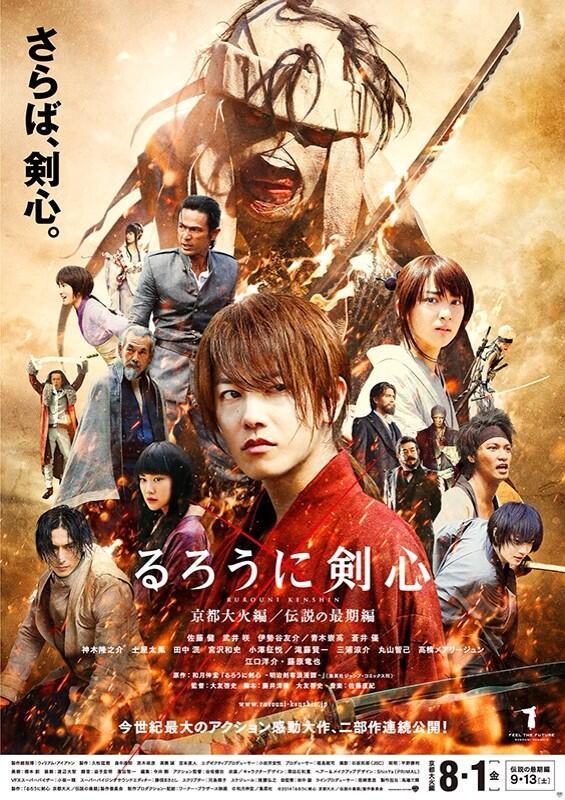
Rurouni Kenshin: The Legend Ends

Genre: Action

Director: Keishi Ohtomo

Writers: Kiyomi Fujii, Keishi Ohtomo, based on the original comic “Rurouni Kenshin” by Nobuhiro Watsuki

Cast: Takeru Satoh, Tatsuya Fujiwara, Emi Takei, Yusuke Iseya, Munetaka Aoki, Yu Aoi, Ryunosuke Kamiki, Tao Tsuchiya, Min Tanaka, Masaharu Fukuyama

Running Length: 135 minutes

Synopsis: To stop Makoto Shishio (Tatsuya Fujiwara) who aims to conquer Japan, Kenshin (Takeru Satoh) arrives in Kyoto and tries to face off against Shishio’s troops. However, his enemy has begun its course to start invading Tokyo with the steel-reinforced battleship. To save captured Kaoru (Emi Takei) who is thrown into the sea by Shishio’s men, Kenshin also dives in after her but is washed ashore alone, unconscious. Kenshin recovers with the help of Seijuro Hiko (Masaharu Fukuyama), the master of Kenshin who happens to find him on the shore. He realises he is no match for Shishio unless he learns the ultimate technique of his sword style, and begs the master to teach him. In the meantime, Shishio finds that Kenshin is still alive, and puts pressure on the government to find Kenshin and execute him in public for his sins during his days as the “Battosai the Killer”. As Kenshin faces his biggest challenge, can Kenshin really defeat his fiercest enemy Shishio, and be reunited with Kaoru?

Review: Unlike most sequels, the wait for The Legend Ends has been pretty short, with less than two months separating the release of Kyoto Inferno and The Legend Ends. The three-movie arc concludes with this film, and fortunately most of the loose ends from the previous movies are tied up here. The film is an unabashed “fan service” film, but works less successfully if one is not acquainted with the franchise and its characters. A major caveat: this is not a movie to watch on its own – at the very least, audiences are expected to have watched Kyoto Inferno, otherwise it would be near impossible to make head or tail of the proceedings.

Strangely, although The Legend Ends picks up where Kyoto Inferno left off, the starting reels are very slow going, and narratively the film comes to an almost complete standstill while Kenshin trains with his master. Such a structure only makes sense if the films are watched back to back, and this is indeed one of the biggest failings of The Legend Ends when seen on its own in the cinema.

Fortunately, the action picks up in the second half of the movie, with some of the best close-quarters swordfights I have seen in a long while, all done with little or no CG work involved. The amount of action in the second half more than makes up for the unenergetic first half, and once things get in gear the movie becomes much easier to get into. The plot remains somewhat muddled, with the supposed political intrigue failing to make much of an impression apart from being a plot device to move the film to its eventual conclusion.

The films are filled with familiar characters from the manga and anime (another indication of the extent of fan service accorded in the films), but the end result is that many of them get relatively short shrift. The most egregious of this is the Ten Swords, introduced in Kyoto Inferno and supposedly would prove to be challenges to Kenshin, but instead are mostly nothing more than fleeting cameos. Even Shishio is missing for a large part of the movie, again something that really only makes sense if the movies are viewed at one go. Once again, the romance between Kenshin and Kaoru remain unconvincing, and their eventual reunion feels anti-climactic despite a valiant attempt at buildup.

With The Legend Ends, it is clear that this Rurouni Kenshin two-parter should never have been structured in this manner. While it is satisfying to see the full story arc resolve, there is once again so much narrative excess in The Legend Ends that the two films ought to have been re-edited into a single, less rambling film. The success of The Legend Ends is assured, since anyone who watched Kyoto Inferno would definitely want to see how the story concludes, and there is enough in the film to warrant a visit to the cinema, but the viewing experience would have been much improved if the choice was made to combine the films.

Rating: * * * (out of four stars)

Standard

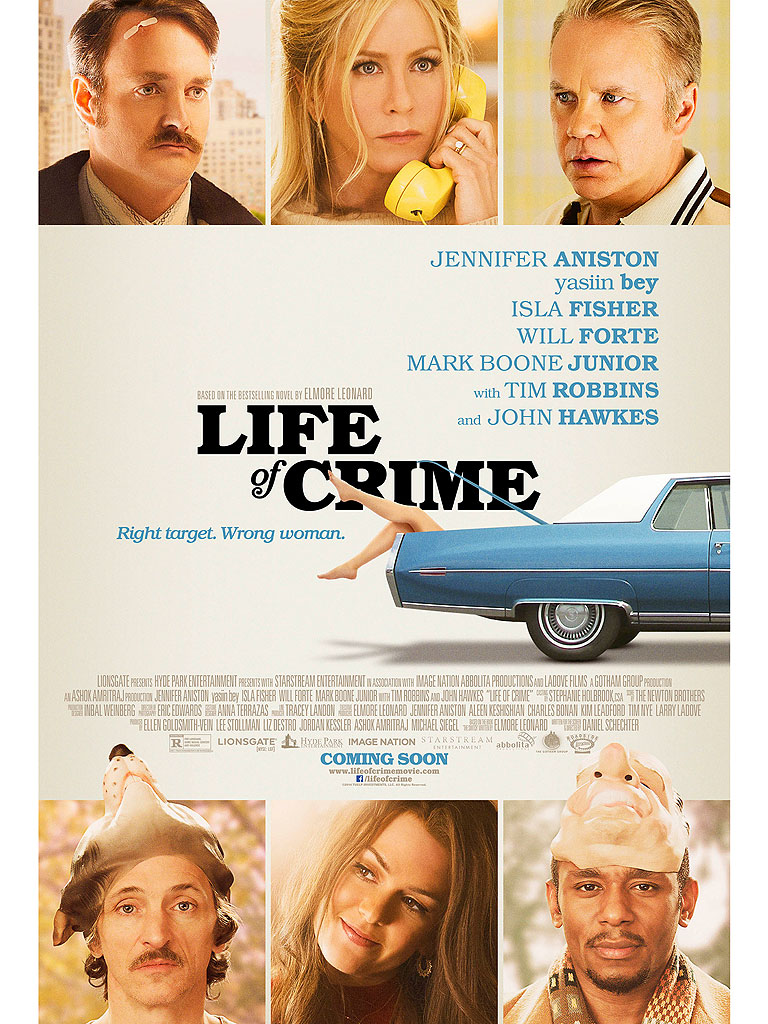
Life of Crime

Genre: Drama

Director: Daniel Schechter

Writer: Daniel Schechter, based on the novel “The Switch” by Elmore Leonard

Cast: Jennifer Aniston, Mos Def (as Yasiin Bey), Isla Fisher, Will Forte, Mark Boone Junior, Tim Robbins, John Hawkes

Running Length: 99 minutes

Synopsis: Mickey (Jennifer Aniston), the wife of a corrupt real estate developer (Tim Robbins) is kidnapped by two common criminals (Yasiin Bey and John Hawkes), who intend to extort him with inside information about his crooked business and off-shore accounts. But the husband decides he’d actually rather not pay the ransom to get back his wife, setting off a sequence of double crosses and plot twists that could only come from the mind of Elmore Leonard.

Review: One can be forgiven, in the opening minutes of Life of Crime, for thinking that the projectionist had somehow played a reel of American Hustle by mistake. And indeed, the film does bear some resemblance to American Hustle, since both a crime capers set in the 70s. Life of Crime is the more low-key movie, and though the plot is sporadically entertaining, the film does not leave much of an impression by the time the credits roll.

There have been a good number of Elmore Leonard adaptations over the years, and this one sits in the middle of the pack. Having not read the source novel, I am unsure how faithful the adaptation is, but suffice to say that the plot and its twists would not be very surprising for anyone with a rudimentary knowledge of caper movies. Having said that, there are a good number of scenes which are set up quite well and the characters’ interactions are rather interesting to observe. Dialogue is also classic Elmore Leonard, which is to be expected since he was quite involved in the project prior to his death last year.

Jenifer Aniston is most known for her comedic roles, but has proven she has what it takes to be a thespian in some smaller movies. She is actually very good here, much better than I had expected, and easily becomes the emotional centre of the film. She is quite capably supported by the rest of the ensemble cast, and I actually enjoyed this ensemble more than the American Hustle posse of characters. However, the cast is less memorable than prior Leonard adaptations (a good handful come to mind – Out of Sight, Jackie Brown, Get Shorty), and although it provides light entertainment, the slightly meandering plot and relatively low energy level of the film did leave me feeling a bit underwhelmed at the end.

Rating: * * ½ (out of four stars)

Standard

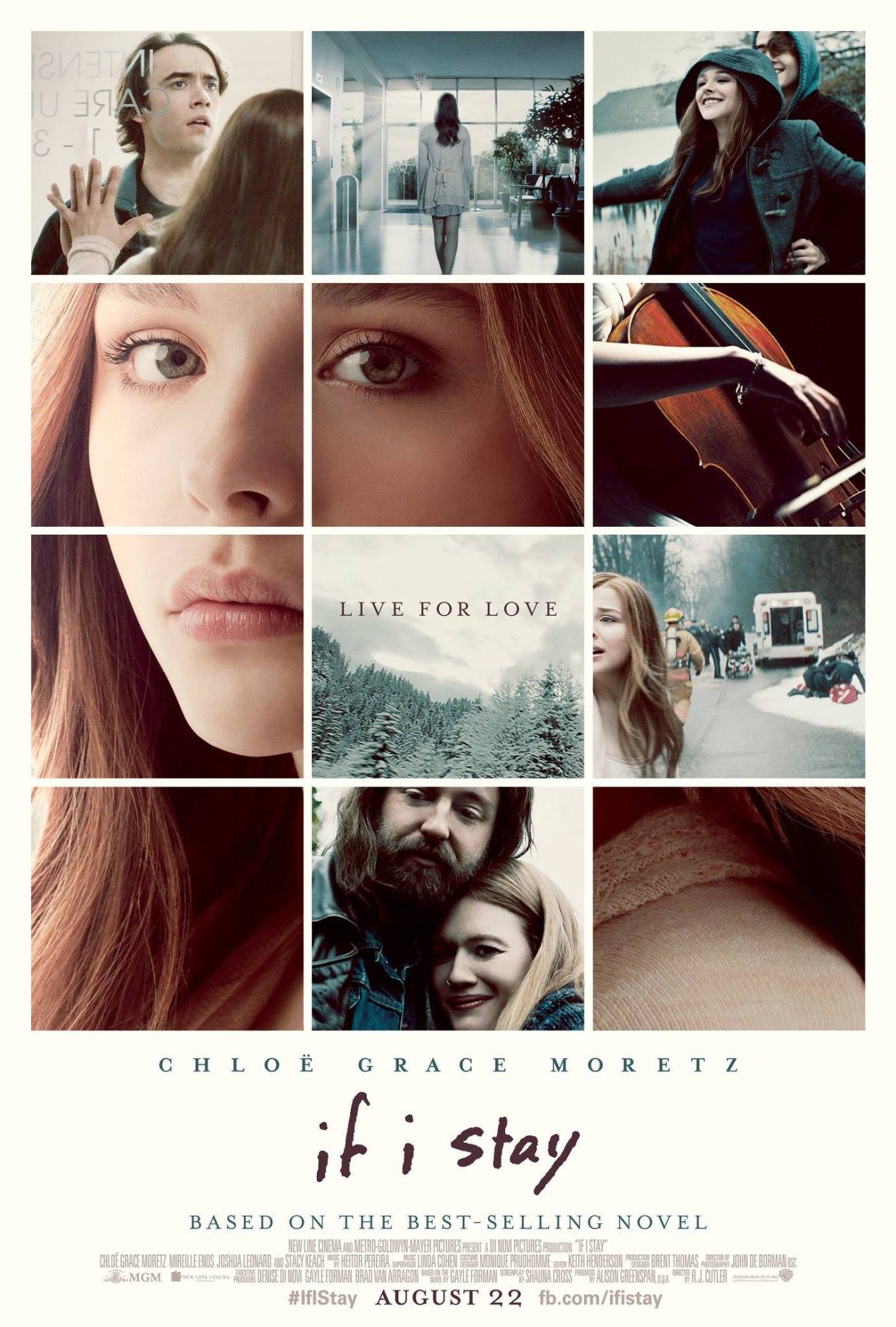
If I Stay

Genre: Drama

Director: R. J. Cutler

Writer: Shauna Cross, based on the novel by Gayle Forman

Cast: Chloe Grace Moretz, Mireille Enos, Jamie Blackley, Joshua Leonard, Liana Liberato, Aisha Hinds, Stacy Keach, Lauren Lee Smith, Gabrielle Rose, Jakob Davies, Gabrielle Cerys Haslett

Running Length: 107 minutes

Synopsis: Mia Hall (Chloe Grace Moretz) thought the hardest decision she would ever face would be whether to pursue her musical dreams at Juilliard or follow a different path to be with the love of her life, Adam (Jamie Blackley).  But what should have been a carefree family drive changes everything in an instant, and now her own life hangs in the balance.  Caught between life and death for one revealing day, Mia has only one decision left, which will not only decide her future but her ultimate fate.

Review: There’s a certain familiarity that comes with YA adaptations these days – it’s almost invariably set in the perspective of the teenage girl (that is the target demographic, after all), and regardless of the quality of the movie, the soundtrack will always be quite listenable, though bordering on the mournful, emo side. If I Stay does not vary from these conventions at all, but despite the best intentions of first-time feature film director Cutler (who had previously cut his teeth on documentaries) and the concerted thespian effort of Chloe Grace Moretz, the film comes across as being just a hair too manipulative and mawkish to earn a solid recommendation.

The narrative structure deviates from the norm – although it starts with a typical first person narrative, the catastrophic accident that lands Mia comatose in hospital also seems to cause an out of body experience for her, and the remainder of the film sees Mia moving about metaphysically (so to speak) in the hospital, unseen and unheard by those around her, coupled with multiple flashbacks to key moments in her life to date. This structure makes it different from most other YA adaptations, but fails to hide the fact that the story is really quite banal, with most of the flashbacks failing to resonate emotionally, despite the rather insistent efforts of the scribe. Therein lies the biggest problem of If I Stay, that it feels way too artificial, from the too-hip parents, the too-cute couple and the incessantly eloquent bon mots that seem to tumble out at will from all the characters’ mouths.

Chloe Grace Moretz is a relatively young actress (just 17 years old) but has been rather prolific of late, and her strong work in If I Stay is one of the key reasons why the film remains watchable. Setting aside the fact that Mia is way too precocious to be believable, Moretz manages to put together a nuanced performance that is far better than the source material would require. Moretz manages to outclass almost everyone in the cast, and the thespian shortcomings of Jamie Blackley in particular are unfortunately thrust into the spotlight quite regularly. If I Stay ends up being a decidedly mixed bag of offerings, a pedestrian YA adaptation that has limited appeal outside of fans of the source novel.

Rating: * * (out of four stars)

Standard

Rurouni Kenshin: Kyoto Inferno

Genre: Action, Drama

Director: Keishi Ohtomo

Writers: Kiyomi Fujii, Keishi Ohtomo, based on the original comic “Rurouni Kenshin” by Nobuhiro Watsuki

Cast: Takeru Satoh, Tatsuya Fujiwara, Emi Takei, Yusuke Iseya, Munetaka Aoki, Yu Aoi, Ryunosuke Kamiki, Tao Tsuchiya, Min Tanaka

Running Length: 139 minutes

Synopsis: Kenshin Himura (Takeru Satoh) is a legendary swordsman in the wars accompanying the turbulent fall of Japan’s Shogunate in the 19th century. Once feared as ‘Battosai the Killer’, he has adopted a peaceful life since the arrival of the ‘new age’ in Japanese history. But Makoto Shishio (Tatsuya Fujiwara), the ‘Shadow Killer’ who succeeded to Kenshin’s position in the service of the new government, has since then been active in the Kyoto underworld. Because he knew too much of the dark side of the new government, he was stabbed and his body set on fire. He survived, however and, wrapped in bandages, has raised an army of disaffected former samurai with the aim of overthrowing the new regime. Agreeing to a request by Toshimichi Okubo, the Home Minister, Kenshin leaves his friends in Tokyo and sets out for Kyoto. He and Shishio are a match in skill and in wits, but their aims are opposite. Kenshin seeks to preserve the nation without breaking his vow that he will kill no more.

Review: With Hollywood blockbusters crowding the cinemas, it’s little wonder that the jidaigeki (period drama) genre of Japanese cinema has become a shadow of its former self, and apart from the Rurouni Kenshin series itself, decent chanbara films have been few and far between. Kyoto Inferno is the follow up to the first Rurouni Kenshin film (in 2012), and perhaps more importantly, is part one of a two-part epic feature (Rurouni Kenshin: The Legend Ends opens in Singapore about a month later on 9 October). And much like other films that are cleaved into two, it’s perhaps a bit unfair to pass judgment on what essentially is half a movie and not on the entire body of work.

Yet, it’s also a necessity that each film should be able to stand on its own, and in a way Kyoto Inferno does succeed to a certain extent. Although the film is very slow going, Kyoto Inferno manages to establish the characters and their motives (it can get a little confusing, but prior knowledge of the Rurouni Kenshin series or the previous movie is not required), as well as set the stage for what would likely be a much more kinetic second film. This unevenness is one of the bigger problems of the film, because it is likely that there will be audiences that go into Kyoto Inferno expecting swordfights galore and not a weighty drama, even if it’s good drama for most of the film. Fortunately, the pace does pick up sporadically in a number of well choreographed action sequences. The action in Kyoto Inferno seems largely to be traditional stunt work, and CG has been kept to a minimum, a refreshing change from typical Hollywood fare these days.

Although no one is going to carry home award trophies for their acting in Kyoto Inferno, at least each actor bears a good resemblance to their manga/anime counterparts. Tatsuya Fujiwara does manage to impress as his turn as Shishio is appropriately menacing despite acting entirely behind a mask of bandages. Much emphasis is placed on the romance between Kenshin and Kaoru, this to me is the weakest link in the film, as the two actors share very little onscreen chemistry and the dalliance simply does not convince.

It seems to be a trend for filmmakers to split finales nowadays, and although in this case the wait is a fair bit shorter than usual, it is still a bugbear to me. Did this installment Rurouni Kenshin need to be played out over two full-length movies? The answer once again is no – there’s so much narrative excess in Kyoto Inferno that much of it could have been edited out in the first place with very little loss to the structure of the film. It remains to be seen if The Legend Ends would justify the two part treatment, but perhaps the better route would have been to release a single film cinematically then a director’s cut later on.

Rating: * * * (out of four stars)

Standard