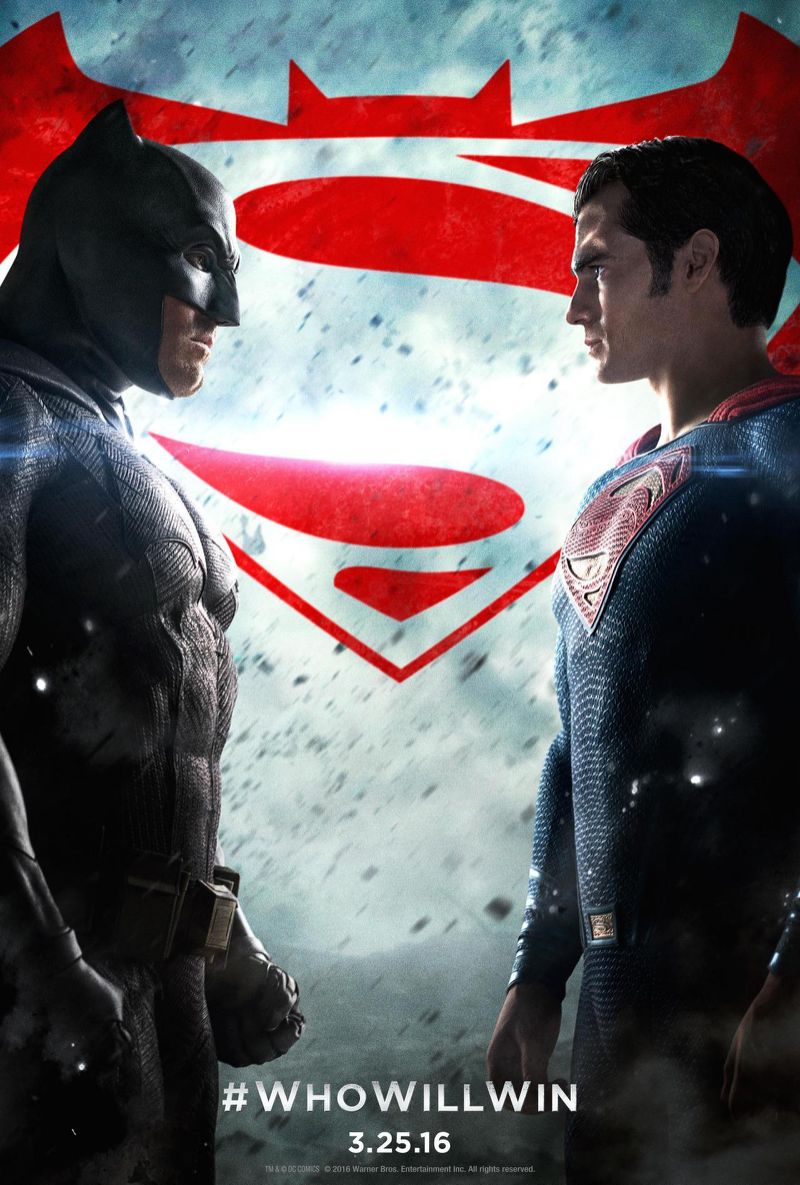
Batman v Superman: Dawn of Justice

Genre: Action

Director: Zach Snyder

Screenplay:  Chris Terrio, David S. Goyer

Cast: Ben Affleck, Henry Cavill, Amy Adams, Jesse Eisenberg, Diane Lane, Laurence Fishburne, Jeremy Irons, Holly Hunter, Gal Gadot, Scoot McNairy, Michael Shannon

Running Length:  152 minutes

Synopsis: Fearing the actions of a god-like Super Hero left unchecked, Gotham City’s own formidable, forceful vigilante takes on Metropolis’s most revered, modern-day saviour, while the world wrestles with what sort of hero it really needs. And with Batman (Ben Affleck) and Superman (Henry Cavill) at war with one another, a new threat quickly arises, putting mankind in greater danger than it’s ever known before.

Review:  It was inevitable, after the incredible box office successes of the Marvel Comic Universe, that competing comics giant DC would want a piece of the pie too. And thus the DC Extended Universe was born, with the first salvo fired being Batman v Superman: Dawn of Justice (shorthanded to BvS for the rest of the review), and a slew of movies announced all the way to 2020. However, based on BvS alone, one wonders if the DCEU is already off on a wrong foot from the get-go. While the film does have its merits and some high points, BvS is also mired with issues, ranging from terrible writing, an overlong (way, WAY overlong) running time, and a complete lack of joy in the proceedings.

Given that the film title states that it’s Batman v Superman, one would not expect that it takes almost 90 minutes for the premise to be setup, and that the setup is such a weak and unconvincing one. The conflict between the two superheroes is just not believable, and even though it presents an interesting angle (essentially, who watches the watchmen, a theme also explored by Snyder’s Watchmen adaptation in 2009), the twists and turns needed to get there just does not work on any level. This is not aided by the lack of anything for the audience to get emotionally invested in – while the film tries to be serious and weighty, there’s very little narrative and backstory for the audience to latch on to, which gives BvS very little dramatic heft. And do not get me started on how the “animosity” is resolved eventually, which is so contrived it truly beggars belief.

While the same self-seriousness worked well in Christopher Nolan’s Dark Knight trilogy, it already proved to be a bit of a miss in Man of Steel as it was quite a departure from Superman’s established canon, both in film and in print. This is further exacerbated in BvS – while no one is expecting a comedy, Snyder and his scribes do not seem to understand that being serious doesn’t mean sapping the joy out of a superhero movie, especially one that contains both Superman and Wonder Woman. BvS doubles down on the dourness of Man of Steel, and is indeed one of the most (if not the most) downer of a superhero movie I’ve watched in years.

Despite the initial outcry, Ben Affleck is actually a reasonable replacement for Batman, both in his physicality and in his performance. However, Henry Cavill remains a very wooden Superman, only looking the part when he shows up in the iconic spandex suit and cape. Jesse Eisenberg is terribly miscast, and his supposed psychotic Lex Luthor comes across more like an annoying teenager with a ridiculously long list of nervous tics and twitches. It is truly hard to believe that two intelligent beings like Batman and Superman falling for his rather simplistic schemes of manipulation. The women all fare better, but are all relegated to nothing more than window dressing in the film. Gal Gadot in particular shows great promise as Wonder Woman, and there is hope that her standalone movie next year would fare better than BvS.

Zach Snyder is a director that excels in crafting visuals, and it is not surprising that some portions of BvS are indeed very good looking. However, there is definitely an over-reliance on CG, especially in the (anti)climactic showdown between the heroic trio and Doomsday. Speaking of Doomsday, he is a complete bust as there’s absolutely no background to the villain, existing solely as a prop to advance the plot, and one that looks very unevenly animated, despite what must be a massive CGI budget. Coupled with way too many quick cuts in the last action-packed hour, and a relentlessly booming and overbearing score by Hans Zimmer and Junkie XL, and it’s just quite an exhausting ordeal of a movie to sit through. BvS functions more like a (very long) teaser trailer to the upcoming DCEU movies, but in their eagerness to launch the franchise, it does seem that Snyder and team have forgotten to make BvS itself a movie that would stand on its own strengths.

Rating: * * (out of four stars)
Standard

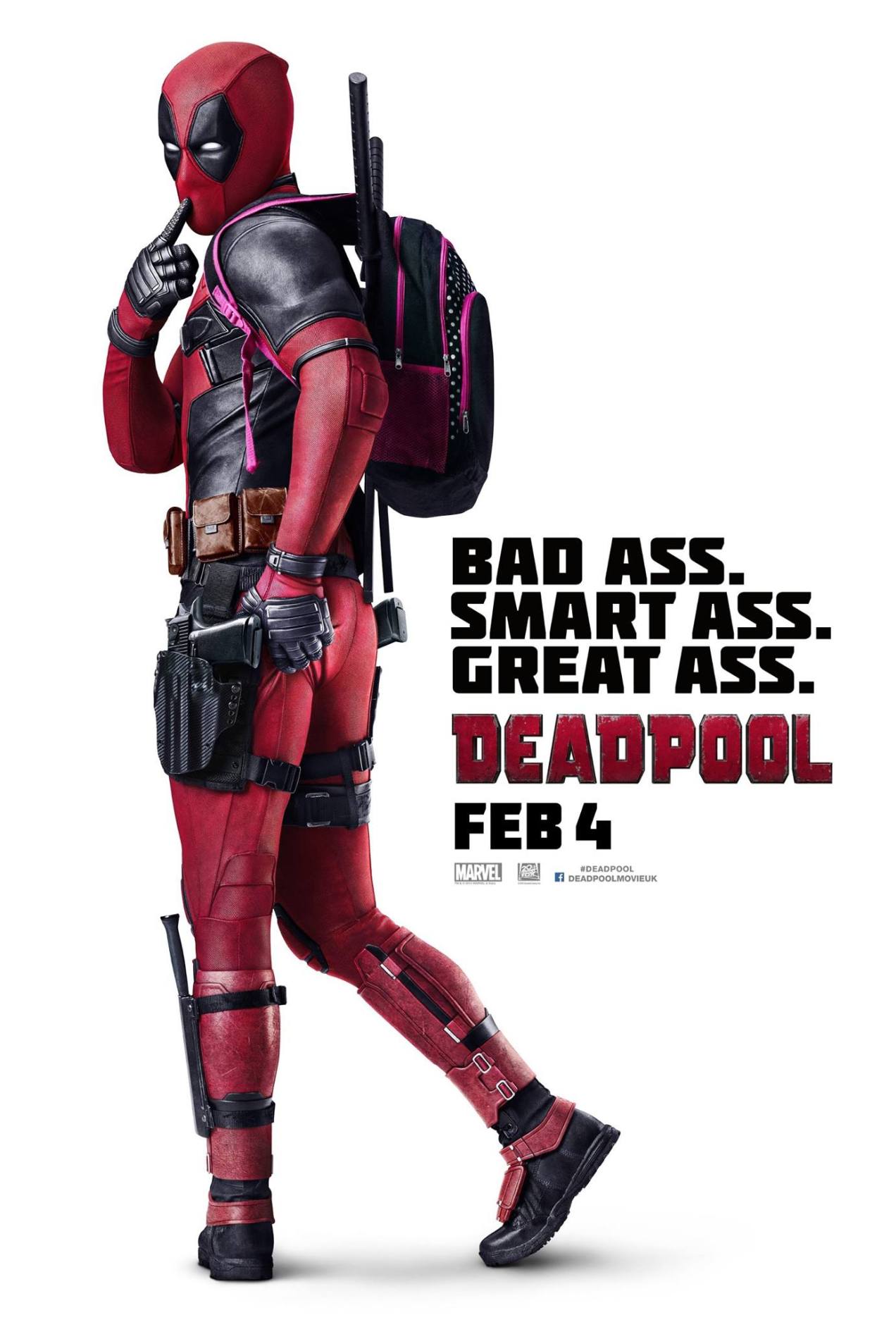
Deadpool

Genre: Action, Comedy

Director: Tim Miller

Screenplay: Rhett Reese, Paul Wernick

Cast: Ryan Reynolds, Morena Baccarin, Ed Skrein, T.J. Miller, Gina Carano, Leslie Uggams, Brianna Hildebrand, Karan Soni, Jed Rees, Stefan Kapicic, Randal Reeder, Isaac C. Singleton Jr.

Running Length:  107 minutes

Synopsis: Based upon Marvel Comics’ most unconventional anti-hero, Deadpool tells the origin story of former Special Forces operative turned mercenary Wade Wilson (Ryan Reynolds), who after being subjected to a rogue experiment that leaves him with accelerated healing powers, adopts the alter ego Deadpool. Armed with his new abilities and a dark, twisted sense of humor, Deadpool hunts down the man who nearly destroyed his life.

Review:  There’s no denying that the superhero movie genre is now one of the most popular, and in 2016 alone there are a whopping 7 superhero movies being released from both the Marvel and DC camps, with many more planned in the few years ahead. There’s also no denying that everyone is suffering from a little bit of superhero fatigue, which helps explain why Deadpool is such an appealing movie for many cinemagoers. After all, Deadpool is pretty much an anti-superhero, and together with one of the best movie marketing campaigns in recent years, have left many (including myself) anticipating the film with bated breath. Of course, it also helps that the film is being released in February instead of during the summer blockbuster season, with a much sparser release schedule.

Inspired marketing campaign aside, the actual Deadpool movie is indeed quite a refreshing change of pace, even though beneath that irreverent façade lies a pretty standard superhero origins movie. I’ve never witnessed any superhero (or movie, including spoofs) take so many potshots at the superhero movie genre, and in this aspect Deadpool is a tremendous success. Ryan Reynolds is totally in his element as the wisecracking, manic Deadpool, and his comic timing and delivery is close to flawless. Nothing is spared, and everything is fearlessly skewered – Ryan’s own failure in Green Lantern, the X-Men, even 20th Century Fox, and much, much more.

Deadpool also breaks the fourth wall repeatedly, turning to the audience and addressing them directly multiple times, and in one scene, even managing to break the fourth wall a second time while breaking the fourth wall (it truly needs to be seen to be believed). It’s smart to the point of being smart-alecky, and while a lot of it works, there are times where the self-aware, ironic shtick becomes a little tiresome.

The film is also not suited for everyone, as it is far raunchier and violent than usual superhero films, more than deserving of its R (locally, M18) rating.  However, if you have a stomach for the violence and are a fan of off-kilter humour, Deadpool will be a very rewarding cinematic experience that is refreshingly different from any other superhero movie before it.

Rating: *** (out of four stars)

Standard

Spectre

Genre: Action, Thriller

Director: Sam Mendes

Screenplay: John Logan, Neal Purvis, Robert Wade, Jez Butterworth

Cast: Daniel Craig, Christoph Waltz, Lea Seydoux, Ralph Fiennes, Monica Bellucci, Ben Whishaw, Naomie Harris, Dave Bautista, Andrew Scott, Rory Kinnear, Jesper Christensen, Alessandro Cremona, Stephanie Sigman

Running Length: 148 minutes

Synopsis: A cryptic message from Bond’s (Daniel Craig) past sends him on a trail to uncover a sinister organisation. While M (Ralph Fiennes) battles political forces to keep the secret service alive, Bond peels back the layers of deceit to reveal the terrible truth behind Spectre.

Review: Given the very high bar that Skyfall had set, it was perhaps an unreasonable expectation that Spectre would outdo its predecessor, even if the production remains largely in the same hands. And while it is true that Spectre is a number of notches below Skyfall, it’s still a very decent Bond movie, and is actually more of a Bond movie than Skyfall is. It’s almost as though Sam Mendes, having broken the mould with Skyfall, had decided that his sophomore Bond effort would instead be something that comes much closer to the roots of the franchise.

Spectre opens with a (literal) bang, and minus the rather lackluster Sam Smith title song, ranks as one of the top Bond opening sequences in the franchise’s entire 53-year history. Set in Mexico on the Day of the Dead, the first five minutes is an ingeniously choreographed one-take tracking shot (mad props to Hoyte van Hoytema, who replaces Roger Deakin as DP), followed by an extended, equally stunningly orchestrated action sequence that culminates in a helicopter doing loop the loops over Zocalo Square. This is just the first of a number of great action set pieces in Spectre, and on their own makes the price of entry worthwhile.

This is Daniel Craig’s fourth appearance as James Bond, and he has firmly established himself as the best modern day Bond, handily beating out Timothy Dalton and Pierce Brosnan by a mile in every aspect (Sean Connery is still the iconic Bond for an old Bond fan like me). However, the rest of the cast simply fail to measure up, with both Bond girls Monica Belluci and Lea Seydoux lacking chemistry with Craig, and Christoph Waltz being particularly flat and uninspired as uber-villain Franz Oberhauser. Surprisingly, it’s the minor cast members that make more of an impression, none more so than Ben Whishaw’s expanded appearance as Q, and Andrew Scott’s detestable turn as government bigwig Max Denbigh.

Unlike Skyfall, there’s never a sense that anything is really at stake in Spectre, and it’s hard to be vested in any facet of the film, especially since the conclusion of any Bond film is a foregone one. It is somewhat surprising that Spectre isn’t pared down to a more manageable length, since the near two and a half hour running time does no favours to the film, and I found my interest flagging a little at times. There is definitely enough going on to not make the film feel like a bore, but it almost feels as though Mendes and crew got a bit lost along the way in an attempt to pull out all the stops for the film.

This is rumoured to be Daniel Craig’s last outing as Bond, and in a way that may not matter, since Spectre manages to wrap up the four-movie story arc quite nicely. It would not be surprising if this film becomes the end of yet another era, and a seventh actor will step up to take the mantle in the 25th Bond film. Although this isn’t the best Bond film in the Daniel Craig era, it will still be a decent swansong for the actor, and a tough act for the next James Bond to follow.

Rating: * * * (out of four stars)

Standard

The Man from U.N.C.L.E.

Genre: Action

Director: Guy Ritchie

Screenplay: Guy Ritchie, Lionel Wigram

Cast: Henry Cavill, Armie Hammer, Alicia Vikander, Elizabeth Debicki, Luca Calvani, Hugh Grant

Running Length: 116 minutes

Synopsis: Set against the backdrop of the early 1960s, at the height of the Cold War, The Man from U.N.C.L.E. centers on CIA agent Napoleon Solo (Henry Cavill) and KGB agent Ilyas Kuryakin (Armie Hammer). Forced to put aside hostilities, the two team up on a joint mission to stop a mysterious international criminal organization bent on destabilizing the fragile balance of power through the proliferation of nuclear weapons and technology. The duo’s only lead is the daughter of a vanished German scientist, who is the key to infiltrating the criminal organization, and they must race against time to find him and prevent a worldwide catastrophe.

Review: Say what you will about this remake (yes, another 60’s TV franchise has made the transition), but The Man from U.N.C.L.E. is undeniably a feast for the eyes, and dripping with style to boot. Those looking for a traditional action blockbuster need look no further than the recent Mission: Impossible film, but The Man from U.N.C.L.E. resembles its leads – a charming (if shallow) diversion, and really fun to watch despite its flaws.

The Man from U.N.C.L.E. boasts a fantastic look – the attention to period detail is meticulous, and the illusion is sometimes so complete that it almost feels like a film that was actually made in the 60s, and not shot in 2015. It is also accompanied by an excellent soundtrack, employed to great effect by Guy, and even sneaks in snippets of the original TV theme song. The leads are also very easy on the eye, but both leading men are quite flat, particularly Henry Cavill. The women fare much better, and Armie Hammer’s performance is somewhat mitigated by his strong sexual chemistry with Alicia Vikander’s Gaby, who more than holds her own when paired against both men. The most memorable and delightful performance, however, goes to Elizabeth Debicki’s Victoria Vinciguerra, who slinks around the screen, almost purring with evil and menace.

Although positioned as an action blockbuster, Guy Ritchie does not display a good handle on the larger action setpieces. In fact, the climactic chase sequence feels kind of watered down and is about as unmemorable as it can get. Where Guy excels, however, are the more casual scenes, and most audiences will walk away with a deeper impression of Napoleon Solo snacking in a truck or the two men bickering over what fashions work best for undercover spies. There’s a lot of humour to be found in the movie, and this definitely makes the slightly over-long film a much more entertaining affair.

While this is ostensibly an origins story of The Man from U.N.C.L.E., it’s safe to say that not many viewers will even be familiar with the original TV series, so the film can pretty much stand on its own merits. Although the film does set up the backstory of the protagonists and leaves the door open for a sequel, the fact that Guy Ritchie has chosen to “date” this first film with a 1960s aesthetic means that a franchise is somewhat unlikely (though not impossible – see Austin Powers). I, for one, would welcome the possibility of a sequel, if only to see if Iilyas and Gaby would finally get down and dirty.

Rating: * * * (out of four stars)

Standard

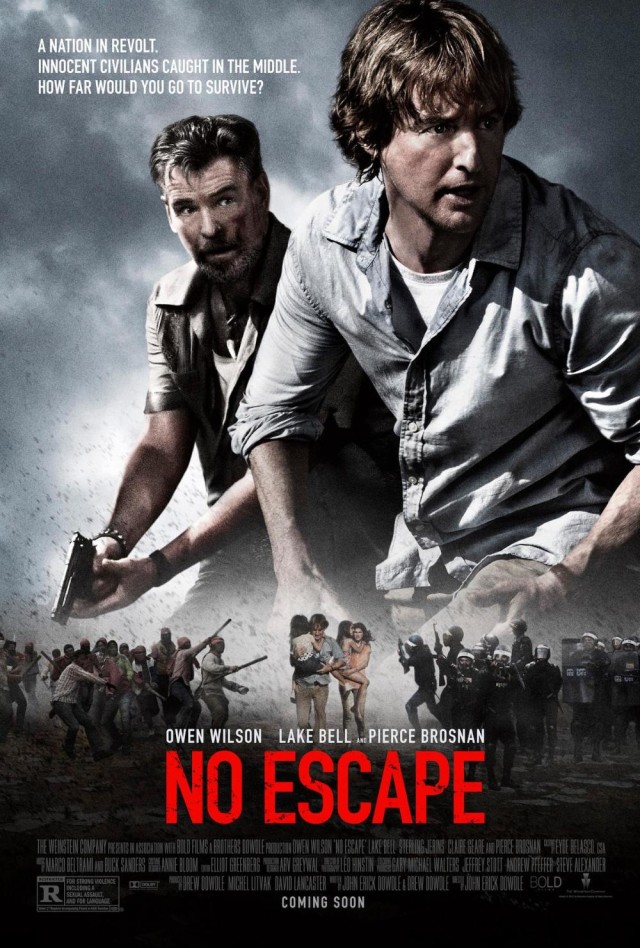
No Escape

Genre: Action, Drama

Director: John Erick Dowdle

Screenplay: John Erick Dowdle, Drew Dowdle

Cast: Owen Wilson, Lake Bell, Pierce Brosnan, Sterling Jerins, Claire Geare

Running Length: 106 minutes

Synopsis: No Escape centres on an American businessman (Owen Wilson) as he and his family settle into their new home in Southeast Asia. Suddenly finding themselves in the middle of a violent political uprising, they must frantically look for a safe escape as rebels mercilessly attack the city.

Review: One of my pet movie peeves is when any director chooses to use the shakycam effect to convey a “visceral” sense of action – apart from the found footage genre, there’s really no need to put viewers through a discomfiting viewing experience. No Escape is the latest in a long, long line of movies that abuses the shakycam effect, and it really managed to mar the cinematic experience of an already rather mediocre film. There’s also the issue that the entire film drips of a rather unkind xenophobia, undoubtedly amplified by the fact that Asian viewers like myself don’t seem be one of the target demographics that the Dowdle brothers are aiming for.

Set in an resolutely unnamed Southeast Asian country (and the subject of a real-life controversy, as Khmer lettering was used upside down on the police shields in the film, leading to outrage and a ban in Cambodia), No Escape does deliver some thrills along the way, but requires the audience to not think about the plot at all, as it is riddled with holes and necessitates the cast members to behave in the most reckless way possible, putting themselves into peril so as to advance the plot. Both the rebels (namely one murderous mob, with the leader sporting a prominent facial scar, because that’s probably the only way the directors felt “the Asians” could be identified) and the resistance (namely Pierce Brosnan and his local sidekick) seem to show up with alarming precision and frequency. It’s amazing how a nationwide coup could be reduced to such a simplistic face-off.

Although the country is unnamed, there are some really ridiculous conventions that John Erick Dowdle stoops to, reducing the locals to nothing more than seemingly irrational, bloodthirsty murderers and rapists. There’s even a scene where the protagonists are scuttling through a den of vice, which includes young prostitutes and (I kid you not) what appears to be an opium den. It’s seriously mind boggling how Dowdle’s perception of Southeast Asia seems stuck at the turn of the 20th Century, instead of being more rooted in current-day sensibilities and realities. As a Southeast Asian viewer, I am honestly quite insulted by such a portrayal.

Put aside all the social commentary and the filming techniques, and we are indeed left with a half-decent movie, with a good number of taut set-pieces, especially in the first few reels of the film. Both Owen Wilson and Lake Bell put in relatively strong performances despite playing against type, though Pierce Brosnan seems to be in this one solely for the paycheck (to be fair, his screen time is fairly limited). No Escape does become increasingly unraveled along the way, culminating in a really ridiculous, anti-climactic denouement that fails to make much sense. However, in all likelihood, the audience would have ceased to care about the movie by then, and are simply looking to escape the cinema once the credits roll.

Rating: * ½ (out of four stars)

Standard

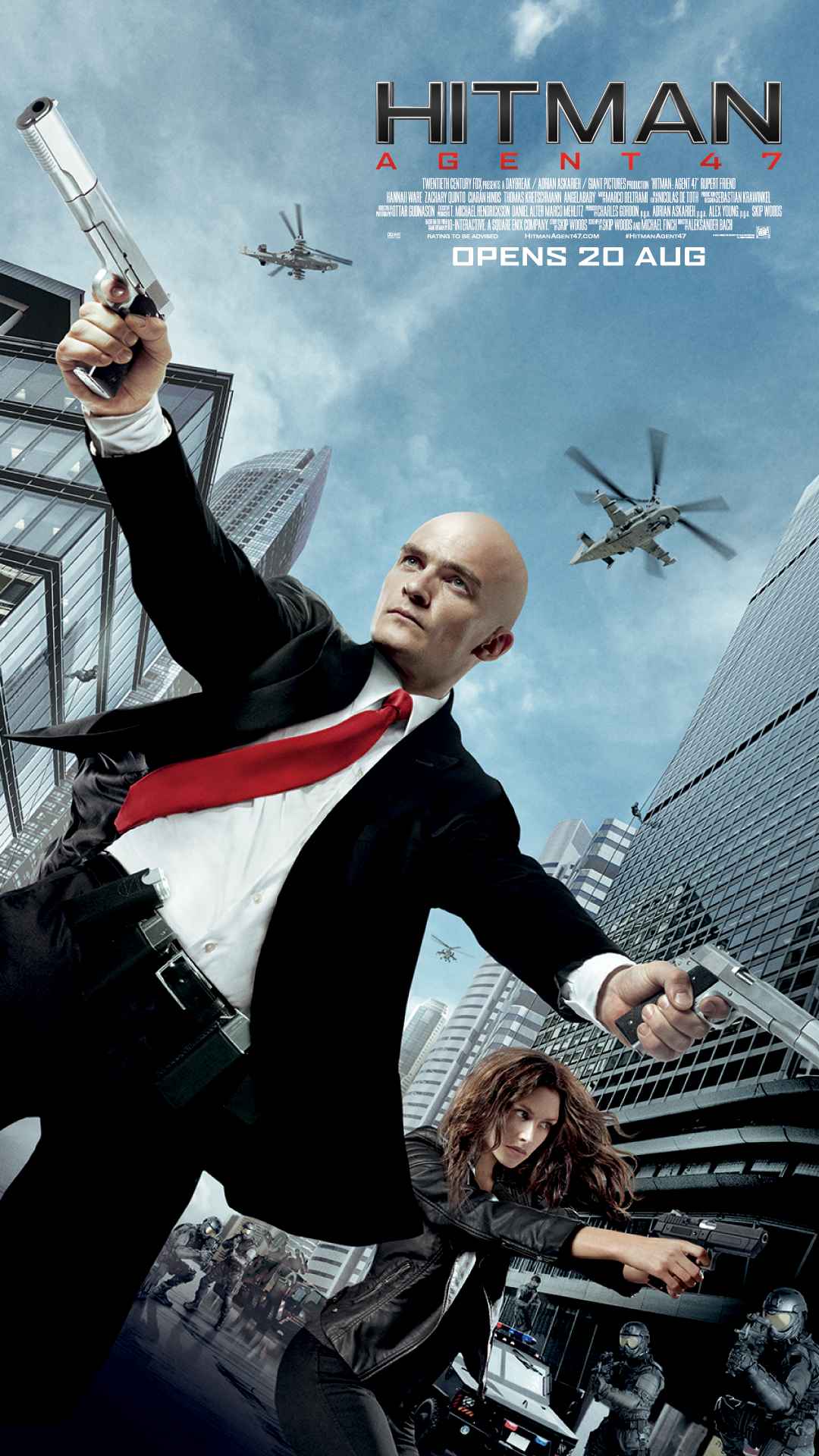
Hitman: Agent 47

Genre: Action

Director: Aleksander Bach

Screenplay: Skip Woods, Michael Finch

Cast: Rupert Friend, Hannah Ware, Zachary Quinto, Ciaran Hinds, Thomas Kretschmann, Angelababy

Running Length: 96 minutes

Synopsis: Hitman: Agent 47 centers on an elite assassin who was genetically engineered from conception to be the perfect killing machine, and is known only by the last two digits on the barcode tattooed on the back of his neck. He is the culmination of decades of research – and forty-six earlier Agent clones – endowing him with unprecedented strength, speed, stamina and intelligence. His latest target is a mega-corporation that plans to unlock the secret of Agent 47’s past to create an army of killers whose powers surpass even his own. Teaming up with a young woman who may hold the secret to overcoming their powerful and clandestine enemies, 47 confronts stunning revelations about his own origins and squares off in an epic battle with his deadliest foe.

Review: Video game to movie adaptations have generally not gone well, and for the Hitman videogame, there was even a poorly-received precedent set in 2007. Flash forward almost a decade later, and it’s time for yet another movie franchise to be rebooted. Agent 47 is likely to elicit a higher interest level locally, simply because parts of the movie were shot on location in Singapore, and let’s face it – there is always a little bit of a cheap thrill when you see familiar landmarks on the big screen, especially in an international blockbuster.

This is not a film that will please fans of the Hitman videogames, simply because it chooses to forgo the stealth element that was an essential component to the videogames. More often than not Agent 47 feels more like a younger, supercharged John McClane, coming out with guns blazing and blowing brains out along the way, and earning the film its NC-16 rating. As an action film, it is a rather generic one, though with a number of pretty decent action set-pieces that serve to move the film along nicely. The CG, unfortunately, is quite unimpressive, though Bach seems to try to mitigate this by employing a copious amount of quick cuts during most of the action scenes.

Apart from the lack of a coherent plot, one of the most glaring faults of Hitman: Agent 47 is how blatant the product placements are. It is clear that Audi must have spent a pretty penny for all the exposure in the film, but even the Singapore portions of the film resemble a promotional video rather than being vital to the film. Was there a need to show Hannah Ware swimming in the (an admittedly gorgeous) infinity pool of a five-star hotel, or to arrange a meeting at (again, admittedly gorgeous) Gardens by the Bay if it was intended to be a clandestine one? More disappointingly, for a film that must have been substantially bankrolled by Singapore, there seems to be only one discernable local actress involved in the film, and even then only as an extra in a very short sequence.

While Rupert Friend makes for a rather effective Agent 47 (this was a role that apparently was intended for Paul Walker before his death), the rest of the cast is bland and forgettable, and Zachary Quinto and Ciaran Hinds in particular feel criminally underused. Although the end credits sequence sets the stage for a potential sequel, it’s hard to imagine this film garnering enough interest or box office for the studios to consider a follow-up.

Rating: * * (out of four stars)
Standard

Mission: Impossible – Rogue Nation

Genre: Action

Director: Christopher McQuarrie

Screenplay: Christopher McQuarrie

Cast: Tom Cruise, Jeremy Renner, Simon Pegg, Rebecca Ferguson, Ving Rhames, Sean Harris, Simon McBurney, Zhang Jingchu, Tom Hollander, Jens Hulten, Alec Baldwin

Running Length: 131 minutes

Synopsis: Ethan Hunt (Tom Cruise) and the rest of the IMF team take on their most impossible mission yet, eradicating the Syndicate – an International rogue organization as highly skilled as they are, committed to destroying the IMF.

Review: With the box office success of Mission: Impossible – Ghost Protocol, it was inevitable that there would be a fifth movie in the M:I series, but it is still somewhat surprising to see Tom Cruise tackle the role with such energy and conviction after a 19-year run. Now 53 years of age, Cruise seems to have taken after the Jackie Chan model of filmmaking, eschewing green screen and digital trickery with actual balls-to-the-wall stuntwork apparently performed mostly by himself. Regardless of what has gone on in his personal life (and the recent HBO documentary on Scientology will do no favours for his already tarnished image), Cruise continues to impress in his performance as Ethan Hunt, and is largely the reason why Rogue Nation works, even though the film does not supplant Ghost Protocol as the best film thus far in the franchise. 

The earlier M:I films had valued style over substance, and the plot threads were exceedingly confusing to follow for audiences. This had improved dramatically in Ghost Protocol, and in Rogue Nation the trend continues, with the relatively straightforward plot pretty much checking off everything a stock spy thriller should contain – a menacing supervillain, a femme fatale with dubious loyalties, multiple locations across the globe, thrilling car chases and visceral action sequences. While James Bond still holds the crown for the spy movie genre (particularly the current Daniel Craig era films), Ethan Hunt and the IMF is a close second. 

There is no doubt that Mission: Impossible is a star vehicle for Tom Cruise, and he still manages to hold the fort here with impressive ease. Apart from his physicality, Cruise remains a charismatic actor, and plays his roguish charms here to the hilt. Rebecca Ferguson is a capable foil as the aptly-named Ilsa Faust, and kudos to McQuarrie for creating a strong female character that very rarely reverts to damsel-in-distress mode, who surprisingly is not positioned as a “Bond Girl” love interest for Hunt. Simon Pegg’s role was largely played for laughs in Ghost Protocol, but in Rogue Nation he has become a key character, though most of the comedic work in the film still falls squarely on Pegg’s shoulders. The other returning characters – Alec Baldwin, Jeremy Renner and Ving Rhames – are unfortunately sidelined and barely given enough to do to justify their presence here. Although there seems to be strong Chinese financial backing for the film, the only Chinese actress present, Zhang Jingchu, has such a minimal blink-and-miss-it role that her inclusion seems to be purely an afterthought.  

Disappointingly, despite screening in IMAX theatres, none of the footage in Rogue Nation seems to have been shot on IMAX cameras (compared to the near half-hour of IMAX footage found in Ghost Protocol). The film still dazzles on the largest screen format, but does not boast the immersiveness that Ghost Protocol had. Given that the action set-pieces in Rogue Nation are as impressive as Ghost Protocol, this truly feels like a wasted opportunity. However, Rogue Nation remains a strong entry in the M:I franchise, and it would not be surprising that a sixth installment is greenlit based on the box office performance of this one. 

Rating: * * * (out of four stars)

Standard

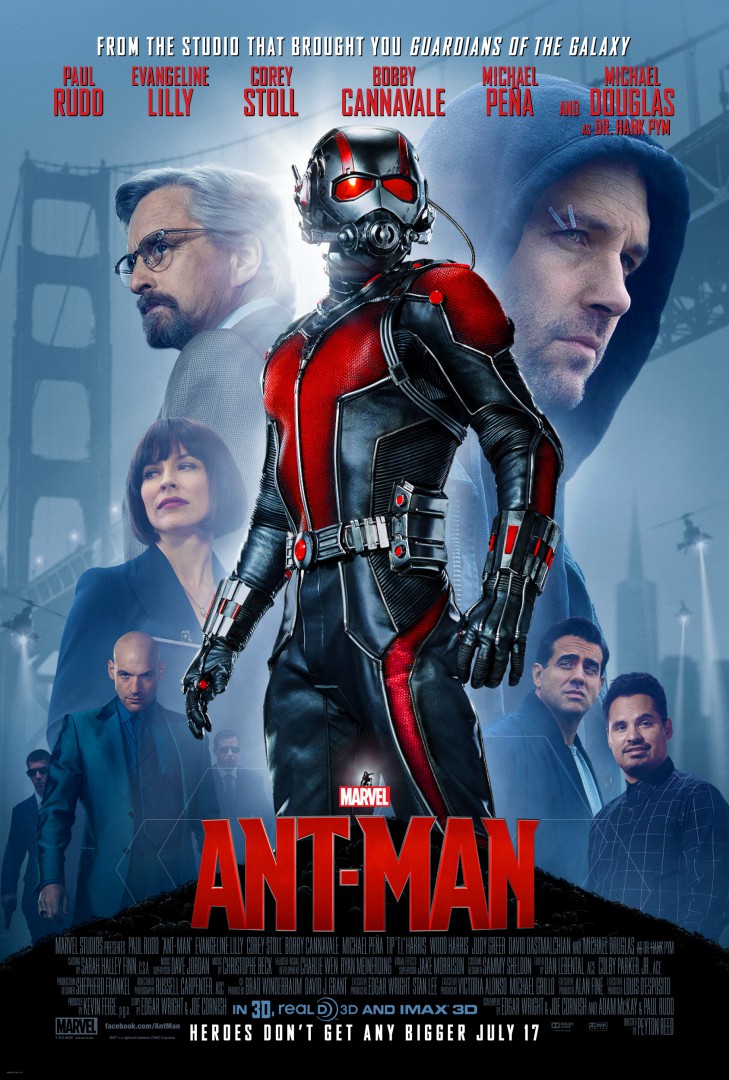
Ant-Man

Genre: Action

Director: Peyton Reed

Screenplay: Edgar Wright, Joe Cornish, Adam McKay, Paul Rudd

Cast: Paul Rudd, Evangeline Lilly, Corey Stoll, Bobby Cannavale, Michael Pena, Tip “T.I.” Harris, Wood Harris, Judy Greer, David Dastmalchian, Michael Douglas, Abby Ryder Fortson, Martin Donovan

Running Length:  117 minutes

Synopsis: Armed with a super-suit with the astonishing ability to shrink in scale but increase in strength, con-man Scott Lang (Paul Rudd) must embrace his inner hero and help his mentor, Dr. Hank Pym (Michael Douglas), plan and pull off a heist that will save the world.

Review: It may seem strange that Marvel has chosen Ant-Man as the film to close out Phase 2 of the Marvel Cinematic Universe, since he is definitely one of the smaller (in every sense of that word) heroes in the Marvel canon. However, if Guardians of the Galaxy is any indication, just because the character isn’t well-known doesn’t mean it won’t be a well-received film. And in this case, although Ant-Man doesn’t quite reach the heights of Guardians, it is very entertaining and as an origins film, sets the stage for yet another franchise opportunity for Marvel (although Ant-Man will already return in next year’s Captain America: Civil War).

There is this sense throughout the film that this is not considered a marquee Marvel property, and it shows in the anything-goes spirit that embodies the bulk of the movie. Even the trials and tribulations faced by the cast feel more personal than usual – there’s only the merest hint of a global crisis, and more often than not it is familial conflicts that propel the plot forward.

The amount of sight gags and humorous asides are second only to Guardians of the Galaxy, and it will be near impossible to not feel entertained by the film. Paul Rudd is an extremely amicable central protagonist, and his immense likeability, much like Chris Pratt’s Starlord, is one of the biggest reasons why Ant-Man works. Of the supporting cast, Evangeline Lilly once again takes on a strong female role as Hank Pym’s daughter Hope (though she isn’t given enough to do), but no one is as memorable as Michael Pena, and two excellent montages in which other characters “lip-sync” to his motor-mouth narration feel particularly inspired.

While audiences of any Marvel superhero movie would naturally expect a good number of action sequences, these scenes in Ant-Man aren’t particularly memorable, with a fair number of scenes that seem to exist simply to up the action to drama ratio. What does manage to impress is how effectively Reed manages to convey the differences in point of view between the human-sized and ant-sized Ant-Man – the sequence where Scott first uses the suit, where he literally falls through a number of “universes” is both fun and unique. There is, again, a lot of humour employed in these scenes, none more clearly so than during a climactic showdown on a Thomas the Train Engine toy track. Oddly, there does seem to be a higher-than-normal amount of product placement in Ant-Man, and though some of it is quite obvious, it never becomes excessive or too glaring.

Expectations may have been low for Ant-Man, the film has more than exceeded them, and quite easily ranks as one of the best films in Phase 2 of the MCU. It is also one of the most kid-friendly Marvel movies to date, an endearing smaller-scale film that is sure to be a crowd-pleaser and generate positive word of mouth.

P.S. Remember to stay throughout the end credits to catch two coda sequences, one mid-credits and one at the very end.

Rating: * * * ½ (out of four stars)

Standard

Jurassic World

Genre: Action/Sci-Fi

Director: Colin Trevorrow

Screenplay: Rick Jaffa, Amanda Silver, Derek Connolly, Colin Trevorrow, based on the novels by Michael Crichton

Cast: Chris Pratt, Bryce Dallas Howard, Vincent D’Onofrio, Nick Robinson, Ty Simpkins, B.D. Wong, Irrfan Khan, Omar Sy

Running Length: 123 minutes

Synopsis: Located off the coast of Costa Rica, the Jurassic World luxury resort provides a habitat for an array of genetically engineered dinosaurs, including the vicious and intelligent Indominus Rex. When the massive creature escapes, it sets off a chain reaction that causes the other dinosaurs to run amok. Now, it’s up to a former military man and animal expert (Chris Pratt) to use his special skills to save two young boys and the rest of the guests from an all-out, prehistoric assault.

Review: It has been a long time since the Jurassic Park franchise has seen the big screen, with the last (rather dismal) movie, Jurassic Park III released in 2001. Stuck in development hell for over a decade, Jurassic World represents a somewhat triumphant return for the franchise, though it would be hard to imagine there being enough interest for a fifth installment. Jurassic World boasts excellent visuals, and strong performances from leads Chris Pratt and Bryce Dallas Howard, but is a little let down near the end when the CG takes over the movie, like so many films these days are wont to do.

The 22-year old Jurassic Park was one of the first movies to make use of the then cutting-edge computer generated imagery, and the awe and wonder of seeing dinosaurs come to “life” can never be replicated in present times. The CGI in Jurassic World is miles ahead of the original film, but that’s honestly a given these days when technology has advanced so far. But, probably akin to the jaded amusement park attendees that populate Jurassic World, it doesn’t stir the soul like that Brachiosaurus reveal in the first film. Perhaps that’s the power of nostalgia speaking, but Jurassic World also falls to the uniquely present-day trap of letting the CGI do the acting – without going into spoilers, the finale sequence feels entirely (and probably is) artificial, and hence it was difficult to vest myself in the outcome in any way.

Although it works as a standalone film, Jurassic World assumes prior knowledge of the Jurassic Park films, never really delving into the backstory of the theme park. There are also a multitude of references to the first movie, which will particularly resonate with fans of Jurassic Park (aren’t we all, though). Michael Giacchino, who takes over the scoring of the movie from John Williams, does not shy away from the well-known musical cues from Jurassic Park either, although his score can feel a bit too bombastic at times. While it would be good to see Jurassic Park on as large a screen as possible to take in the majesty of the imagery, 3D is once again absolutely pointless and should be avoided.

Chris Pratt has really stepped up his Hollywood leading man game, and in Jurassic Park he channels his performance in Guardians of the Galaxy – funny and macho at the same time, he’s instantly likeable as Owen. Bryce Dallas Howard has the slightly more uphill task, since she needs to play both the “modern” action heroine and the “traditional” damsel in distress, and the duality does not work very well at times. She does share great onscreen chemistry with Pratt, which makes much of their interaction pleasant to watch. However, the Jurassic Park franchise has never been about the human actors, and relies more on its dinosaur counterparts. In this aspect the movie is not as successful. Although the Indominus Rex is positioned as a bad-ass dinosaur that’s even more dangerous than a T-Rex, she doesn’t really feel all that menacing onscreen. The velociraptors also make a return, but once again they come across as rather tame and certainly not as intelligent as the old raptors seemed to be.

No movie in the franchise will ever compare to the original, but it’s easy to place Jurassic World as the second-best film thus far. I am firmly of the opinion, however, that this should mark the end of the franchise – there’s no room in the franchise for any additional plot development, and any sequel after this one will be flogging a dead horse. I won’t put it past the studio executives to greenlight more films, especially if Jurassic World does well, but if this is indeed the swan song, it will conclude the franchise on a relatively high note.

Rating: * * * (out of four stars)

Standard

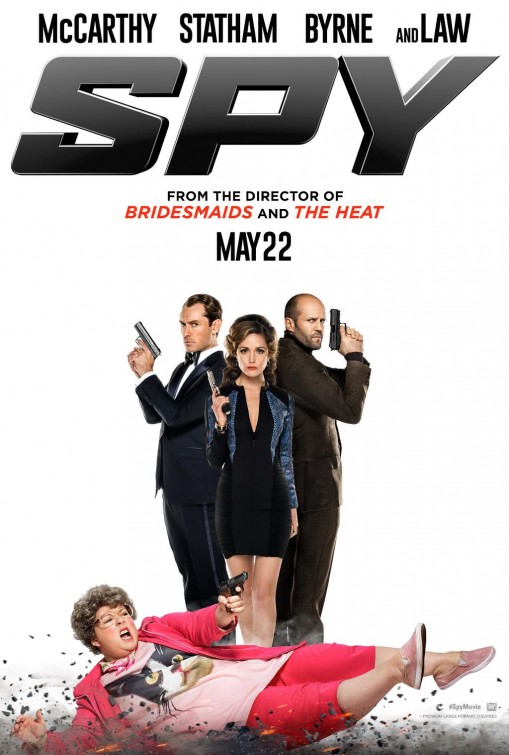
Spy

Genre: Action/Comedy

Director: Paul Feig

Screenplay: Paul Feig

Cast: Melissa McCarthy, Jason Statham, Rose Byrne, Miranda Hart, Bobby Cannavale, Allison Janney, Peter Serafinowicz, Morena Baccarin, Jude Law

Running Length: 120 minutes

Synopsis: Susan Cooper (Melissa McCarthy), a shy deskbound CIA analyst, goes on a mission to help a field agent in trouble. Employing not-so-outrageous identities and not-so-fancy spy gadgets, she attempts to infiltrate the shadowy world of an alluring but dangerous weapons dealer. She leaves a trail of mayhem crisscrossing Europe, utilizing deception and false bravado to try and outwit her quarry and locate a stolen nuke.

Review: No one has managed to make Melissa McCarthy shine like Paul Feig has (and that includes McCarthy’s husband, who directed her in the mediocre Tammy), and in Spy they have left everything else (so far) in the McCarthy canon in the dust. Spy is undeniably the best Feig-Mccarthy pairing in the three films they have worked together on (the breakout hit Bridesmaids and the equally successful The Heat), and despite it being positioned firstly as a comedy, Spy is also a totally legit espionage action film, and I foresee it scoring great success at the box office despite a pretty packed Summer roster.

The most impressive thing about Spy is how it manages to meld the comedy and action genres together so well, without diminishing either aspect. This is in large part due to the how deftly Melissa McCarthy balances between the two – her comic timing is impeccable here, but she also manages to pull off the action and physical comedy sequences with equal aplomb (though there are some scenes where a body double was quite clearly used). Not many actors can lay claim to such an achievement, and it firmly establishes McCarthy as the reigning queen of comedy with a few tricks up her sleeve.

Paul Feig’s script does the same – it’s filled with excellent zingers and visual gags, so rich in material that one can easily watch the film a second time round and find even more to belly laugh at, and yet the spy story is equally engaging, with twists and turns that would surprise even the most jaded moviegoers. All the things that make a good spy movie are present here: exotic locations, over-the-top action sequences, a doomsday device and yes, even the classic Bond-style opening sequence makes an appearance.

Both McCarthy and the script are also bolstered greatly by a uniformly excellent supporting cast, almost all playing against type (and obviously having a great time doing it). The most notable are Rose Byrne, who is fantastic as the cruel but vapid villainess with a ridiculous accent and even more ridiculous coiffure, and Jason Statham, gleefully sending up his usual tough guy routine as a British spy who is all bark and no bite. Spy is possibly the most fun that will be had this Summer season, and is an easy recommendation to make to virtually any moviegoer.

Rating: * * * ½ (out of four stars)

Standard