War for the Planet of the Apes

Genre: Sci-Fi, Action

Director: Matt Reeves

Screenplay: Matt Reeves, Mark Bomback, based on characters created by Rick Jaffa, Amanda Silver

Cast: Andy Serkis, Woody Harrelson, Steve Zahn, Karin Konoval, Terry Notary, Amiah Miller, Judy Greer, Max Lloyd-Jones, Devyn Dalton

Running Length:  140 minutes

Synopsis: In War for the Planet of the Apes, the third chapter of the critically acclaimed blockbuster franchise, Caesar and his apes are forced into a deadly conflict with an army of humans led by a ruthless Colonel.  After the apes suffer unimaginable losses, Caesar wrestles with his darker instincts and begins his own mythic quest to avenge his kind.  As the journey finally brings them face to face, Caesar and the Colonel are pitted against each other in an epic battle that will determine the fate of both their species and the future of the planet.

Review: Who could have anticipated that the best summer blockbuster this year would belong to the simians, rather than the superheroes that have come along thus far? But here we are, three movies deep into the second Planet of the Apes reboot, and it’s easy to give War for the Planet of the Apes the crown because it’s so starkly different from everything that has come before it this year. Trumping even the excellent Dawn of the Planet of the Apes (also directed by Reeves), the only thing working against the movie is its serious tone – not every moviegoer would like to be preached to by Reeves on his soapbox, especially midway through the Summer blockbuster season – but audiences who do make the decision to give War a try would likely find themselves well rewarded.

Ostensibly the last prequel film in this reboot trilogy (though there’s now a fourth movie planned), the events in War would logically lead up to what transpires in the original Planet of the Apes, and there are throwbacks (throwforwards?) to the characters found in the 1968 movie. While there’s no necessity to have seen the original movies, War does presume that the audience is familiar with what has been covered so far in the 2011 and 2014 films – any moviegoer that watches this film “cold” would likely find themselves quite lost indeed, so consider this fair warning.

While the film is not without flaws, War for the Planet of the Apes is quite simply, a very well-made movie. CGI is usually peripheral to the plot of a movie, but in this case, without the bleeding-edge CGI, there very simply would not have been a movie at all. The franchise has progressed to not just rendering one hyper-realistic chimpanzee, to a literal army of various simians. Andy Serkis is at the top of the motion capture acting game, and his performance of Caesar quite simply transcends any description – it’s still shocking to see the depth and nuances of emotion that can flicker across Caesar’s face as a fully rendered character.

War is also a movie that doesn’t shy away from a complex plot, and while it may get a bit preachy at times, kudos must be given to any summer blockbuster that is willing to take the risk of alienating a group of audience members who do not expect to be mentally taxed. That’s not to say War isn’t entertaining – not only is there plenty of well-choreographed, riveting action to be found, there’s even a character that seems to be inserted purely for comic relief purposes.

Matt Reeves has proven his capabilities in the two Apes movies he has directed, and War in particular feels almost like a loving homage to some of the best war movies (think Apocalypse Now, The Great Escape and The Bridge Over River Kwai), except with apes. It’s a beautifully lensed film, though each scene is so meticulously constructed there’s almost an artificiality at times. While it’s a rather heavy-going movie, there’s no denying that each Planet of the Apes movie has managed to outdo its predecessor, and it’s easy to see War for the Planet of the Apes ending up on many Top 10 lists come the end of 2017.

Rating: * * * ½ (out of four stars)
Standard

Wonder Woman

Genre: Sci-Fi, Action

Director: Patty Jenkins

Screenplay: Allan Heinberg, from a story by Heinberg, Zack Snyder, Jason Fuchs, based on DC’s Wonder Woman created by William Moulton Marsto

Cast: Gal Gadot, Chris Pine, Connie Nielsen, Robin Wright, Danny Huston, David Thewlis, Said Taghmaoui, Ewen Bremner, Eugene Brave Rock, Lucy Davis, Elena Anaya

Running Length:  141 minutes

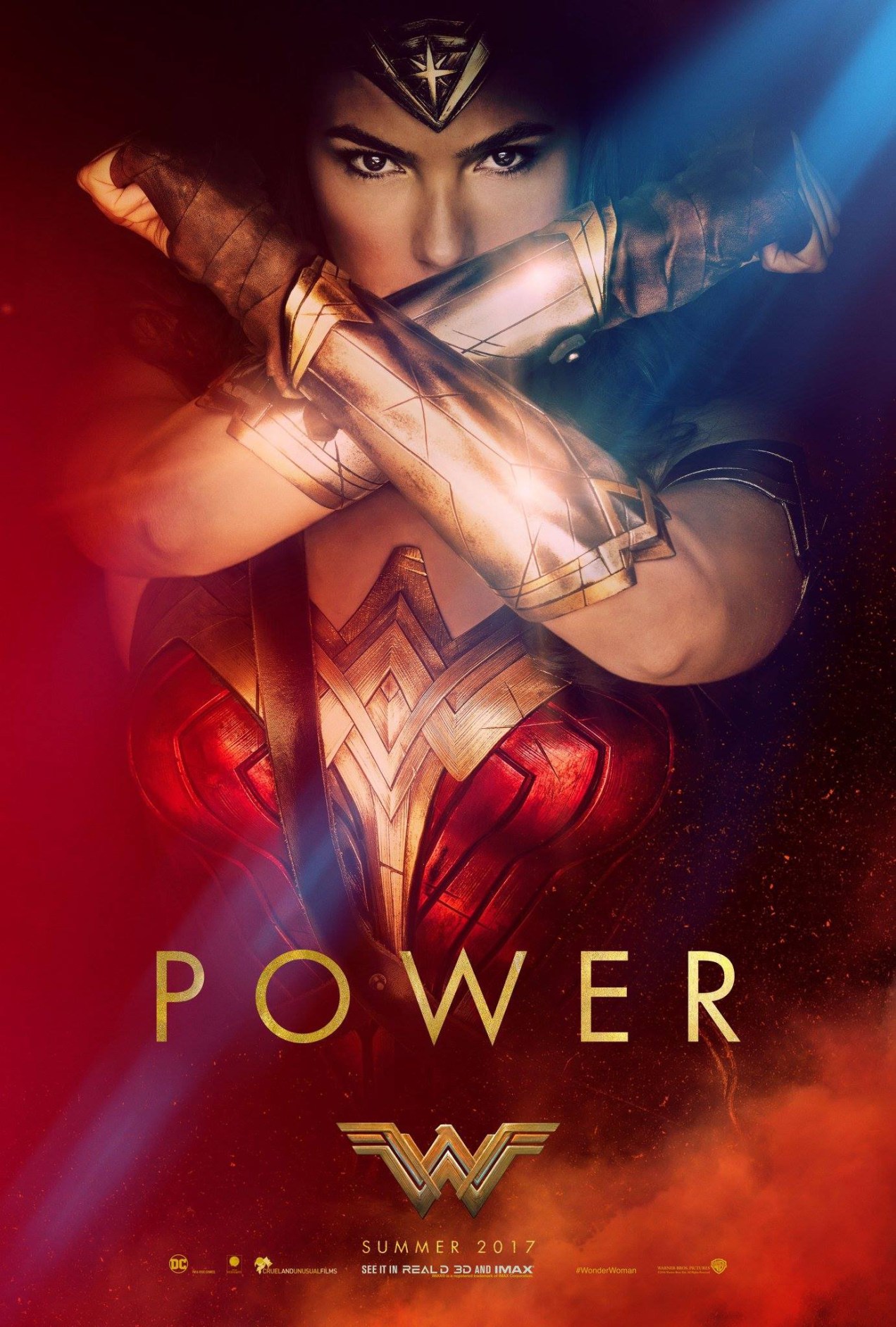
Synopsis: Before she was Wonder Woman, she was Diana, princess of the Amazons, trained to be an unconquerable warrior. Raised on a sheltered island paradise, when an American pilot crashes on their shores and tells of a massive conflict raging in the outside world, Diana leaves her home, convinced she can stop the threat. Fighting alongside man in a war to end all wars, Diana will discover her full powers…and her true destiny.

Review: With Wonder Woman, audiences have finally received the DC Extended Universe movie that they deserved – a stark departure from the dank, monochrome, Debbie Downer movies helmed by Zach Snyder, that reached a new DCEU low with Batman v Superman last year. Patti Jenkins’ Wonder Woman is a far more optimistic and colourful movie, bolstered by 2 very good lead performances and a generally positive vibe that finally bodes well for the franchise. Gal Gardot may not be the most iconic Wonder Woman of my time (Lynda Carter’s incarnation will forever hold a special place in my heart), but she certainly does an excellent job here, and establishes a tone that hopefully the subsequent DCEU films will be able to adopt.

In the tradition of superhero movies, this first Wonder Woman film (discounting her extended appearance in BvS) is an origins story, but unlike the somewhat similarly set Captain America: The First Avenger, the entire film essentially transpires in the early 19th Century, during WWI. There’s great attention to period detail here, and this is a film that is not afraid to get its fingers dirty – while the tone is lighter, it also does not shy away from depicting the horrors of war, from a mustard gas attack on a village, to an attack on a fortified German position in the frontline of war. In fact, these scenes are impressively choreographed and shot, almost being able to stand toe-to-toe with dedicated war movies – this is something new for the superhero movie genre, and Jenkins and her crew ought to be commended for achieving what they have here.

Both Gal Gadot and Chris Pine are well-cast in their roles here – Gadot is a very beautiful, elegant woman that can convincingly emote and kick ass, which makes her iteration of Wonder Woman a near-perfect one (except perhaps, the few scenes in which she somehow seems to suffer from a bad hair day). Chris Pine brings the right amount of bravado and charm to his Steve Trevor despite playing the thankless (and for once, male) role of the love interest in distress, and the strong, playful chemistry between the two helps to lend more emotional impact to the film versus most superhero movies.

While the finale drops the ball a bit and ends up being too much of a CG-fest (which comes across as being a little shoddily done, strangely) and leans to the cheesy side of things, the entire movie remains entertaining, and the decision to lighten the mood with the occasional wisecrack or fish-out-of-water gag, as well as developing a romantic subplot, really helps to balance out the film despite its 2-plus hour running time. This is the most Marvel-like DCEU film yet, which may sound like an insult to fans of the DC Universe, but is actually quite high praise, given the high watermark that the MCU has set.

Rating: * * * (out of four stars)

Standard

Guardians of the Galaxy Vol. 2

Genre: Sci-Fi, Action

Director: James Gunn

Screenplay: James Gunn

Cast: Chris Pratt, Zoe Saldana, Bradley Cooper, Dave Bautista, Vin Diesel, Michael Rooker, Glenn Close, Karen Gillan, Sylvester Stallone, Pom Klementieff, Kurt Russell, Elizabeth Debicki, Nathan Fillion, Tommy Flanagan

Running Length:  135 minutes

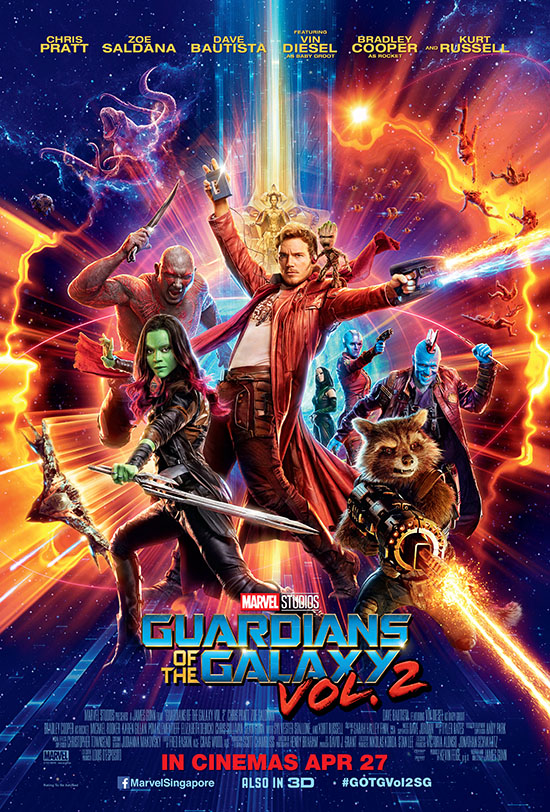
Synopsis: Set to the all-new sonic backdrop of Awesome Mixtape #2, Marvel’s “Guardians of the Galaxy Vol. 2” continues the team’s adventures as they traverse the outer reaches of the cosmos. The Guardians must fight to keep their newfound family together as they unravel the mystery of Peter Quill’s true parentage. Old foes become new allies and fan-favorite characters from the classic comics will come to our heroes’ aid as the Marvel Cinematic Universe continues to expand.

Review: The first Guardians of the Galaxy was such a breath of fresh air in the world of superhero movies that it was nearly impossible to begrudge despite some rough spots. In the three intervening years, however, there has been a number of entrants into the genre that sported similar characteristics – most notably Deadpool, which took the irreverence found in Guardians to an extreme and yet delivered admirably. It also helped that most moviegoers went into Guardians of the Galaxy with little or no expectations, and most would walk away feeling it was time and money well spent.

Guardians of the Galaxy Vol. 2, however, will not get a similar free pass. Although everything that made the first movie good still remains – the great chemistry amongst the lead actors, the excellent soundtrack, the eye-popping visuals, the laidback humour, the heart – there’s also an unshakeable feeling of sequelitis, where everything old doesn’t really feel new again. That’s not to say it’s not a good movie; in fact Vol. 2 still manages to (barely) sit amongst the best in the MCU, but it simply can’t measure up to the original, and not from a lack of trying.

One of the most problematic aspects of Vol. 2 is that James Gunn decided to one-up the first movie in every imaginable way, and the result is a film that honestly feels a little bloated. Despite not having to delve into each character’s backstory, there’s almost no real plot development until almost halfway through the movie, and even then the central plot feels a little underwhelming (true to its predecessor, the villains continue to remain the movie’s weakest link). This results in the film feeling just a bit tiresome at times, and I found myself glancing at my watch more than once throughout the movie’s 135-minute running time.

There’s quite a bit of unresolved plotlines and unexplained cameos (Sylvester Stallone literally does nothing in his cameo appearances here), ostensibly to set the stage for the inevitable sequel, but they figure so peripherally into the actual film that editing them out of the film is actually a rather compelling argument. The same applies for the five (!!) post-credit codas, which manages to up the ante of the first movie in serving up pointlessness

Fortunately, there’s still much left to like about Vol. 2. Baby Groot is inexorably adorable if a bit overused, the slapstick moments are still delicious nuggets to savor, and Chris Pratt still impresses with both his physicality and impeccable comic timing. While visuals for modern day sci-fi movies are all nearly without reproach, Vol. 2 still boasts a rather unique, nearly psychedelic visual style that impresses (but is also rather tiring in 3D). And the joyous soundtrack gets one star of its own even for an eclectic, ear-friendly selection almost on par with the first movie’s. And much like the first movie, there’s even a scene that would touch even a jaded moviegoer like myself. There’s no doubt that Guardians of the Galaxy Vol. 2 would do terrifically well at the box office, but if Vol. 3 doesn’t address the franchise’s weaknesses, it will assuredly end the trilogy on a low note, which would be a waste.

Rating: * * * (out of four stars)

Standard

Underworld: Blood Wars

Genre: Action

Director: Anna Foerster

Screenplay: Cory Goodman

Cast: Kate Beckinsale, Theo James, Lara Pulver, Bradley James, Tobias Menzies

Running Length:  92 minutes

Synopsis: The next installment in the Underworld franchise follows vampire death dealer, Selene (Kate Beckinsale) as she fends off brutal attacks from both the lycan clan and the vampire faction that betrayed her. With her only allies, David (Theo James) and his father Thomas (Charles Dance), she must stop the eternal war between lycans and vampires, even if it means she has to make the ultimate sacrifice.

Review: The seemingly ageless Kate Beckinsale reprises her role as vampire assassin Selene for a fifth time in Underworld: Blood Wars, and while she looks none the worse for wear, the same cannot be said of the Underworld franchise. Most audiences would have ceased to care about what happens between the vampires and the lycans, and Blood Wars would not make anyone sit up and take notice either.

Although the film is clearly targeted at existing fans of the franchise, new director to the series Anna Foerster (also the series’ first female director) puts in a fair number of flashback sequences to help the uninitiated along. However, these flashbacks actually drag the film out much more than they should, and the film sags under the weight of unnecessary exposition – after all, everyone is here for Selene and the action sequences, and the plot is really more of an afterthought. Even so, some of the writing in Blood Wars is laughably bad, especially anything that involves the hokey albino vampire coven that looks literally ripped out of Game of Thrones.

Unfortunately, even the action sequences do not do the franchise much justice. It’s very clear that Blood Wars was made with a smaller (much smaller) budget, but even basic wirework looks and feels clumsily executed. CGI looks clunky and unpolished as well, often so poorly executed that the film would have done better with less.

That the film ends abruptly without any real resolution and clearly signals a sixth film (which Beckinsale has already signed up for) is just adding salt to the wound. The mystery around Selene’s (now missing) daughter remains almost entirely unresolved, and Selene’s only character development is unbelievably limited to frosted hair tips and a new fur coat. Even for fans, Blood Wars is a tough sell.

Rating: * ½ (out of four stars)

Standard

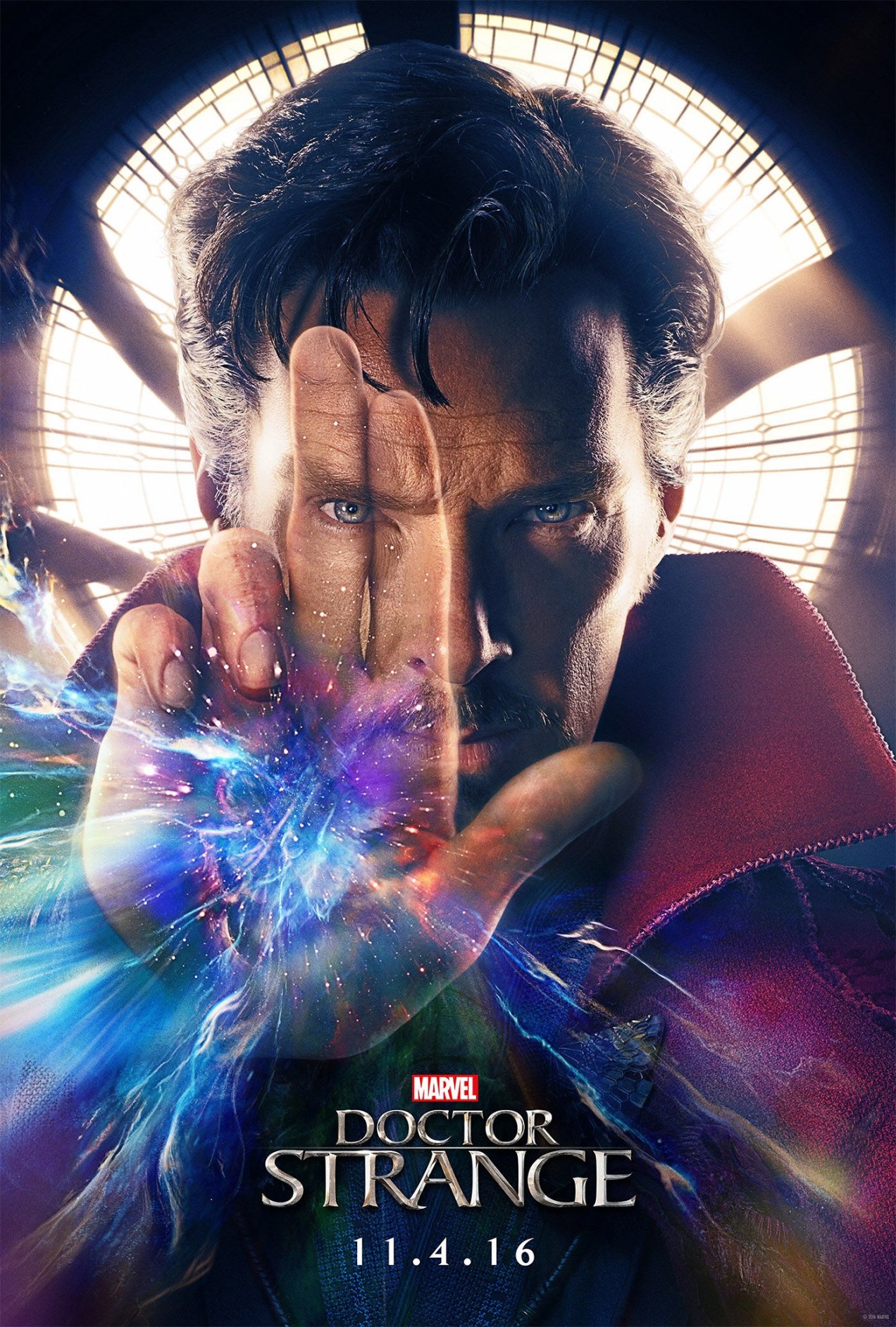
Doctor Strange

Genre: Action

Director: Scott Derrickson

Screenplay: Jon Spaihts, Scott Derrickson & C. Robert Cargill

Cast: Benedict Cumberbatch, Chiwetel Ejiofor, Rachel McAdams, Benedict Wong, Mads Mikkelsen, Tilda Swinton, Michael Stuhlbarg, Benjamin Bratt, Scott Adkins, Zara Phythian, Alaa Safi, Katrina Burden

Running Length: 115 minutes

Synopsis: After his career is destroyed, a brilliant but arrogant surgeon (Benedict Cumberbatch) gets a new lease on life when a sorcerer takes him under his wing and trains him to defend the world against evil.

Review: It has become increasingly difficult to innovate in the genre of superhero movies, since there is now an expectation that comes with the territory (just look at the number of moviegoers that patiently wait for the end credits to finish rolling nowadays). Marvel has proven significantly better at carving out new spaces within the crowded genre, however, and Doctor Strange is yet another Marvel film that has managed to defy expectations. Delving into the mystical facet of the Marvel Comic Universe was surely a gamble, but it is one that has paid off handsomely. Doctor Strange is easily the best superhero movie to be released in 2016, and a breath of fresh air for the MCU.

Scott Derrickson is not the most obvious choice of director for Doctor Strange, having cut his teeth on horror films like Sinister and The Exorcism of Emily Rose, but perhaps he was exactly what the doctor (ahem) ordered – a fresh pair of eyes that would be able to dispense with convention. Doctor Strange doesn’t deviate that far from other MCU movies, but is different enough to warrant a second look, even for audiences who have grown tired of the neverending barrage of films in the same mould. Derrickson and co-writers Spaihts and Cargill are also not afraid of adding humor into the mix, and there are almost as many comedic sequences as there are action set pieces.

Derrickson also seems to have a knack for creating eye-popping visuals, particularly the Inception-esque scenes of the cityscape folding and twisting onto itself that are alone worth the price of admission. In particular, the chase sequence that takes place in one of these settings is possibly one of the most imaginative scenes in recent memory, and would make M.C. Escher proud. This is also a film that I highly recommend watching in 3D (this is probably the first movie since Avatar that I’ve made this statement), and together with some truly trippy imagery, Doctor Strange undoubtedly serves as a feast for the eyes.

British thespians Benedict Cumberbatch, Tilda Swinton and Chiwetel Ejiofor seem like odd choices for a superhero movie, but casting them is an inspired decision. The level of acting is so consistently high that it manages to elevate the film to the next level, allowing the audience to look past some of the more ludicrous pieces of dialogue or plot holes. While the film does end on a slightly weak (and rather psychedelic) denouement, this first Doctor Strange installment has successfully created a new Marvel franchise, and it would certainly be interesting to see how his mystical powers are put to use in subsequent Avengers or MCU films.

Rating: * * * ½ (out of four stars)

P.S. Remember to stay for both post-credit sequences, one situated at the very end of the rather substantial end credits.

Standard

Suicide Squad

Genre: Action

Director: David Ayer

Screenplay: David Ayer, based on characters from DC Entertainment

Cast: Will Smith, Viola Davis, Margot Robbie, Jared Leto, Jai Courtney, Jay Hernandez, Cara Delevingne, Adewale Akinnuoye-Agbaje, Adam Beach, Karen Fukuhara, Aidan Devine, David Harbour, Ben Affleck, Ezra Miller

Running Length: 123 minutes

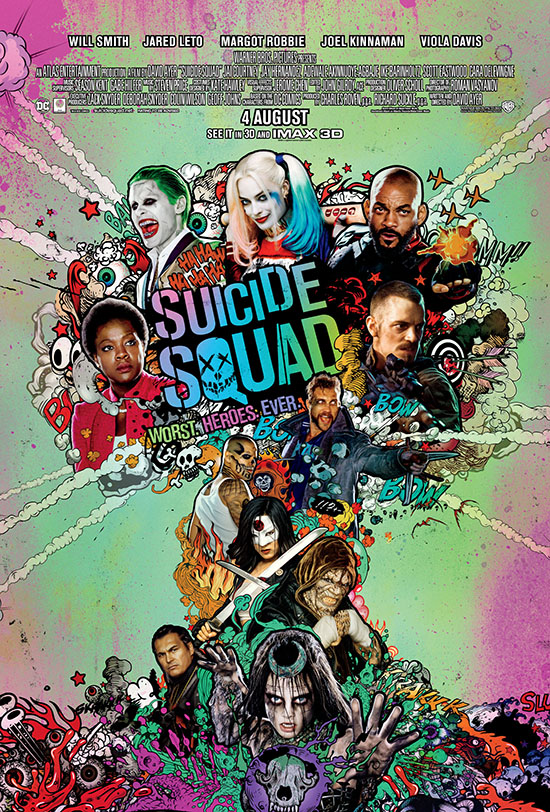
Synopsis: A secret government agency recruits imprisoned supervillains to execute dangerous black ops missions in exchange for clemency.

Review: Suicide Squad is set in Midway City, and that’s exactly where the entire film ends up – it’s midway between director David Ayer’s usual hard hitting action and Zach Snyder’s slick, hyperreal stylistic flourishes (used to great effect in 300 and with vastly diminishing returns after); it’s midway between trying to be a mirror of Marvel’s winningly irreverent Guardians of the Galaxy (a motley crew of relatively unknown comic universe characters being reluctant heroes) and a follow up of the ultra-dour Batman v Superman; and unfortunately, it’s midway between a good movie and a bad one. As this is a particularly weak Summer for film releases so far, the box office for Suicide Squad should still be decent, but despite a handful of bright spots in the film, it feels like a terribly wasted opportunity that fails to liven up the DC cinematic universe.

The biggest problems for Suicide Squad lie in its script and editing – simply put, this is one of most schizoid movie I have seen in a long time. The film starts with 20 minutes of endless exposition, cramming in one tonally discordant origin sequence after another in an attempt to introduce the Suicide Squad’s many characters, and yet the film is furthered peppered throughout with jarringly out of place flashback sequences. Despite that, there still isn’t enough room to include everyone, and one Squad member is literally given a one-sentence introduction and casually dispatched of minutes later, which raises the valid question of “why even bother?”

There are sudden lulls amidst the action that make no narrative sense, the most egregious being the Squad taking a protracted timeout just before the supposedly climactic finale. All the attention to the characters’ back stories also leads to there being not much of an actual story to work off on, and the central plot involving the Enchantress is unfortunately bland and uninteresting. It boggles the mind that someone named the Enchantress ends up doing nothing more than create some unexplained giant Macguffin doomsday device that feels more at home in the Ghostbusters movie than in this one. Pitting the Suicide Squad against the Enchantress is also problematic, since essentially all of them, apart from El Diablo and Killer Croc, are simply armed vigilantes with no discernible “metahuman” powers, and are technically all outclassed by a 6,000 year old witch.

The performances in Suicide Squad are actually quite decent, the standout being Margot Robbie who does an excellent job as Harley Quinn in spite of limited material to work with. She gets the deranged sexpot killer part of Quinn down pat (and gets all the best lines in the movie), but it’s the brief glimpses into the emotionally vulnerable, damaged side of her where Margot truly impresses. The much vaunted Jared Leto method-acting version of the Joker turns out to be quite a non-event, since he is left mostly in the periphery of the overloaded script, though what is on display here bodes well for the eventual DC movie where Mr J steps up to be the central villain.

The action in Suicide Squad is generally serviceable, but does get repetitive after a while, since it’s composed largely of groups of people firing guns at each other. Unlike the much more successful Deadpool, Suicide Squad’s violence is severely constrained by its PG rating, resulting in bloodless altercations that end up feeling disengaged. David Ayer is definitely capable of better, but Suicide Squad feels like it has simply been meddled with way too much both in pre and post. This is not the movie that would “rescue” the DC movie universe, and now the weight falls on Wonder Woman and Justice League in 2017 to attempt that.

Rating: * * (out of four stars)

Standard

Jason Bourne

Genre: Action

Director: Paul Greengrass

Screenplay: Paul Greengrass & Christopher Rouse, based on characters created by Robert Ludlum

Cast: Matt Damon, Tommy Lee Jones, Alicia Vikander, Julia Stiles, Riz Ahmed, Ato Essandoh, Scott Shepherd, Bill Camp, Vinzenz Kiefer, Stephen Kunken, Gregg Henry

Running Length: 123 minutes

Synopsis: Matt Damon returns to his most iconic role in Jason Bourne. Paul Greengrass, the director of The Bourne Supremacy and The Bourne Ultimatum, once again joins Damon for the next chapter of Universal Pictures’ Bourne franchise, which finds the CIA’s most lethal former operative drawn out of the shadows.

Review: I’ve never enjoyed films that overemployed the use of shakycams, because I firmly believe that cinema verite can be achieved without having to nauseate your audience. While shakycams can be used to good effect in found footage films, an action movie like Jason Bourne shouldn’t have to resort to such a measure. Those familiar with the two prior Paul Greengrass-helmed Bourne movies would probably have come prepared (as did I), but the film not only left me feeling mildly ill, it also left me feeling dissatisfied despite Greengrass’ and Damon’s return to the franchise.

While there has been an additional Bourne movie (The Bourne Legacy in 2012, starring Jeremy Renner), most Bourne fans would really only recognize the Bourne Ultimatum as canon – this means that the “real” Bourne has not appeared on the big screen for almost a decade. The formula remains largely the same, but something seems to have been lost in the nine years. Greengrass has added too much bluster to the proceedings, and in the midst of car crash after car crash after car crash, the script seems to have forgotten to give Damon’s Bourne any room for performance or introspection, diluting what was one of the strongest aspects of the original trilogy.

While the action sequences are well-choreographed, the dizzying camerawork and rapid-fire editing leaves much to be desired. The Athens chase scene near the start is the highlight of the film, but by the time the near 40-minute long chase sequence in Las Vegas takes place in the final reels, exhaustion has set in, and no matter how grand each successive crash is, it simply doesn’t feel rousing anymore. The only bright spot was an impressive hand-to-hand combat sequence between Damon and Cassel that brings to mind similar visceral, hard-hitting scenes in the previous installments.

Coupled with a weak, suspense-less plot, there’s this general sense that Jason Bourne is an unnecessary sequel to a trilogy that had more or less given closure to the protagonist’s story. The denouement leaves the door open for another sequel, but there is very little compelling reason, based on what is seen here, to warrant yet another outing with the cast and crew.

Rating: * * ½ (out of four stars)


Standard

Star Trek Beyond

Genre: Sci-Fi, Action

Director: Justin Lin

Screenplay: Simon Pegg, Doug Jung

Cast: Chris Pine, Zachary Quinto, Karl Urban, Zoe Saldana, Simon Pegg, Anton Yelchin, John Cho, Idris Elba, Sofia Boutella

Running Length: 122 minutes

Synopsis: In Star Trek Beyond, the Enterprise crew explores the furthest reaches of uncharted space, where they encounter a mysterious new enemy who puts them and everything the Federation stands for to the test.

Review: The first post-reboot Star Trek movie not helmed by J. J. Abrams himself (directorial reins have been passed to Fast & Furious’ Justin Lin, while Abrams is preoccupied with Star Wars), Star Trek Beyond continues the winning streak that the new Star Trek franchise has been enjoying. It brings back everything that made the previous two films a success – a space adventure, comedy, excellent action set pieces and a great ensemble cast. However, the 13th movie in the Star Trek universe does seem to be spinning its wheels a bit, and instead of boldly taking audiences where they’ve never gone before, Star Trek Beyond ends up feeling more like an extended, big-budget episode of the various Star Trek TV series.

While Star Trek Beyond is ostensibly about the captain and the crew of the USS Enterprise, the bulk of the film actually takes place outside the starship. While it’s commendable that screenwriter-actors Pegg and Jung (who shows up as Sulu’s husband, another first for the franchise) for making this creative decision, it does detract somewhat from the “Star Trek experience” where you see all the core crew members of the USS Enterprise interact with each other. That is mitigated somewhat by deeper interactions within small pairings of the crew – Kirk with Chekhov (one of Anton Yelchin’s last roles before his untimely demise), Bones with Spock, Sulu with Uhura, Scotty and newcomer Jaylah (a very effective Sofia Boutella) and so on.

It is this aspect of Star Trek Beyond that truly seems to harken to the series’ TV roots, and despite the big budget and big effects, the film feels small in terms of plot and payoff, and the denouement doesn’t really move the needle either in terms of character or franchise development. The various Star Trek TV series had the luxury of time to build characters and storylines week by week, which is not the case in a summer blockbuster film with a running time of just over two hours, and Star Trek Beyond’s narrative suffers a little due to this.

Justin Lin is an old hand at action sequences, and while it does take some time to get started, the action set pieces are indeed quite well done. Be it an extended unarmed combat sequence, or massive dogfights in space, the action is consistently engaging and thrilling, though it can come across as being slightly confusing at times. 3D looks like it’s another post-production conversion and there was very little in terms of dimensionality that would make shelling out extra for a 3D screening. The soundtrack by Michael Giacchino does its job a little too well at times, and can come across as being just slightly overbearing in key moments of the film. The song choices for the film are quite inspired, however, and feature an excellent, highly memorable use of the Beastie Boys’ “Sabotage”.

Star Trek Beyond is certainly an entertaining Summer blockbuster, and should be able to appeal to general audiences and Trekkies alike. It may not mark a high point in the post-reboot canon, but it has at least maintained the momentum the franchise has gained since 2009. With the new TV series coming in 2017, and the likelihood of at least a fourth film with the current cast, it certainly looks like Star Trek has quite a bright future ahead.

Rating: * * * (out of four stars)

Standard

X-Men: Apocalypse

Genre: Action

Director: Bryan Singer

Screenplay: Simon Kinberg, story by Bryan Singer, Simon Kinberg, Michael Dougherty, Dan Harris

Cast: James McAvoy, Michael Fassbender, Jennifer Lawrence, Oscar Isaac, Nicholas Hoult, Rose Byrne, Evan Peters, Tye Sheridan, Sophie Turner, Olivia Munn, Kodi Smit-McPhee, Alexandra Shipp, Luca Till, Josh Helman, Ben Hardy, Lana Condor, Zelko Ivanek, Anthony Koneehny

Running Length: 143 minutes

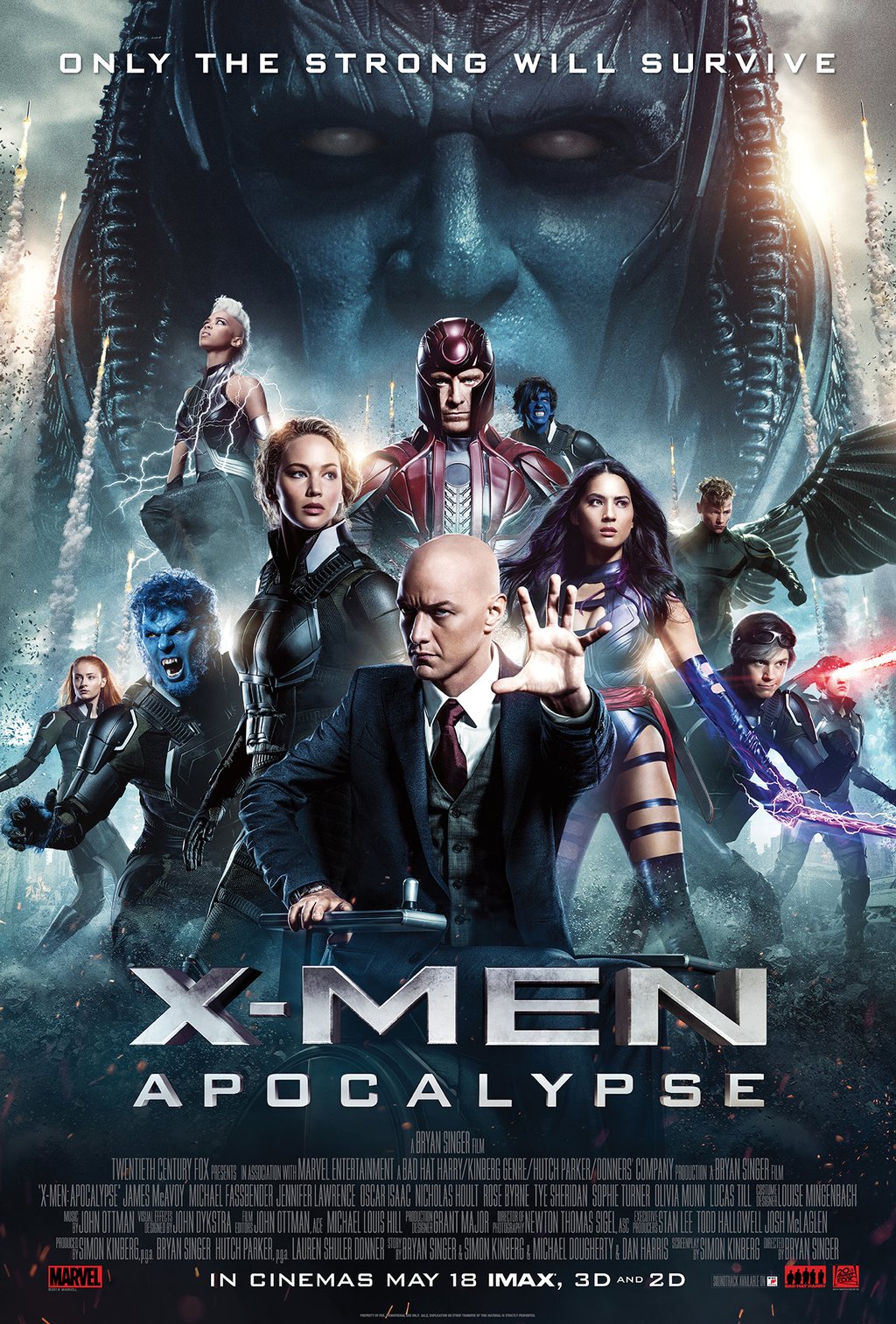
Synopsis:  Since the dawn of civilization, he was worshipped as a god. Apocalypse (Oscar Isaac), the first and most powerful mutant from Marvel’s X-Men universe, amassed the powers of many other mutants, becoming immortal and invincible. Upon awakening after thousands of years, he is disillusioned with the world as he finds it and recruits a team of powerful mutants, including a disheartened Magneto (Michael Fassbender), to cleanse mankind and create a new world order, over which he will reign. As the fate of the Earth hangs in the balance, Raven (Jennifer Lawrence) with the help of Professor X (James McAvoy) must lead a team of young X-Men to stop their greatest nemesis and save mankind from complete destruction.

Review: The good news is that X-Men: Apocalypse is not the worst superhero movie released this year (Batman v Superman is a very tough act to upstage, after all). The bad news is that after the superlative First Class and Days of Future Past, the entire X-Men franchise seems to have taken a huge step backwards with Apocalypse. Even the collective thespian prowess of Fassbender, McAvoy, Lawrence and franchise newcomer Sophie Turner cannot combat a movie that is overstuffed with inconsequential characters and subplots, as well as one of the least menacing arch-villains in recent memory.

It does start off well enough, and the opening sequence set in the Nile Valley in 3600BC introducing Apocalypse holds good promise. However, once the film segues into 1983, the script starts to make questionable advances – Apocalypse is supposed to be immensely powerful, but ends up spending almost all of his screen time behaving like a blue Nick Fury (there are a LOT of blue characters in this movie, by the way) and convincing mutants to join his cause as his horsemen. While three of the mutants he recruits are of highly questionable use (sorry, fans of Angel, Psylocke and Storm), Apocalypse does manage to get Magneto on his side as well, but the recruitment sequence involving Auschwitz borders on the tacky. Apocalypse is such a generic villain that he poses no menace whatsoever, and even his scheme for total global annihilation feels underwhelming.

X-Men: Apocalypse runs a (nowadays) relatively standard 2-plus hours, but due to the bevy of characters being introduced and the number of subplots, the film feels very scattershot, often jumping from one plot to another before they have time to sink in. This also deprives a bunch of very good actors from doing much, though not for lack of trying (congratulations to James McAvoy for emoting well in an almost incessant chain of extreme closeups). Of the newcomers, the only actor of note is Sophie “Sansa Stark” Turner, who does a decent job of giving depth to Jean Grey in her limited screen time, and would be the one to look out for in the inevitable sequel.

What truly does X-Men: Apocalypse in is the lack of any newness to its proceedings. Everything feels been there, done that, and even one of the best sequences in Days of Future Past – the Quicksilver slow-mo musical number – is given a rehash here, and proves that lightning does not strike twice. The second time round, this Quicksilver musical number feels uninspired and perfunctory, mirroring much of the remainder of the movie. In one sequence, a bunch of X-Men exit a Return of the Jedi screening, throwing a barely veiled dig at both the “old” X-Men trilogy as well as the Star Wars franchise of how the third film is always the worst, but what Singer and team does not realise is that X-Men: Apocalypse falls to the same curse, and is a shocking low point for the franchise despite everyone’s best intentions.

Rating: * * (out of four stars)


Standard

Captain America: Civil War

Genre: Action

Director: Anthony Russo, Joe Russo

Screenplay: Christopher Markus, Stephen McFeely

Cast: Chris Evans, Robert Downey Jr., Scarlett Johansson, Sebastian Stan, Anthony Mackie, Don Cheadle, Jeremy Renner, Chadwick Boseman, Paul Bettany, Elizabeth Olsen, Paul Rudd, Emily VanCamp, Tom Holland, Frank Grillo, William Hurt, Daniel Bruhl

Running Length: 146 minutes

Synopsis:  Captain America: Civil War finds Steve Rogers (Chris Evans) leading the newly formed team of Avengers in their continued efforts to safeguard humanity. But after another incident involving the Avengers results in collateral damage, political pressure mounts to install a system of accountability, headed by a governing body to oversee and direct the team. The new status quo fractures the Avengers, resulting in two camps – one led by Steve Rogers and his desire for the Avengers to remain free to defend humanity without government interference, and the other following Tony Stark’s (Robert Downey Jr.) surprising decision to support government oversight and accountability.

Review:  It’s not surprising, given their track record, that Marvel has managed to hit yet another Marvel Cinematic Universe movie out of the park. This may sound repetitive, but Captain America: Civil War is possibly the best movie from the MCU so far – not only does it present an absorbing, complex and intellectual storyline, it is chock-full of impressive action set-pieces and even finds time to flesh out both old and new Marvel characters. This is the superhero movie that Batman v Superman wanted to be but failed terribly trying.

Although this is presented as the third Captain America movie, the number of superheroes involved in the story is as plentiful as a “proper” Avengers film. Apart from the rather obvious omissions of Thor and the Hulk, Civil War features almost all the Avengers, and introduces audiences to Black Panther and Spider-man (who makes a pretty triumphant, scene-stealing return to Disney after his stint in Sony Pictures). Impressively, scribes Christopher Markus and Stephen McFeely (who also wrote first two Captain America movies) managed to flesh many of these superheroes out to be more than the sum of their superpowers, despite an already narratively dense film.

Refreshingly, Civil War is not all grim and dour like in Batman v Superman, and yet the film grapples with heavy subject matter with far greater aplomb than the clunky incoherence that populated BvS. Directors Anthony and Joe Russo have applied their experience in TV comedies to the Marvel films they have directed, and the same is evident here – there are many moments of levity to be found amidst the seriousness, though never distractingly so. There is also some really great action sequences to be found here, including an excellent scene at the airport where the two opposing factions of the Avengers finally clash, and their superpowers being pitted against each other in very interesting and unexpected ways.

Civil War is the first salvo in Phase 3 of the Marvel Cinematic Universe, and one of the very few criticisms that can be leveled at the movie is that it feels slightly incomplete as a standalone movie, and ends in a really abrupt manner. This is to be expected given the way the MCU is being structured now, with each movie being a cog in the wheel of a larger movement, but it is particularly apparent in Civil War that many plot lines are being laid in the film and aren’t fully realized by the time the credits roll, since the audience isn’t expected to watch this movie in isolation. While the uneven nature of Batman v Superman has called to question the viability of DC’s cinematic universe and roster of upcoming films, Civil War has merely reaffirmed that Marvel is at the top of the cinematic game, and even if the proceedings feel a little predictable at times, the film is a highly enjoyable opener to the next five years’ worth of the MCU.

Rating: * * * ½ (out of four stars)
P.S. Like all Marvel movies, don’t miss the two post-credit sequences, although they aren’t particularly essential viewing.

Standard