Beauty and the Beast

Genre: Musical

Director: Bill Condon

Screenplay: Stephen Chbosky and Evan Spiliotopolous

Cast: Emma Watson, Gugu Mbatha-Raw, Josh Gad, Kevin Kline, Emma Thompson, Ian McKellen, Ewan McGregor, Luke Evans, Dan Stevens, Stanley Tucci

Running Length:  130 minutes

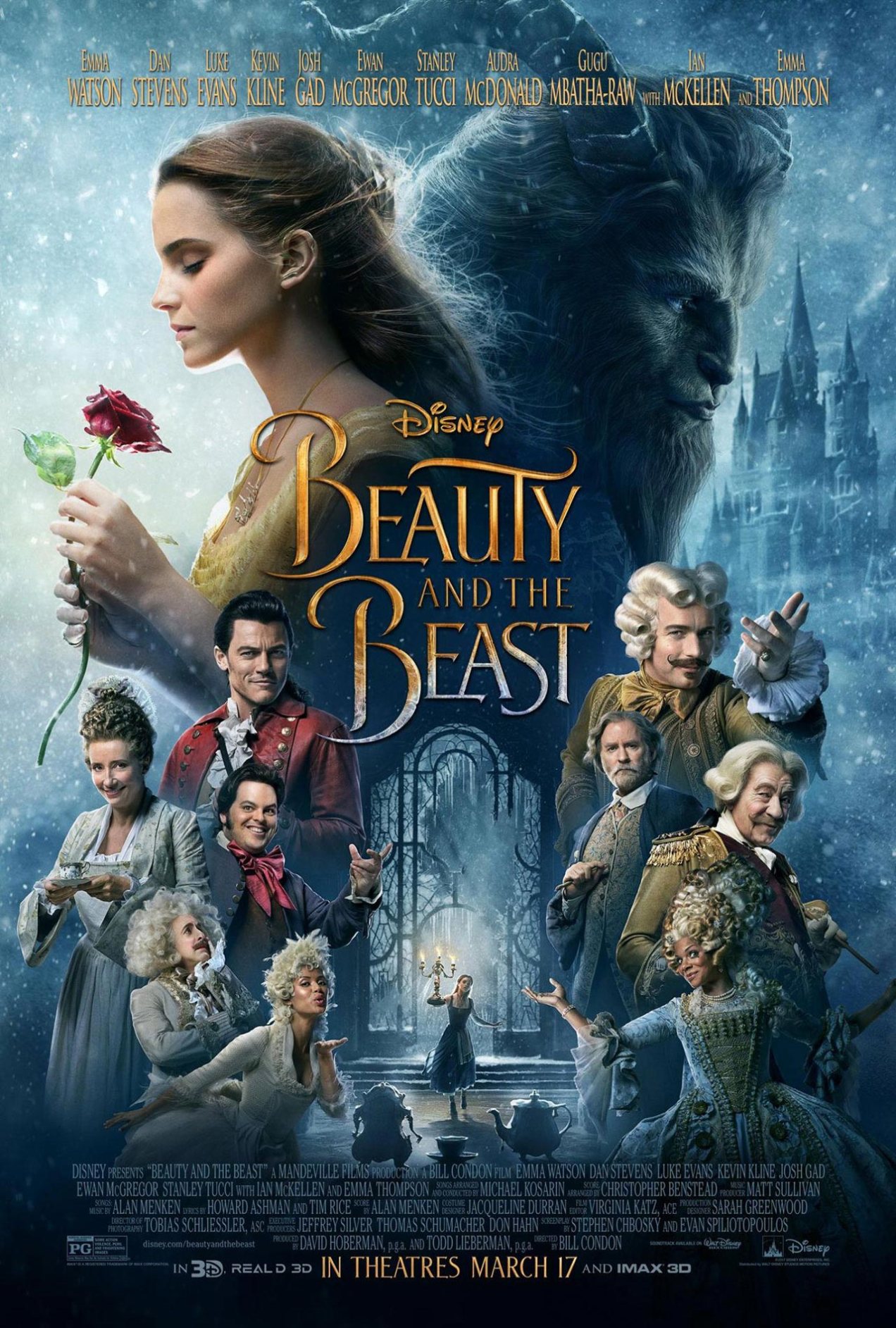
Synopsis: Disney’s “Beauty and the Beast” is a live-action re-telling of the studio’s animated classic which refashions the classic characters from the tale as old as time for a contemporary audience, staying true to the original music while updating the score with several new songs.

Review: Disney seems to have found a surefire formula in remaking its beloved animations into live-action films, and with Cinderella and The Jungle Book already done and dusted, this year’s release focuses on arguably one of the most enduring Disney cartoons of all time – 1991’s Beauty and the Beast, which holds the honour of being the first animated film ever to be nominated for the Best Picture Oscar. While 26 years (!) have passed, the magic of the cartoon has not faded with time, and therein lies the first issue with the 2017 Beauty and the Beast: while it is undoubtedly a well-produced, entertaining movie, this new film at many times feels like a poorer cousin of the original animation.

The best parts of the new film are all templated from the animation, and director Bill Condon has remained largely faithful in these recreations, down to the camera movement and choreography. Yet the most classic sequences all come up a little short in their recreation, none more evident than the iconic ballroom scene, which loses much of the multiplane magic that was presented in the then-groundbreaking usage of computer animation.

Fortunately, the cast is largely beyond reproach, with everyone possessing at least adequate vocals (though my personal preference is still Paige O’Hara’s Belle and Angela Lansbury’s Mrs Potts), and Emma Watson being essentially the perfect casting choice for a real-life Belle. While this is billed as a live-action film, many of the actors exist for a great part of the film as voice actors, and only showing up in human form at the very end. In fact, the “Be Our Guest” segment can hardly be called live action apart from Emma Watson being present in the scene, and executed almost entirely via CG.

The added segments – which includes new songs and additional backstory – are unfortunately a mixed bag. The Beast’s new standalone song “Evermore” showcases Dan Stevens’ strong vocals, but much of the other additions feel extraneous. The original film ran an economical 84 minutes, but this over-padded version clocks in at over two hours, resulting in the film’s energy flagging multiple times.

Beauty and the Beast shows how nostalgia can be a double-edged sword – while it’s certainly a lovely walk down memory lane for those who are old enough to have experienced the original animation, the constant referencing also kneecaps this version from attaining true greatness. I believe viewers who have not seen the first film will undoubtedly find this version hugely enjoyable, both young and old(er).

And of course, there’s the elephant in the room that I have not addressed up to this point in the review – the “gay controversy” that erupted right before the film’s release, due to the “revelation” that LeFou is indeed intended to be an openly gay character. It has even resulted in the film being pulled entirely from the Malaysian market, due to Disney’s outright refusal to excise minutes of the film to meet the country’s censorship requests. While I applaud Disney’s stance on this issue, this so called “gay controversy” is nothing more than a storm in a (chipped) teacup, and is such a non-event that it is laughable (and sad) that so much outrage and handwringing have ensued. No need to break out the pitchforks and sing The Mob Song, because there’s virtually nothing there that wasn’t there before.

Rating: * * * (out of four stars)
Standard

Fifty Shades Darker

Genre: Drama

Director: James Foley

Screenplay: Niall Leonard, adapted from the novel by E. L. James

Cast: Dakota Johnson, Jamie Dornan, Eric Johnson, Marcia Gay Harden, Kim Basinger, Bella Heathcote, Rita Ora, Luke Grimes, Eloise Mumford, Max Martini, Victor Rasuk, Robinne Lee, Bruce Altman, Fay Masterson, Andrew Airlie

Running Length:  118 minutes

Synopsis: Daunted by the singular tastes and dark secrets of the handsome, tormented young entrepreneur Christian Grey, Anastasia Steele has broken off their relationship to start a new career with a Seattle Independent Publishing House (SIP); but desire for Christian still dominates her every waking thought, and when he proposes a new arrangement, Anastasia cannot resist. They rekindle their searing sexual affair, and Anastasia learns more about the harrowing past of her damaged, driven and demanding Fifty Shades.

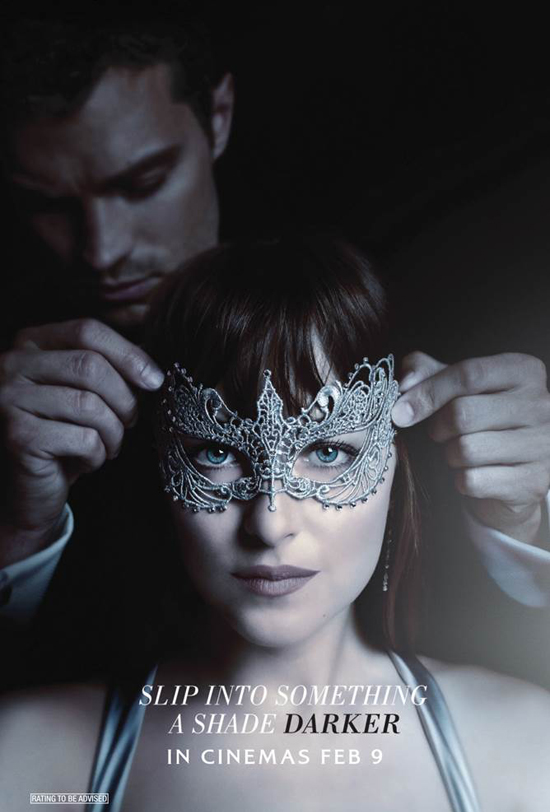
Review: The biggest offense that Fifty Shades Darker commits isn’t that it’s a juvenile, teenage-girl fantasy of a film, or that the leads look great but seem to have virtually no thespian talent to speak of, or that the storyline is nothing short of ridiculous… It’s that the movie is terribly, terribly bland. It’s near impossible to feel vested in any of the characters because of how vanilla and uninteresting they are, and none of the plot’s few twists and turns are worth vesting more than a moment’s thought. It’s not like there was a depth to the source material that failed to make the translation to the silver screen, but it’s kind of surreal how completely lacking in edge a movie that’s supposed to be about S&M is.

Picking up right where Fifty Shades of Grey left off, we are reintroduced to the dewy-eyed Anastasia Steel (Dakota Johnson), who’s secretly still pining for, and eventually rejoined, with the dashing Christian Grey (Jamie Dornan), despite his pervy predilections in the bedroom. And yet, the numerous sex scenes in Fifty Shades Darker barely quickens one’s pulse, much less come across as being an accurate portrayal of deviant sex. At least the actors seemed to enjoy the process, and Dakota Johnson can add “perfected O-face” to her resume.

The second film in a trilogy will almost always suffer from middle child syndrome, having no proper start and no proper ending, and this is of course the case in Fifty Shades Darker. There’s no resolution to the major plot points, and the limp attempt at creating a cliffhanger for Fifty Shades Freed does not impress either. Having not read the source novels in their entirety, it is hard to tell if the flaws in Fifty Shades Darker are merely literal translations from page to screen, or if it’s something that’s native to the film.

However, the film does boast a very ear-friendly soundtrack with a slew of famous performers attached to it, and even though the settings are wildly unrealistic (how Anastasia can afford such a huge apartment on an editorial assistant’s paycheck is a mystery worthy of Sherlock Holmes), it certainly is a rather aesthetically pleasing film to look at (lead actors included). Thankfully.

Rating: * ½ (out of four stars)

Standard

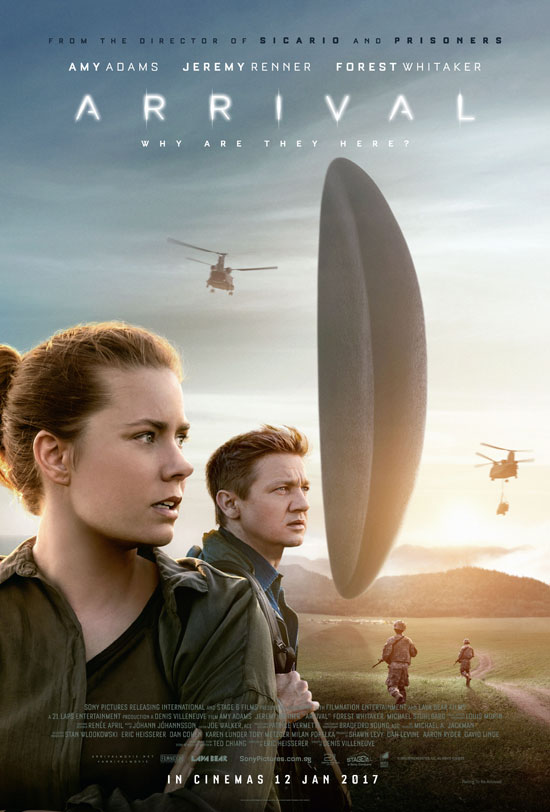
Arrival

Genre: Sci-Fi, Drama

Director: Denis Villeneuve

Screenplay: Eric Heisserer, based on the short story “Story of Your Life” by Ted Chiang

Cast: Amy Adams, Jeremy Renner, Forest Whitaker, Michael Stuhlbarg, Mark O’Brien, Tzi Ma

Running Length:  116 minutes

Synopsis: Taking place after alien crafts land around the world, an expert linguist is recruited by the military to determine whether they come in peace or are a threat.

Review: Arrival is a revelation in more ways than one – not only is it another feather in Denis Villeneuve’s increasingly crowded cap, it’s also Amy Adams’ best performance of her career so far, almost certain to score her another Academy Award nomination (and likely her first win), and one of the smartest sci-fi movies to hit the theatres in quite some time.

What’s truly refreshing about Arrival is how it bravely defies almost every single cliché of alien movies, and nothing will play out like what most audiences think they would. The trailers may seem to have given the plot away, but rest assured that there are plenty of surprises still to be had. To discuss more about the plot would be spoilerly, but trust that your mind will be thoroughly screwed (and possibly blown) by the time the credits roll.

Amy Adams has turned in solid work throughout her career, but this is certainly a defining moment for her. She is understated but nuanced, and manages to convey a complexity of emotions with minimal theatrics. In Arrival the lead performance is critical to the success of the film, and while supporting characters like Renner and Whitaker are perfectly fine, Adams is what turns the film into a superlative experience.

Denis Villeneuve has impressed time and again with his films, but Arrival manages to achieve the perfect balance of a cerebral film that still has mainstream appeal. While the pace might come across as ponderous to some, his patience in letting the audience slowly take to the engaging story of Arrival is why the film packs such a punch eventually. Add to the fact that the film is beautifully lensed by Bradford Young and accompanied by a spare, haunting score by Johann Johansson, and the result is hardly surprising – a film that is immediately one of the best of this new year, an instant classic, and warrants a repeat viewing on the big screen to take all its minutiae in.

Rating: * * * * (out of four stars)

Standard

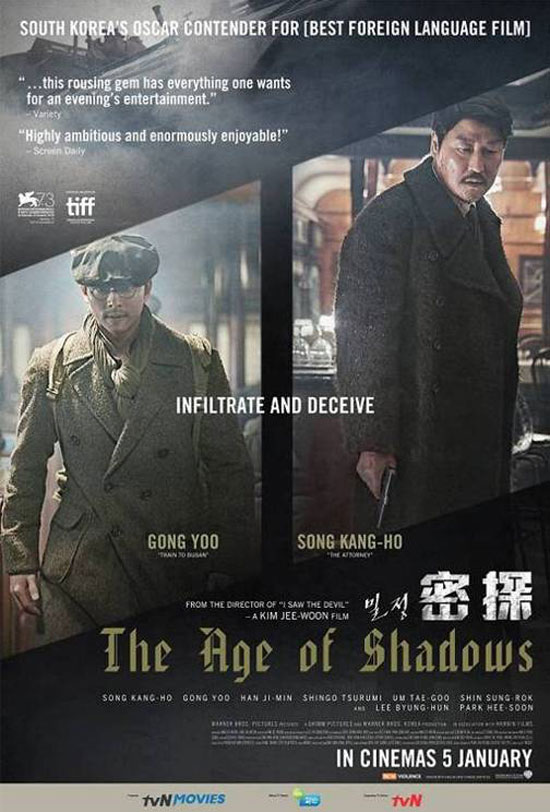
The Age of Shadows

Genre: Drama

Director: Kim Jee Woon

Screenplay: Lee Ji-min, Park Jong-dae

Cast: Song Kang-ho, Gong Yoo, Han Ji-min, Park Hee-soon, Um Tae-goo, Shin Sung-rok, Shingo Tsurumi, Park Hee-soon, Seo Young-joo, Han Soo-yeon, Yoo Jae-sang, Lee Soo-kwang, Kim Dong-young, Lee Byung-hun

Running Length:  141 minutes

Synopsis: Set in the late 1920s, The Age of Shadows follows the cat-and-mouse game that unfolds between a group of resistance fighters trying to bring in explosives from Shanghai to destroy key Japanese facilities in Seoul, and Japanese agents trying to stop them. A talented Korean-born Japanese police officer, who was previously in the independence movement himself, is thrown into a dilemma between the demands of his reality and the instinct to support a greater cause.

Review: After a three-year hiatus, director Kim Jee Woon makes a big budget return to the big screen with The Age of Shadows, a slick, stylish and somewhat overblown spy thriller set in the 1920s. While there are some top-notch set pieces, the story is almost impossible to make head or tail of, involving more twists and turns than one can shake two fists at, and additionally hampered if one needs to read the subtitles. However, it remains an engaging film throughout its 2-plus hour running time, and for fans of his recent work in Train to Busan, Gong Yoo turns in another decent performance, though Song Kang-ho is the true star here.

While the entire film is handsomely lensed, Kim Jee Woon manages to outdo himself in the setup of a number of set pieces, none more evident than the extended sequence on the train (zombie-free), in which Kang-ho’s Jung-chool traverses multiple times through the train, his loyalties seemingly being tested and changing constantly, the tension ratcheting up multiple times till an almost unbearable degree, finally culminating in an expected but still shockingly violent conclusion. The opening sequence comes a close second, in which an expertly choreographed chase resembles almost like a ballet more so than a squad of policemen chasing down their quarry. It’s all extremely impressive camera and editing work, further enhanced by an excellent soundtrack.

However, the dense plot threatens to derail (ahem) The Age of Shadows at times, and this is a movie that heavily punishes any lapse in attention – even without any distractions, one might find difficulty in following the labyrinthine plot. This does the film no favours, especially when one of the weakest characterizations is that of Japanese police chief Hashimoto, a one-dimensional villain that fails to convince, posing zero moral ambiguity and hence a certainty to Jung-chool’s character arc and his decisions along the way despite being the film’s main focus. While these do prevent the film from reaching greater heights, there’s no denying that The Age of Shadows is easily one of the best Korean films I’ve seen in a while, and certainly explains why South Korea chose this to be their entry for the Best Foreign Language Film in the Academy Awards this year.

Rating: * * * (out of four stars)

Standard

Rogue One: A Star Wars Story

Genre: Sci-Fi, Drama

Director: Gareth Edwards

Screenplay: Chris Weitz, Tony Gilroy

Cast: Felicity Jones, Diego Luna, Alan Tudyk, Donnie Yen, Jiang Wen, Ben Mendelsohn, Forest Whitaker, Riz Ahmed, Mads Mikkelsen, Jimmy Smits, Alistair Petrie, Genevieve O’Reilly, Beau Gadson, Dolly Gadson

Running Length:  133 minutes

Synopsis: From Lucasfilm comes the first of the Star Wars standalone films, “Rogue One: A Star Wars Story,” an all-new epic adventure. In a time of conflict, a group of unlikely heroes band together on a mission to steal the plans to the Death Star, the Empire’s ultimate weapon of destruction. This key event in the Star Wars timeline brings together ordinary people who choose to do extraordinary things, and in doing so, become part of something greater than themselves.

Review: As the first “non-Episodic” movie in the Star Wars cinematic universe, Rogue One is a triumph – although it caters mostly to the (rabid) Star Wars fanbase, there is enough on display here that would please anyone who is a fan of space operas (and to an extent, war movies). Harkening back to the original trilogy, and yet a couple of shades darker, Rogue One can stand shoulder-to-shoulder with any of the canonic Episodes on almost every level. This is great news especially for fans, since it means that the Star Wars cinematic universe is set to expand far beyond what George Lucas had achieved with his six films.

Rogue One is far from being a perfect movie – it starts off slowly, and the amount of exposition in the first hour threatens to bog the film down multiple times. Thankfully, once the heavy exposition gets out of the way, and the audience is reintroduced to the menace of Darth Vader, Rogue One does kick into high gear and delivers the payload. No spoilers here, but suffice to say the most iconic Darth Vader sequence in Star Wars now resides in Rogue One (yes, even more so than “I am your father”, though that scene is far more ingrained in pop culture).

Rogue One once again has a strong female protagonist in Jyn Ersa, and Felicity Jones puts in an excellent performance, being able to emote and kick ass with aplomb. However, Diego Luna doesn’t manage to match Jones’ performance, and there’s a distinct lack of chemistry between the two – just as well that the film does not really try to force a romance. Donnie Yen does good work as the blind warrior Chirrut Imwe, though it does seem at times that he’s merely reprising his most iconic role of Ip Man in a different setting. His presence, together with Jiang Wen as Baze Malbus, will almost certainly ensure very healthy box office takings in China.

Mirroring The Force Awakens, however, the most memorable character in Rogue One is a non-human – K-2SO, voiced flawlessly by Alan Tudyk. K-2 not only has some of the best lines in the show, but is one of the few sources of levity in a film that is almost relentlessly grim, though not annoyingly so like C-3PO.

Special effects are employed sparingly in the action sequences, resulting in an organic, old-school feel to many of the scenes (the aerial dogfights in particular), but the CGI is top-notch when used. Much of the ground assault sequences feel equally at home in a war movie, and the stakes of the fight between the rebels and the Imperial Army have never been as personal and high as presented in Rogue One.

An interesting point of note is that the most impressive special effect isn’t in the “big” scenes, but the digital sleight of hand that was employed to bring Peter Cushing back to “life” as Grand Moff Tarkin, despite him being dead for 22 years. One can only imagine the amount of work that was required to recreate Cushing’s likeness (using a stand-in actor, a voice actor and CG) in such a convincing manner.

It’s not hyperbole to say that Rogue One is one of the most anticipated movies of 2016. Fortunately, it has managed to deliver, and has even stirred a desire in me to rewatch the original trilogy once again. While it bears the moniker of a “Star Wars Story”, Rogue One should more accurately be called Episode 3.5, because it dovetails so perfectly into the opening of A New Hope. Ranked amongst the two films since J. J. Abrams’ reboot last year, Rogue One actually ends up a notch above The Force Awakens, especially in terms of rewatchability.

Rating: * * * ½ (out of four stars)

Standard

Underworld: Blood Wars

Genre: Action

Director: Anna Foerster

Screenplay: Cory Goodman

Cast: Kate Beckinsale, Theo James, Lara Pulver, Bradley James, Tobias Menzies

Running Length:  92 minutes

Synopsis: The next installment in the Underworld franchise follows vampire death dealer, Selene (Kate Beckinsale) as she fends off brutal attacks from both the lycan clan and the vampire faction that betrayed her. With her only allies, David (Theo James) and his father Thomas (Charles Dance), she must stop the eternal war between lycans and vampires, even if it means she has to make the ultimate sacrifice.

Review: The seemingly ageless Kate Beckinsale reprises her role as vampire assassin Selene for a fifth time in Underworld: Blood Wars, and while she looks none the worse for wear, the same cannot be said of the Underworld franchise. Most audiences would have ceased to care about what happens between the vampires and the lycans, and Blood Wars would not make anyone sit up and take notice either.

Although the film is clearly targeted at existing fans of the franchise, new director to the series Anna Foerster (also the series’ first female director) puts in a fair number of flashback sequences to help the uninitiated along. However, these flashbacks actually drag the film out much more than they should, and the film sags under the weight of unnecessary exposition – after all, everyone is here for Selene and the action sequences, and the plot is really more of an afterthought. Even so, some of the writing in Blood Wars is laughably bad, especially anything that involves the hokey albino vampire coven that looks literally ripped out of Game of Thrones.

Unfortunately, even the action sequences do not do the franchise much justice. It’s very clear that Blood Wars was made with a smaller (much smaller) budget, but even basic wirework looks and feels clumsily executed. CGI looks clunky and unpolished as well, often so poorly executed that the film would have done better with less.

That the film ends abruptly without any real resolution and clearly signals a sixth film (which Beckinsale has already signed up for) is just adding salt to the wound. The mystery around Selene’s (now missing) daughter remains almost entirely unresolved, and Selene’s only character development is unbelievably limited to frosted hair tips and a new fur coat. Even for fans, Blood Wars is a tough sell.

Rating: * ½ (out of four stars)

Standard

Fantastic Beasts and Where to Find Them

Genre: Fantasy

Director: David Yates

Screenplay: J.K. Rowling

Cast: Eddie Redmayne, Katherine Waterston, Dan Fogler, Alison Sudol, Ezra Miller, Samantha Morton, Jon Voight, Carmen Ejogo, Colin Farrell

Running Length:  133 minutes

Synopsis: Based on a textbook Harry Potter reads while at Hogwarts, this first film in a new prequel franchise of the Harry Potter universe is set in New York during the 1920s, and follows the adventures of Newt Scamander (Eddie Redmayne) as he makes his way through a secret wizarding community in search of magical creatures.

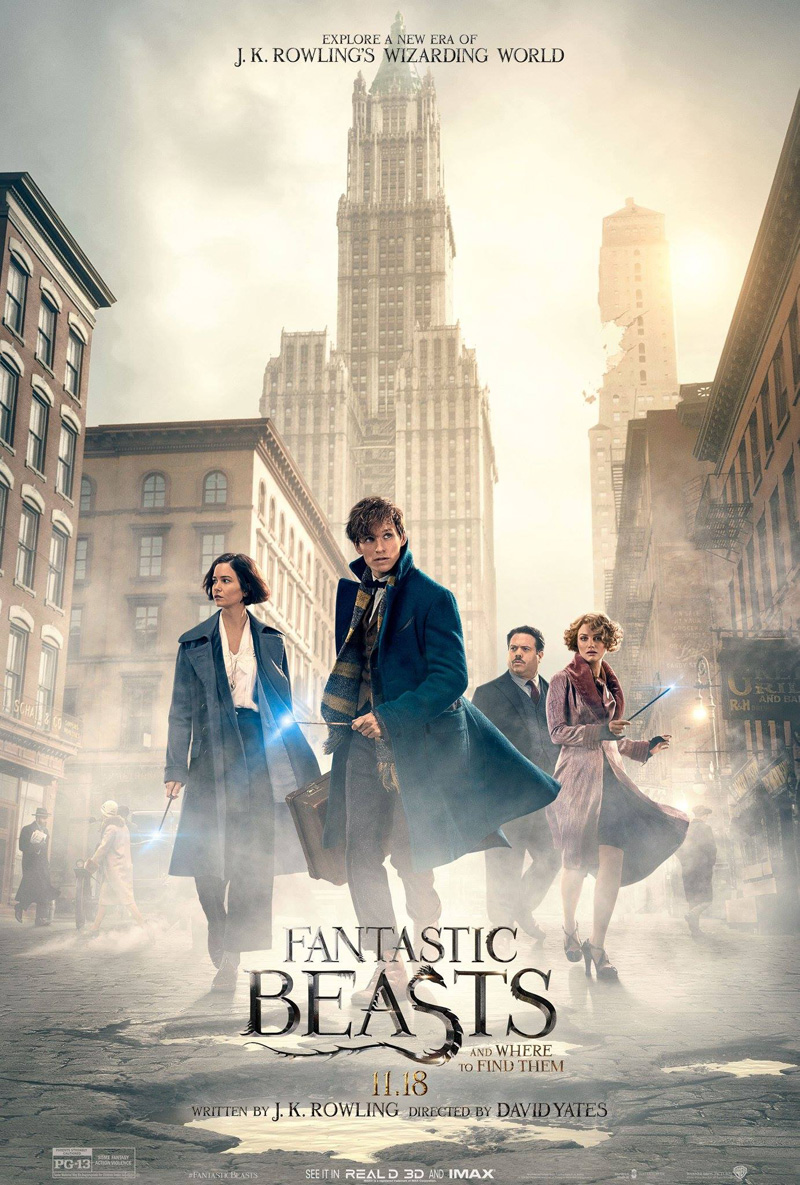
Review: 5 years has passed since the eighth and “final” movie in the Harry Potter universe made it to the big screens, but there really was no doubt that the Potterverse was too lucrative to be left alone. Not long after, Fantastic Beasts and Where to Find Them was announced, set 70 years prior to the events that unfolded in the original Harry Potter franchise. It has since been revealed that this would be the first of five movies, and while this is a good thing for fans, I had reservations – the Harry Potter films to me were a highly functional (read: $$$) but a decidedly average franchise. Would Fantastic Beasts fare any better? The answer is – yes and no.

The Harry Potter films got gradually darker as they progressed, but Fantastic Beasts takes it even further. This is easily the darkest film in the Harry Potter universe, and deals not just with multiple character deaths, but also touches on child abuse and bigotry (amongst others), difficult subjects for any film to handle, and even more so for a film that is at least partially targeted at younger viewers. This is probably a conscious decision on J.K. Rowling’s end, since she takes on the screenwriting duties for the first time, and one can somewhat appreciate the fact that she chose not to talk down to the audience. This does mean that Fantastic Beasts will not work well as a family film if there are younger children in the mix.

Fantastic Beasts is heavily steeped in Potter-speak, and a newcomer to the universe would likely feel a bit alienated by the lack of an introduction into the world of wizardry. It is, however, still quite a wonderful universe to be lost in, and David Yates, with his plentiful experience in Harry Potter movies, has managed to bring some conceptually difficult sequences to life. The highlight of the show is definitely the myriad fantastic beasts featured, and really shows off Rowling’s imagination as a writer. The actors largely do a reasonable job, with Eddie Redmayne seemingly becoming typecast as the awkward, slightly bumbling protagonist (which he plays to the hilt here), but the bigger names in the cast list do nothing more than what amounts to cameo appearances. The only problem is that the beasts boast more personality than the actors, which isn’t something that could be said of the original Harry Potter franchise.

Fantastic Beasts also exposes one of the weaknesses that Rowling has as an author. Every installment of the Harry Potter franchise unfolds in largely similar manners (surprise villain, characters with secrets – good or bad – to hide, and so on), and the same predictability dogs Fantastic Beasts. There is no surprise to be had, and even though the universe is an enchanting one, at times Fantastic Beasts feels like the pilot episode of a drama series, building towards something potentially greater a couple of movies down the line. It remains to be seen whether this new franchise would take off, but given the amount of fan service that Yates and Rowling have offered here, the likelihood of commercial failure seems remote.

Rating: * * * (out of four stars)

Standard

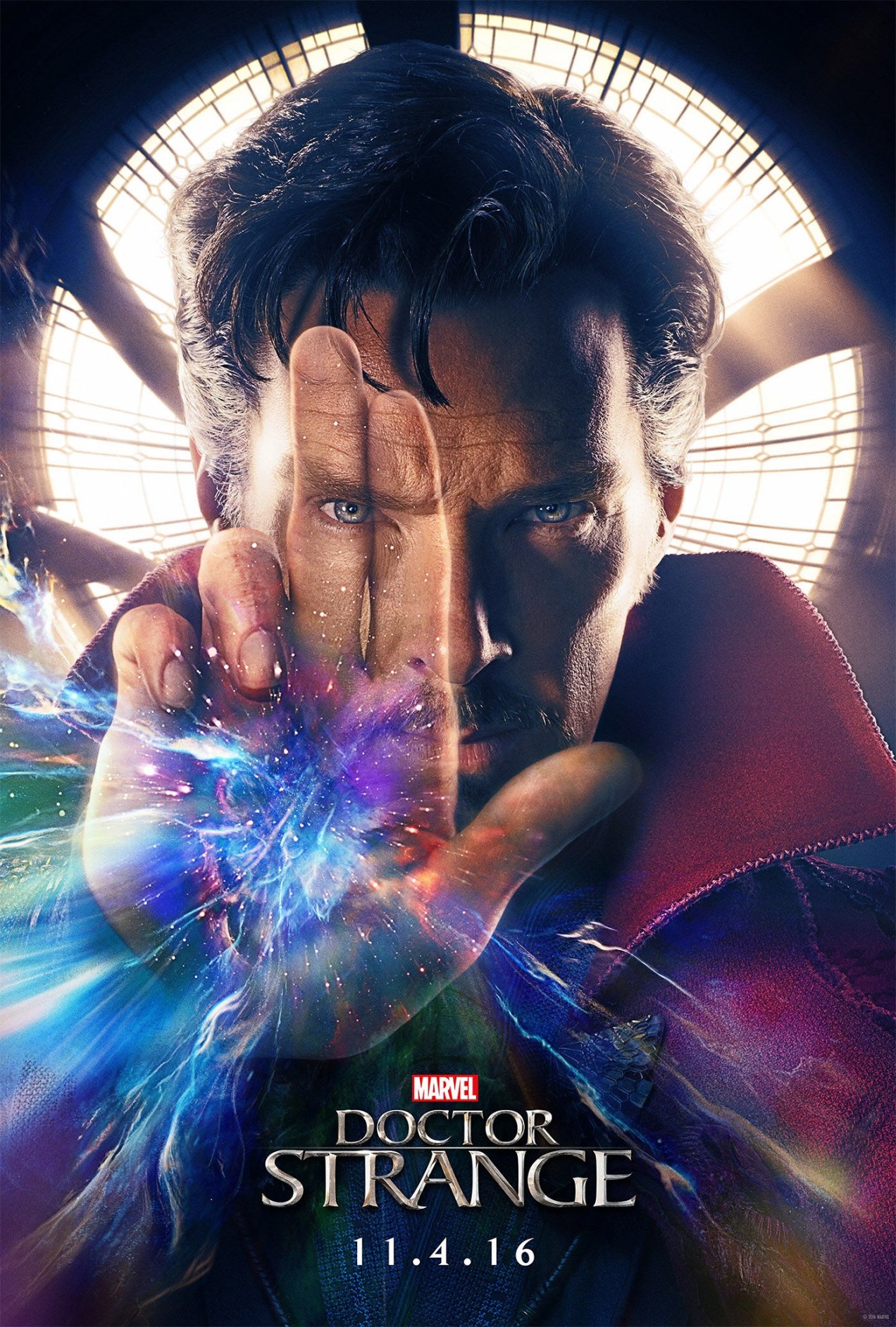
Doctor Strange

Genre: Action

Director: Scott Derrickson

Screenplay: Jon Spaihts, Scott Derrickson & C. Robert Cargill

Cast: Benedict Cumberbatch, Chiwetel Ejiofor, Rachel McAdams, Benedict Wong, Mads Mikkelsen, Tilda Swinton, Michael Stuhlbarg, Benjamin Bratt, Scott Adkins, Zara Phythian, Alaa Safi, Katrina Burden

Running Length: 115 minutes

Synopsis: After his career is destroyed, a brilliant but arrogant surgeon (Benedict Cumberbatch) gets a new lease on life when a sorcerer takes him under his wing and trains him to defend the world against evil.

Review: It has become increasingly difficult to innovate in the genre of superhero movies, since there is now an expectation that comes with the territory (just look at the number of moviegoers that patiently wait for the end credits to finish rolling nowadays). Marvel has proven significantly better at carving out new spaces within the crowded genre, however, and Doctor Strange is yet another Marvel film that has managed to defy expectations. Delving into the mystical facet of the Marvel Comic Universe was surely a gamble, but it is one that has paid off handsomely. Doctor Strange is easily the best superhero movie to be released in 2016, and a breath of fresh air for the MCU.

Scott Derrickson is not the most obvious choice of director for Doctor Strange, having cut his teeth on horror films like Sinister and The Exorcism of Emily Rose, but perhaps he was exactly what the doctor (ahem) ordered – a fresh pair of eyes that would be able to dispense with convention. Doctor Strange doesn’t deviate that far from other MCU movies, but is different enough to warrant a second look, even for audiences who have grown tired of the neverending barrage of films in the same mould. Derrickson and co-writers Spaihts and Cargill are also not afraid of adding humor into the mix, and there are almost as many comedic sequences as there are action set pieces.

Derrickson also seems to have a knack for creating eye-popping visuals, particularly the Inception-esque scenes of the cityscape folding and twisting onto itself that are alone worth the price of admission. In particular, the chase sequence that takes place in one of these settings is possibly one of the most imaginative scenes in recent memory, and would make M.C. Escher proud. This is also a film that I highly recommend watching in 3D (this is probably the first movie since Avatar that I’ve made this statement), and together with some truly trippy imagery, Doctor Strange undoubtedly serves as a feast for the eyes.

British thespians Benedict Cumberbatch, Tilda Swinton and Chiwetel Ejiofor seem like odd choices for a superhero movie, but casting them is an inspired decision. The level of acting is so consistently high that it manages to elevate the film to the next level, allowing the audience to look past some of the more ludicrous pieces of dialogue or plot holes. While the film does end on a slightly weak (and rather psychedelic) denouement, this first Doctor Strange installment has successfully created a new Marvel franchise, and it would certainly be interesting to see how his mystical powers are put to use in subsequent Avengers or MCU films.

Rating: * * * ½ (out of four stars)

P.S. Remember to stay for both post-credit sequences, one situated at the very end of the rather substantial end credits.

Standard

The Magnificent Seven

Genre: Western

Director: Antoine Fuqua

Screenplay: Nic Pizzolatto, Richard Wenk

Cast: Denzel Washington, Chris Pratt, Ethan Hawke, Peter Sarsgaard, Vincent D’Onofrio, Lee Byung-hun, Manuel Garcia-Rulfo, Martin Sensmeier

Running Length:  132 minutes

Synopsis: With the town of Rose Creek under the deadly control of industrialist Bartholomew Bogue (Peter Sarsgaard), the desperate townspeople employ protection from seven outlaws, bounty hunters, gamblers and hired guns – Sam Chisolm (Denzel Washington), Josh Farraday (Chris Pratt), Goodnight Robicheaux (Ethan Hawke), Jack Horne (Vincent D’Onofrio), Billy Rocks (Lee Byung-Hun), Vasquez (Manuel Garcia-Rulfo), and Red Harvest (Martin Sensmeier). As they prepare the town for the violent showdown that they know is coming, these seven mercenaries find themselves fighting for more than money.

Review: The Magnificent Seven is a remake of the 1960 film of the same name, but this is one of “those movies” in which it would actually do the viewer more good if they have never watched the original (which itself is actually also a remake of Akira Kurasawa’s Seven Samurai). While it doesn’t measure up to either original, this remake of The Magnificent Seven is a serviceable, entertaining film that should appeal to most audiences.

While the concept of a motley crew could have been new and fresh in the 60s, in the new millennium it is the norm – ensemble casts can be found across the board in multiple genres of film, most notably the superhero genre that is now the mainstay of blockbuster movies. Apart from the “been there, done that” vibe, the common weakness of many similar films is also found here in The Magnificent Seven – there simply isn’t enough flesh on the bone for many of the ensemble characters, so much so that the audience won’t really feel vested in their outcomes at all.

In a cast that is filled with well-known faces, Denzel Washington and Chris Pratt are the only two that manage to make a mark. Denzel Washington is positioned as the emotional centre of the film, and the seasoned thespian assumes this role with aplomb. Chris Pratt is once again cast as a roguish charmer with all the best lines in the script, and his sharpshooting, sass-talking Josh Faraday is easily the most memorable (and likeable) character in the entire film. Unfortunately, Peter Sarsgaard comes across as a one-dimensional villain and his Bogue fails to convince (on a positive note, at least they didn’t cast Christoph Waltz yet again in this role).

The first hour of The Magnificent Seven is focused on the backstories of the seven-plus characters that populate the show, and is the more interesting half of the movie even if some of the backstories feel a little generic. In the second hour, Fuqua goes back to his action film roots, and it’s essentially one giant, protracted shootout where the vastly outnumbered good guys are able to mow down a ridiculous number of bad guys. While it does go on for a little too long, the action remains engaging enough to not feel tiresome. These seven may not necessarily be magnificent, but are at least a hair above “good enough”.

Rating: * * * (out of four stars)

Standard

Lights Out

Genre: Horror

Director: David F. Sandberg

Screenplay: Eric Heisserer, based on the short film by Sandberg

Cast: Teresa Palmer, Gabriel Bateman, Alexander DiPersia, Maria Bello, Billy Burke, Alicia Vela-Bailey, Lotta Losten

Running Length: 81 minutes

Synopsis: When Rebecca (Teresa Palmer) left home, she thought she left her childhood fears behind.  Growing up, she was never really sure of what was and wasn’t real when the lights went out…and now her little brother, Martin (Gabriel Bateman), is experiencing the same unexplained and terrifying events that had once tested her sanity and threatened her safety. A frightening entity with a mysterious attachment to their mother, Sophie (Maria Bello), has reemerged.

But this time, as Rebecca gets closer to unlocking the truth, there is no denying that all their lives are in danger…once the lights go out.

Review: David F. Sandberg’s 3-minute short film in 2013 was an exercise in horror simplicity – a creature that only manifests itself when the lights are out. It was a relatively fun and clever film, and it wasn’t surprising that Lights Out went viral, and more importantly, it got popular enough to get the attention of horror master James Wan. Sandberg’s first full-length feature is based on the same premise, and although it is a little rough around the edges, works very effectively as a commercial horror film, and should please fans of the genre.

The entire 80 minutes of Lights Out is essentially designed as setting up one jump scare after another, and there’s really nothing much else to say except that almost all the scares work as planned. Sure, the mythology behind the female entity is a little muddled and requires a very healthy amount of suspension of disbelief, and like all horror movies the protagonists behave in inexplicably silly (and hence life-threatening) ways, but the film delivers enough thrills for audiences to look past these flaws.

Palmer is effective as the lead, bringing a gravitas to the role while not being cheesy or over the top, like how some scream queens could be. Bello is a little underused as the anguished mother, but the small number of cast members and their general likeability goes a long way in making the audience root for all of them. The most memorable performance, however, belongs to Alexander DiPersia as the slightly clueless love interest of Palmer, and his one big escape sequence from the entity delivers all the goods – it’s scary, it’s thrilling, and it’s actually very funny. Lights Out is the quintessential effective low budget horror film, and I for one will be looking forward to seeing what Sandberg can do in his sophomore effort.

Rating: * * * (out of four stars)
 

Standard