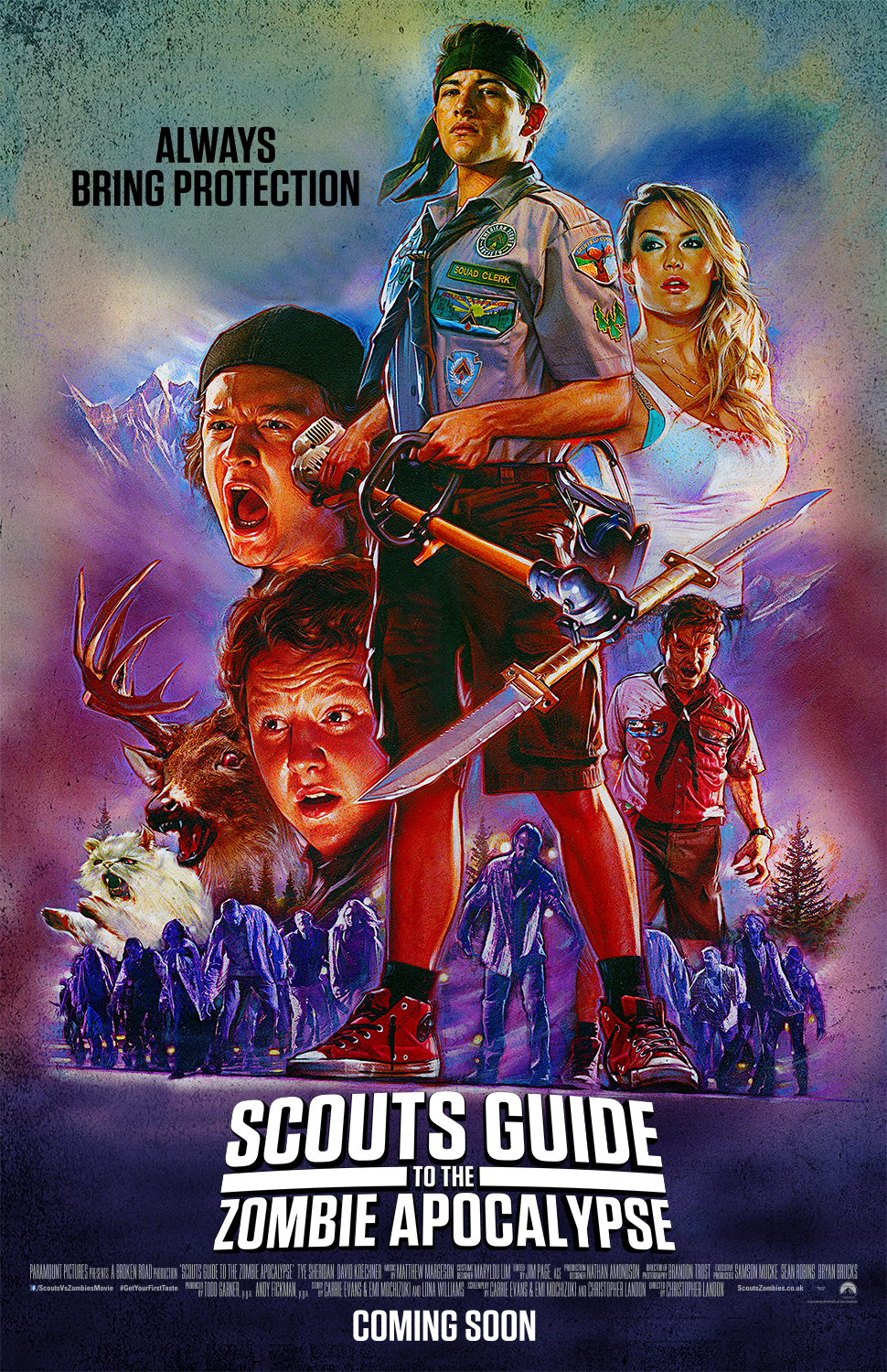
Scouts Guide to the Zombie Apocalypse

Genre: Horror, Comedy

Director: Christopher B. Landon

Screenplay: Carrie Evans, Emi Mochizuki, Christopher B. Landon

Cast: Tye Sheridan, David Koechner, Cloris Leachman, Halston Sage, Logan Miller, Joey Morgan, Sarah Dumont, Patrick Schwarzenegger

Running Length: 93 minutes

Synopsis: Three scouts and lifelong friends join forces with one badass cocktail waitress to become the world’s most unlikely team of heroes. When their peaceful town is ravaged by a zombie invasion, they’ll fight for the badge of a lifetime and put their scouting skills to the test to save mankind from the undead.

Review: It’s exceedingly clear that anyone shelling out money to watch Scouts Guide to the Zombie Apocalypse will have known in advance what they are getting themselves into – as long as one has watched any trailer of the film, they would know that this is more Scary Movie than a scary movie, and that age and enjoyment of the movie has an inverse relationship. Scouts Guide to the Zombie Apocalypse is unyieldingly sexist and puerile, proudly wearing its T&A badge on its sleeve, yet it still comes up somewhat short even when viewed forgivingly through the eyes of a teenaged boy who managed to sneak into the M18-rated movie.

The problem is mainly that the film doesn’t go far enough, especially since it is supposed to target a slightly older demographic. Other than a few moments of bawdy humour (yes, the strip club is really called “Lawrence of Alabia”, and you’ll be in for treat if you’ve ever wondered about zombie cunnilingus or zombie penises), there is barely anything else that seems to justify its M18 rating. In fact, Tye Sheridan and gang are such sweet leads that they seem more suited to be in a teen romance flick than a zombie film.

While there are certainly great moments of gore, a small number of laugh-out-loud sequences and an excellent opening sequence, a lot of Scouts Guide is painfully predictable, and the film heads steadily downhill as it progresses. Fortunately, it’s a fast-paced and relatively short film, and the end credits starts to roll just as it begins to get tiresome. And despite its title (and its leads staying in uniform the entire time), the Scouting aspect plays a minimal role, which feels somewhat like a missed opportunity.

Rating: * * (out of four stars)

Standard

Spectre

Genre: Action, Thriller

Director: Sam Mendes

Screenplay: John Logan, Neal Purvis, Robert Wade, Jez Butterworth

Cast: Daniel Craig, Christoph Waltz, Lea Seydoux, Ralph Fiennes, Monica Bellucci, Ben Whishaw, Naomie Harris, Dave Bautista, Andrew Scott, Rory Kinnear, Jesper Christensen, Alessandro Cremona, Stephanie Sigman

Running Length: 148 minutes

Synopsis: A cryptic message from Bond’s (Daniel Craig) past sends him on a trail to uncover a sinister organisation. While M (Ralph Fiennes) battles political forces to keep the secret service alive, Bond peels back the layers of deceit to reveal the terrible truth behind Spectre.

Review: Given the very high bar that Skyfall had set, it was perhaps an unreasonable expectation that Spectre would outdo its predecessor, even if the production remains largely in the same hands. And while it is true that Spectre is a number of notches below Skyfall, it’s still a very decent Bond movie, and is actually more of a Bond movie than Skyfall is. It’s almost as though Sam Mendes, having broken the mould with Skyfall, had decided that his sophomore Bond effort would instead be something that comes much closer to the roots of the franchise.

Spectre opens with a (literal) bang, and minus the rather lackluster Sam Smith title song, ranks as one of the top Bond opening sequences in the franchise’s entire 53-year history. Set in Mexico on the Day of the Dead, the first five minutes is an ingeniously choreographed one-take tracking shot (mad props to Hoyte van Hoytema, who replaces Roger Deakin as DP), followed by an extended, equally stunningly orchestrated action sequence that culminates in a helicopter doing loop the loops over Zocalo Square. This is just the first of a number of great action set pieces in Spectre, and on their own makes the price of entry worthwhile.

This is Daniel Craig’s fourth appearance as James Bond, and he has firmly established himself as the best modern day Bond, handily beating out Timothy Dalton and Pierce Brosnan by a mile in every aspect (Sean Connery is still the iconic Bond for an old Bond fan like me). However, the rest of the cast simply fail to measure up, with both Bond girls Monica Belluci and Lea Seydoux lacking chemistry with Craig, and Christoph Waltz being particularly flat and uninspired as uber-villain Franz Oberhauser. Surprisingly, it’s the minor cast members that make more of an impression, none more so than Ben Whishaw’s expanded appearance as Q, and Andrew Scott’s detestable turn as government bigwig Max Denbigh.

Unlike Skyfall, there’s never a sense that anything is really at stake in Spectre, and it’s hard to be vested in any facet of the film, especially since the conclusion of any Bond film is a foregone one. It is somewhat surprising that Spectre isn’t pared down to a more manageable length, since the near two and a half hour running time does no favours to the film, and I found my interest flagging a little at times. There is definitely enough going on to not make the film feel like a bore, but it almost feels as though Mendes and crew got a bit lost along the way in an attempt to pull out all the stops for the film.

This is rumoured to be Daniel Craig’s last outing as Bond, and in a way that may not matter, since Spectre manages to wrap up the four-movie story arc quite nicely. It would not be surprising if this film becomes the end of yet another era, and a seventh actor will step up to take the mantle in the 25th Bond film. Although this isn’t the best Bond film in the Daniel Craig era, it will still be a decent swansong for the actor, and a tough act for the next James Bond to follow.

Rating: * * * (out of four stars)

Standard

Burnt

Genre: Drama

Director: John Wells

Screenplay: Steven Knight

Cast: Bradley Cooper, Sienna Miller, Omar Sy, Daniel Bruhl, Riccardo Scamarcio, Sam Keeley, Alicia Vikander, Matthew Rhys, Uma Thurman, Emma Thompson, Lily James, Sarah Greene

Running Length: 100 minutes

Synopsis: Adam Jones (Bradley Cooper) is a chef who destroyed his career with drugs and rock star behavior. He cleans up and returns to London, determined to redeem himself by spearheading a top restaurant that can earn him his third Michelin star.

Review: There’s a scene in Burnt where Bradley Cooper’s Adam expounds on why fast food is not given the credit he claims it deserves – and the answer is because they produce food that’s too consistent, and consistency is boring. The same, unfortunately, can be said of Burnt itself, as it comes across as a film that’s a little too generic and unmemorable as a whole.

It’s kind of a pity, especially since Bradley Cooper puts in a (by now) reliably solid performance, able to portray both the swaggering a-hole and the introspective, insecure ex-addict with aplomb and believability. However, his performance is let down by the middling script – the entire redemptive arc of Adam runs along an extremely predictable path, and anyone who’s seen a movie in the same mould (i.e. everyone) will not be surprised in any way, save for a single unexpected plot twist near the end of the film.

Also, for a film that deals in the rarefied world of haute cuisine, there’s surprisingly little attention paid to the food. While there are some aesthetically pleasing close-up shots of the dishes, the editing and montages generally feel too harried, with the camera rarely resting on any food shot for more than a second. This frenetic pace works better in a film like Chef, and ironically Chef actually pays more loving, measured attention to the food truck-style dishes than what Burnt does with its Michelin-star gourmet dishes.

While there are a good number of name actors in the film, they are generally given very little to do, with the only bright spark being Sienna Miller’s Helene, whose charming performance is a credible foil to Cooper. Other well-known faces like Emma Thompson and Uma Thurman feel criminally underused, serving more like props to help propel the plot along rather than actual characters. In the end, Burnt feels like a facsimile of a gourmet meal, one that will undoubtedly leave you feeling full, yet unsatisfied.   

Rating: * * ½ (out of four stars)

Standard

The Walk

Genre: Drama

Director: Robert Zemeckis

Screenplay: Robert Zemeckis and Christopher Browne, based on the book “To Reach the Clouds” by Philippe Petit

Cast: Joseph Gordon-Levitt, Ben Kingsley, Charlotte Le Bon, James Badge Dale, Clement Sibony, Cesar Domboy, Benedict Samuel, Ben Schwartz, Steve Valentine, Mark Camacho

Running Length: 124 minutes

Synopsis: Twelve people have walked on the moon, but only one man – Philippe Petit (Joseph Gordon-Levitt) – has ever, or will ever, walk in the immense void between the World Trade Center towers. Guided by his real-life mentor, Papa Rudy (Ben Kingsley), and aided by an unlikely band of international recruits, Petit and his gang overcome long odds, betrayals, dissension and countless close calls to conceive and execute their mad plan.

Review: Movies worth watching in 3D come extremely few and far between, and I’ve always advocated sticking to 2D for the large majority of films that offer both options. However, The Walk is a movie that truly deserves to be seen on the big screen and in 3D (fortunately, it’s available in IMAX 3D locally, the largest possible format), and it’s my recommendation to go that route in order to maximize the viewing experience that The Walk will provide. In fact, if one does not watch The Walk in IMAX 3D, there’s very little compelling reason to watch the film in any other format.

The Walk takes its own sweet time to get started, with the first hour being largely unnecessary exposition filled with characters that populate the film but possess little to no depth (unfortunately that includes Joseph Gordon-Levitt’s portrayal of Petit, though he still imbues the character with a boatload of charm). However, once we move on to the actual attempt to walk the wire across the two World Trade Center towers, things become a lot more interesting. The setup of the walk feels like a heist movie, and is quite an entertaining segment of the film. The logistical challenge of sneaking the equipment into the towers and the actual setup of the line is nothing to sniff at, and while truncated, Zemeckis does manage to wring a lot of entertainment value out of this third of the film.

And then there’s the last reel of the movie, which covers the walk itself. This is the big payoff for the film, and manages to counterbalance all the faults that the film contained prior to this glorious sequence. When viewed in IMAX 3D, the walk is nothing short of a spectacle – you could almost believe that the towers are real, and the dizzying sense of vertigo is enhanced with the huge screen and 3D. In fact, anyone with a fear of heights might find themselves feeling a bit of anxiety over how realistic some parts of the sequence are. The technical wizardry employed to bring this segment to life is truly impressive and I am pretty sure that The Walk is a shoo-in for at least a handful of technical award nominations next Oscar season.

This is not the first big-screen treatment of Petit’s historic walk across the twin towers, as it was also the subject matter of the eminently watchable documentary Man on Wire in 2008. Truth be told, the documentary tells the tale better, but in terms of visuals The Walk wins out by a large margin. This will not be a movie that would work well on the small screen, so make plans to head down to a cineplex near you if a visceral cinematic experience is what you’re after.

Rating: * * * (out of four stars)

Standard

The Martian

Genre: Drama, Sci-Fi

Director: Ridley Scott

Screenplay: Drew Goddard, based on the novel by Andy Weir

Cast: Matt Damon, Jessica Chastain, Michael Pena, Kate Mara, Sebastian Stan, Aksel Hennie, Jeff Daniels, Chiwetel Ejiofor, Kristin Wiig, Sean Bean

Running Length: 141 minutes

Synopsis: During a manned mission to Mars, Astronaut Mark Watney (Matt Damon) is presumed dead after a fierce storm and left behind by his crew. But Watney has survived and finds himself stranded and alone on the hostile planet. With only meager supplies, Watney must draw upon his ingenuity, wit and spirit to subsist and find a way to signal to Earth that he is alive. Millions of miles away, NASA and a team of international scientists work tirelessly to bring “the Martian” home, while his crewmates concurrently plot a daring, if not impossible, rescue mission. As these stories of incredible bravery unfold, the world comes together to root for Watney’s safe return.

Review: There has been a resurgence of space exploration movies in recent years, and while The Martian does not reach the heights of Interstellar and Gravity, it’s a very commendable effort nonetheless, featuring some of the best work from both Ridley Scott and Matt Damon in years. While the concept of The Martian certainly isn’t a new one (it would not be a stretch to describe the movie as “Cast Away” in space), it is an undeniably fun and fulfilling cinematic experience that will definitely be a crowd pleaser.

Despite what the trailers might suggest, The Martian is a movie that’s very light on action and very heavy on introspection and exposition. While it isn’t focused solely on Watney, with relatively big chunks of screen time split between the other crew members of the Ares 3 as well as the ground crew, a lot of time is spent observing Watney doing his utmost best to survive on a distant planet. Although some liberties have been taken with the science in the movie, a lot of it feels authentic and believable, which makes it even easier for the audience to identify with the proceedings, despite its alien setting. Both Andy Weir (author of the original novel) and NASA have been involved every step of the way, and the resulting authenticity of the movie is surely a direct result of this.

While the subject matter is quite serious, Ridley Scott maintains a light touch throughout the film, and there are many moments of humour that help to make the proceedings less dark than they could have been. Although The Martian runs over 2 hours, the film moves at a very brisk pace, and at no time does the film feel like it has lost any dramatic momentum despite cutting back and forth the three locales.The Martian is also a handsomely shot film, particularly when showcasing the barren vastness of Mars. There is, naturally, a large amount of visual effects employed in the film, but it never distracts from the actors or the storyline.

Although there is a very large and capable group of supporting actors, this is undoubtedly Matt Damon’s movie. Having to perform largely in isolation means that there are many stretches of the film where the thespian duties fall entirely on Damon, and he does an admirable job portraying the wide range of emotions that Watney undergoes. He easily becomes the emotional core of the movie, and audiences will assuredly be rooting for him long before the movie ends. It’s not difficult to imagine that he would likely be a frontrunner in the Oscar race in 2016. It’s not his first performance as a stranded astronaut (Interstellar being the first), but it’s definitely his best (so far).

Rating: * * * ½ (out of four stars)

Standard

The Man from U.N.C.L.E.

Genre: Action

Director: Guy Ritchie

Screenplay: Guy Ritchie, Lionel Wigram

Cast: Henry Cavill, Armie Hammer, Alicia Vikander, Elizabeth Debicki, Luca Calvani, Hugh Grant

Running Length: 116 minutes

Synopsis: Set against the backdrop of the early 1960s, at the height of the Cold War, The Man from U.N.C.L.E. centers on CIA agent Napoleon Solo (Henry Cavill) and KGB agent Ilyas Kuryakin (Armie Hammer). Forced to put aside hostilities, the two team up on a joint mission to stop a mysterious international criminal organization bent on destabilizing the fragile balance of power through the proliferation of nuclear weapons and technology. The duo’s only lead is the daughter of a vanished German scientist, who is the key to infiltrating the criminal organization, and they must race against time to find him and prevent a worldwide catastrophe.

Review: Say what you will about this remake (yes, another 60’s TV franchise has made the transition), but The Man from U.N.C.L.E. is undeniably a feast for the eyes, and dripping with style to boot. Those looking for a traditional action blockbuster need look no further than the recent Mission: Impossible film, but The Man from U.N.C.L.E. resembles its leads – a charming (if shallow) diversion, and really fun to watch despite its flaws.

The Man from U.N.C.L.E. boasts a fantastic look – the attention to period detail is meticulous, and the illusion is sometimes so complete that it almost feels like a film that was actually made in the 60s, and not shot in 2015. It is also accompanied by an excellent soundtrack, employed to great effect by Guy, and even sneaks in snippets of the original TV theme song. The leads are also very easy on the eye, but both leading men are quite flat, particularly Henry Cavill. The women fare much better, and Armie Hammer’s performance is somewhat mitigated by his strong sexual chemistry with Alicia Vikander’s Gaby, who more than holds her own when paired against both men. The most memorable and delightful performance, however, goes to Elizabeth Debicki’s Victoria Vinciguerra, who slinks around the screen, almost purring with evil and menace.

Although positioned as an action blockbuster, Guy Ritchie does not display a good handle on the larger action setpieces. In fact, the climactic chase sequence feels kind of watered down and is about as unmemorable as it can get. Where Guy excels, however, are the more casual scenes, and most audiences will walk away with a deeper impression of Napoleon Solo snacking in a truck or the two men bickering over what fashions work best for undercover spies. There’s a lot of humour to be found in the movie, and this definitely makes the slightly over-long film a much more entertaining affair.

While this is ostensibly an origins story of The Man from U.N.C.L.E., it’s safe to say that not many viewers will even be familiar with the original TV series, so the film can pretty much stand on its own merits. Although the film does set up the backstory of the protagonists and leaves the door open for a sequel, the fact that Guy Ritchie has chosen to “date” this first film with a 1960s aesthetic means that a franchise is somewhat unlikely (though not impossible – see Austin Powers). I, for one, would welcome the possibility of a sequel, if only to see if Iilyas and Gaby would finally get down and dirty.

Rating: * * * (out of four stars)

Standard

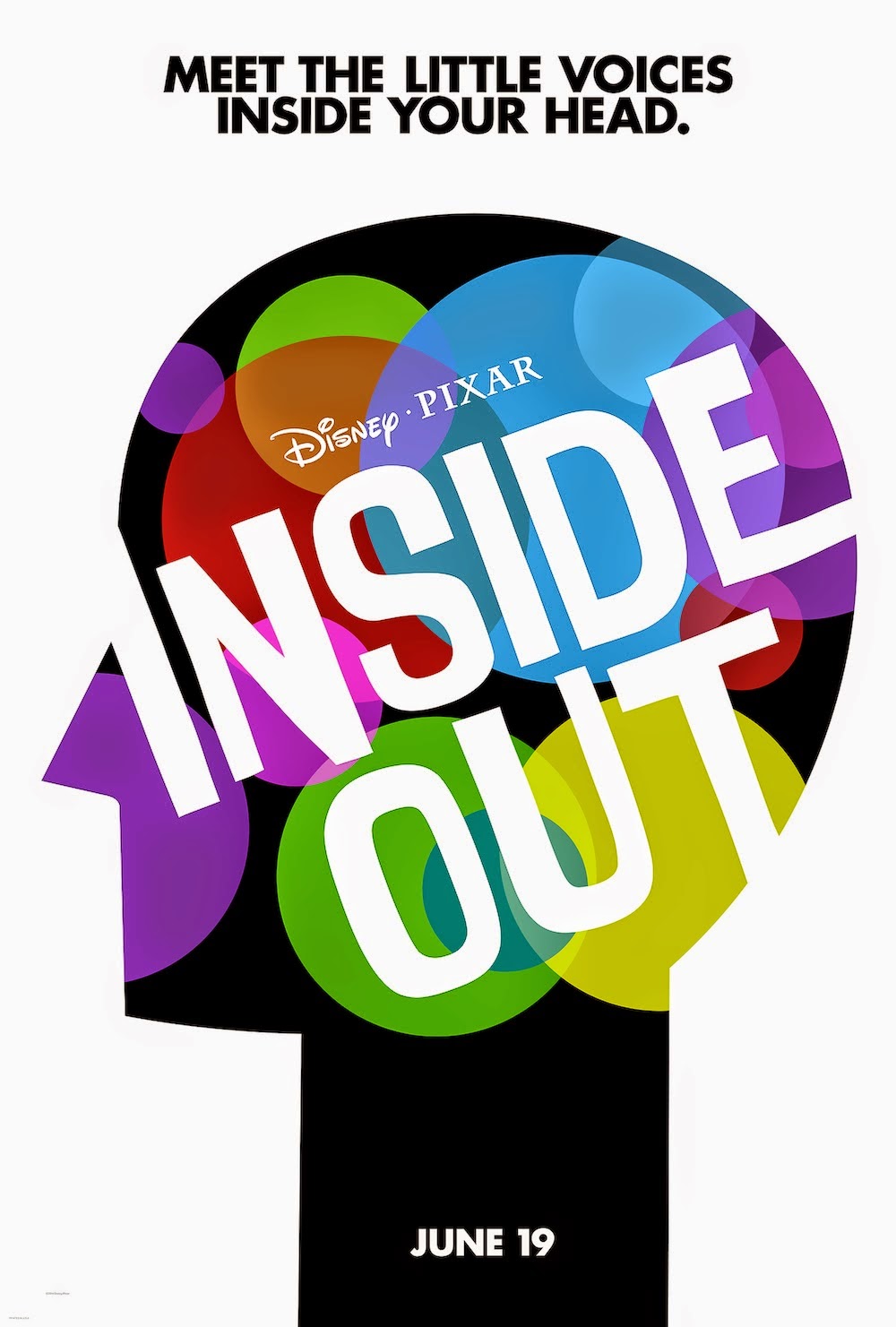
Inside Out

Genre: Animation

Directors: Pete Docter, Ronnie del Carmen

Screenplay: Pete Docter, Meg LeFauve, Josh Cooley

Voice Cast: Amy Poehler, Phyllis Smith, Bill Hader, Lewis Black, Mindy Kaling, Richard Kind, Kaitlyn Dias, Diane Lane, Kyle McLachlan

Running Length: 94 minutes

Synopsis: Growing up can be a bumpy road, and it’s no exception for Riley (Kaitlyn Dias), who is uprooted from her Midwest life when her father starts a new job in San Francisco. Like all of us, Riley is guided by her emotions – Joy (Amy Poehler), Fear (Bill Hader), Anger (Lewis Black), Disgust (Mindy Kaling) and Sadness (Phyllis Smith). The emotions live in Headquarters, the control center inside Riley’s mind, where they help advise her through everyday life. As Riley and her emotions struggle to adjust to a new life in San Francisco, turmoil ensues in Headquarters. Although Joy, Riley’s main and most important emotion, tries to keep things positive, the emotions conflict on how best to navigate a new city, house and school.

Review: It had almost seemed like Pixar’s stellar run was at its end – Toy Story 3 was the last truly great Pixar film and that was way back in 2010. The following few films – Cars 2, Brave and Monster’s University – were good at best, mediocre at worst. I am glad to say that after a one year gap, Pixar has finally returned to form with Inside Out, which ranks amongst the very best films the studio has released since its inception. Inside Out is one of those rare films that will undoubtedly please the little ones, but bears much more poignancy and deeper meaning for the grown-ups. What’s also remarkable is how inventive this film is, with such a clean and easy-to-grasp take on neuropsychology that it really needs to be seen to be believed.

The premise of Inside Out is nearly impossible to articulate – essentially it asks the question “what if your feelings had feelings”? Yet, Pixar has managed to flesh out a fully-functioning universe based around the concept that everything we think and feel is governed by five emotions – Joy, Sadness, Anger, Fear and Disgust, and that our experiences form spheres that are being looked after by these emotions and a supporting crew. The really important experiences become core memory spheres, powering the “islands” that shape a person’s personality. It’s amazingly inventive – the Pixar team has managed to think of everything, from how a person loses some memories, to how dreams come about, and even why certain songs and jingles become annoying earworms that pop up at the most inopportune moments. While it may not look like it at first glance, Inside Out is certainly one of the smartest films I’ve seen in a very long time.

This actually poses a small problem for Inside Out – the cleverest, most poignant moments in the film will also be the ones that will connect least with the younger audiences. I cannot envision any child being able to appreciate why Joy, Sadness and Riley’s imaginary friend Bing Bong are reduced to Dadaist shapes when they enter Abstract Thought. Even more so, while Bing Bong has a zany but cute character design – he even cries tears of candy, adults should come prepared with tissues as his story plays out. The film remains generally a bright and colourful one, and there’s enough fun moments in it to please the kids, but suffice to say older viewers will be the one to really experience fully what Inside Out has to offer.

That the film looks amazing is almost a given, but it does come across as rather surprising that almost no effort has been made to make Inside Out pop a bit more in the third dimension – this will be a film best seen without the encumbrance of 3D glasses. But really, this is all nitpicking – Inside Out is not only one of the best animated films I’ve seen in recent years, I believe it has a legitimate chance of a Best Picture nomination at the Oscars next year, and automatically gets a slot in my best-of list for 2015. It may sound a little hyperbolic, but Inside Out is a masterpiece that should not be missed, and one that will stand the test of time, still enjoyable and meaningful years down the road.

Rating: * * * * (out of four stars)

Standard

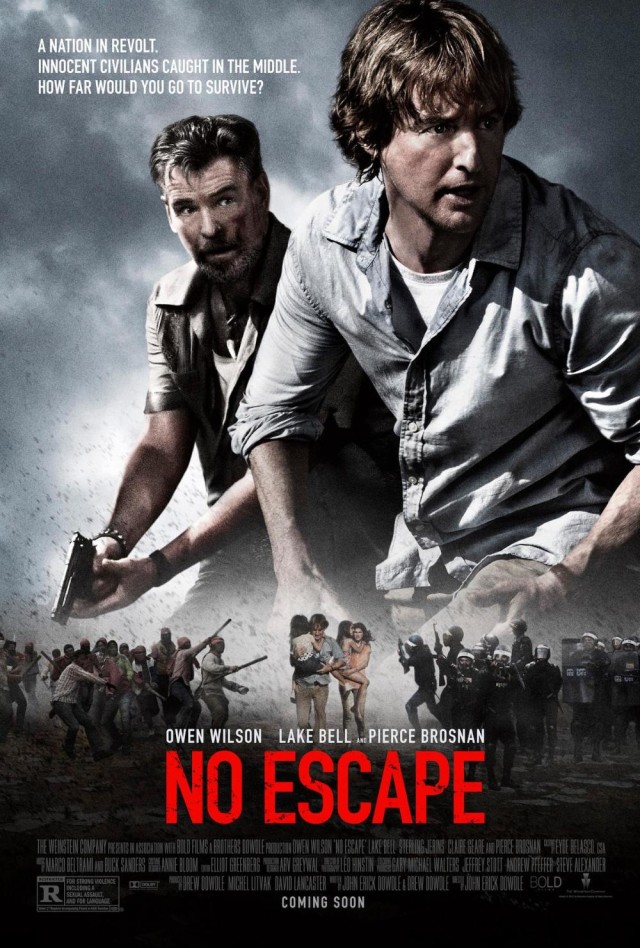
No Escape

Genre: Action, Drama

Director: John Erick Dowdle

Screenplay: John Erick Dowdle, Drew Dowdle

Cast: Owen Wilson, Lake Bell, Pierce Brosnan, Sterling Jerins, Claire Geare

Running Length: 106 minutes

Synopsis: No Escape centres on an American businessman (Owen Wilson) as he and his family settle into their new home in Southeast Asia. Suddenly finding themselves in the middle of a violent political uprising, they must frantically look for a safe escape as rebels mercilessly attack the city.

Review: One of my pet movie peeves is when any director chooses to use the shakycam effect to convey a “visceral” sense of action – apart from the found footage genre, there’s really no need to put viewers through a discomfiting viewing experience. No Escape is the latest in a long, long line of movies that abuses the shakycam effect, and it really managed to mar the cinematic experience of an already rather mediocre film. There’s also the issue that the entire film drips of a rather unkind xenophobia, undoubtedly amplified by the fact that Asian viewers like myself don’t seem be one of the target demographics that the Dowdle brothers are aiming for.

Set in an resolutely unnamed Southeast Asian country (and the subject of a real-life controversy, as Khmer lettering was used upside down on the police shields in the film, leading to outrage and a ban in Cambodia), No Escape does deliver some thrills along the way, but requires the audience to not think about the plot at all, as it is riddled with holes and necessitates the cast members to behave in the most reckless way possible, putting themselves into peril so as to advance the plot. Both the rebels (namely one murderous mob, with the leader sporting a prominent facial scar, because that’s probably the only way the directors felt “the Asians” could be identified) and the resistance (namely Pierce Brosnan and his local sidekick) seem to show up with alarming precision and frequency. It’s amazing how a nationwide coup could be reduced to such a simplistic face-off.

Although the country is unnamed, there are some really ridiculous conventions that John Erick Dowdle stoops to, reducing the locals to nothing more than seemingly irrational, bloodthirsty murderers and rapists. There’s even a scene where the protagonists are scuttling through a den of vice, which includes young prostitutes and (I kid you not) what appears to be an opium den. It’s seriously mind boggling how Dowdle’s perception of Southeast Asia seems stuck at the turn of the 20th Century, instead of being more rooted in current-day sensibilities and realities. As a Southeast Asian viewer, I am honestly quite insulted by such a portrayal.

Put aside all the social commentary and the filming techniques, and we are indeed left with a half-decent movie, with a good number of taut set-pieces, especially in the first few reels of the film. Both Owen Wilson and Lake Bell put in relatively strong performances despite playing against type, though Pierce Brosnan seems to be in this one solely for the paycheck (to be fair, his screen time is fairly limited). No Escape does become increasingly unraveled along the way, culminating in a really ridiculous, anti-climactic denouement that fails to make much sense. However, in all likelihood, the audience would have ceased to care about the movie by then, and are simply looking to escape the cinema once the credits roll.

Rating: * ½ (out of four stars)

Standard

Amy

Genre: Documentary

Director: Asif Kapadia

Running Length: 128 minutes

Synopsis: Amy tells the incredible story of six-time Grammy-winner Amy Winehouse – in her own words. Featuring extensive unseen archive footage and previously unheard tracks, this strikingly modern, moving and vital film shines a light on the world we live in, in a way that very few can.

Review: Just like Asif Kapadia’s previous documentary Senna, you don’t need to be a fan of Amy Winehouse to appreciate the documentary Amy. It is a quietly devastating meditation on her stratospheric rise to fame and how she rapidly came undone, succumbing at the age of 27 to the cumulative effect of drugs, alcohol and bulimia. It’s not a story that’s unique to Amy (other “27 Club” members include Janis Joplin, Jimi Hendrix, Kurt Cobain, and Jim Morrison), but the fact that she belongs to a generation that has diligently self-documented their lives, and in an era where celebrities’ lives are under constant scrutiny, gives rise to a richness of material that Asif uses to great effect.

Asif continues to employ the technique that he used in Senna, where instead of talking head interviews and re-enactments, most of the interviews that he conducts are audio-only, and serve as voiceovers to a wealth of images and videos (many taken by Amy Winehouse or those close to her), performance footage and news footage. It is often raw, pixelated video that is queasily jerky (think Blair Witch Project or Cloverfield shakycam – those who are prone to motion sickness may be better advised to watch this on the small screen), but because the material is so personal, gives a deep, nuanced glimpse into the most intimate moments of Amy Winehouse’s short life.

It’s also interesting to see how much access Asif managed to obtain for this documentary – not only was he able to get notes and videos created by Amy Winehouse herself (and for fans, some previously unseen performance footage as well), he was also able to interview almost all the key people in Amy’s life, including her childhood friends Juliette Ashby and Lauren Gilbert, her first manager and friend Nick Shymansky, and more importantly, her ex-husband Blake Fielder-Civil and her father Mitch Winehouse. Although Asif generally presents the material (expertly edited by without comment, it’s clear to see that Blake and Mitch were the two most destructive influences in Amy’s life. Mitch has particularly been vocal about how the documentary had twisted his relationship with Amy, but the dispassionate way the material is presented makes it hard to reach any other conclusion.

The last one-third of Amy is especially difficult to watch, as the audience literally witnesses Amy waste away, as well as get a glimpse of what a media and paparazzi feeding frenzy resembles. Yet it’s also tempered with one of the most poignant scenes in the film, of a star-struck Amy recording a duet with one of her idols, Tony Bennett, just a few months prior to her death. Despite a shaky start, she eventually manages to record an excellent rendition of “Body and Soul” that reminds the audience yet once again that she was an incandescent talent whose light burned out way too early. Particularly memorable is a line from Bennett himself that “life will teach you how to live it, if you live long enough”. Unfortunately, Amy Winehouse had no such luxury.

Rating: * * * ½ (out of four stars)

Standard

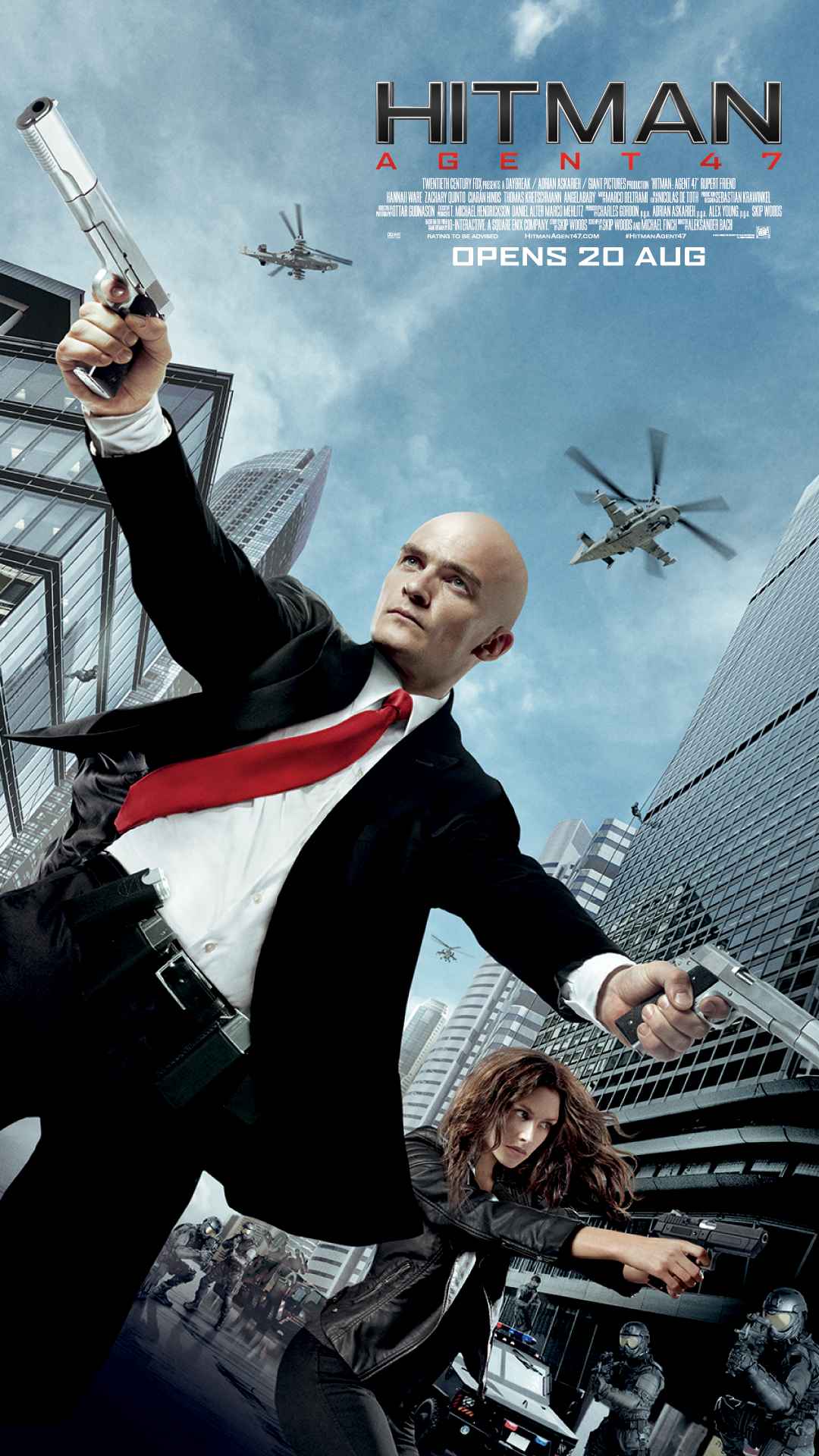
Hitman: Agent 47

Genre: Action

Director: Aleksander Bach

Screenplay: Skip Woods, Michael Finch

Cast: Rupert Friend, Hannah Ware, Zachary Quinto, Ciaran Hinds, Thomas Kretschmann, Angelababy

Running Length: 96 minutes

Synopsis: Hitman: Agent 47 centers on an elite assassin who was genetically engineered from conception to be the perfect killing machine, and is known only by the last two digits on the barcode tattooed on the back of his neck. He is the culmination of decades of research – and forty-six earlier Agent clones – endowing him with unprecedented strength, speed, stamina and intelligence. His latest target is a mega-corporation that plans to unlock the secret of Agent 47’s past to create an army of killers whose powers surpass even his own. Teaming up with a young woman who may hold the secret to overcoming their powerful and clandestine enemies, 47 confronts stunning revelations about his own origins and squares off in an epic battle with his deadliest foe.

Review: Video game to movie adaptations have generally not gone well, and for the Hitman videogame, there was even a poorly-received precedent set in 2007. Flash forward almost a decade later, and it’s time for yet another movie franchise to be rebooted. Agent 47 is likely to elicit a higher interest level locally, simply because parts of the movie were shot on location in Singapore, and let’s face it – there is always a little bit of a cheap thrill when you see familiar landmarks on the big screen, especially in an international blockbuster.

This is not a film that will please fans of the Hitman videogames, simply because it chooses to forgo the stealth element that was an essential component to the videogames. More often than not Agent 47 feels more like a younger, supercharged John McClane, coming out with guns blazing and blowing brains out along the way, and earning the film its NC-16 rating. As an action film, it is a rather generic one, though with a number of pretty decent action set-pieces that serve to move the film along nicely. The CG, unfortunately, is quite unimpressive, though Bach seems to try to mitigate this by employing a copious amount of quick cuts during most of the action scenes.

Apart from the lack of a coherent plot, one of the most glaring faults of Hitman: Agent 47 is how blatant the product placements are. It is clear that Audi must have spent a pretty penny for all the exposure in the film, but even the Singapore portions of the film resemble a promotional video rather than being vital to the film. Was there a need to show Hannah Ware swimming in the (an admittedly gorgeous) infinity pool of a five-star hotel, or to arrange a meeting at (again, admittedly gorgeous) Gardens by the Bay if it was intended to be a clandestine one? More disappointingly, for a film that must have been substantially bankrolled by Singapore, there seems to be only one discernable local actress involved in the film, and even then only as an extra in a very short sequence.

While Rupert Friend makes for a rather effective Agent 47 (this was a role that apparently was intended for Paul Walker before his death), the rest of the cast is bland and forgettable, and Zachary Quinto and Ciaran Hinds in particular feel criminally underused. Although the end credits sequence sets the stage for a potential sequel, it’s hard to imagine this film garnering enough interest or box office for the studios to consider a follow-up.

Rating: * * (out of four stars)
Standard